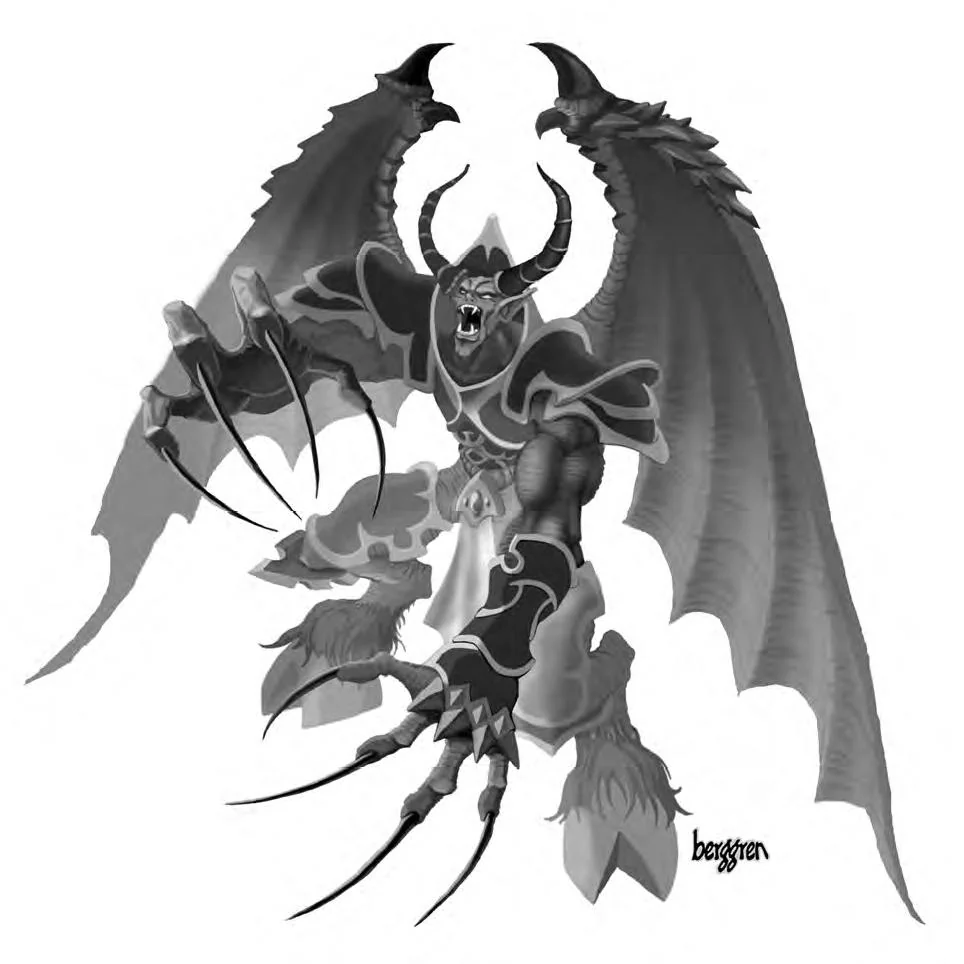
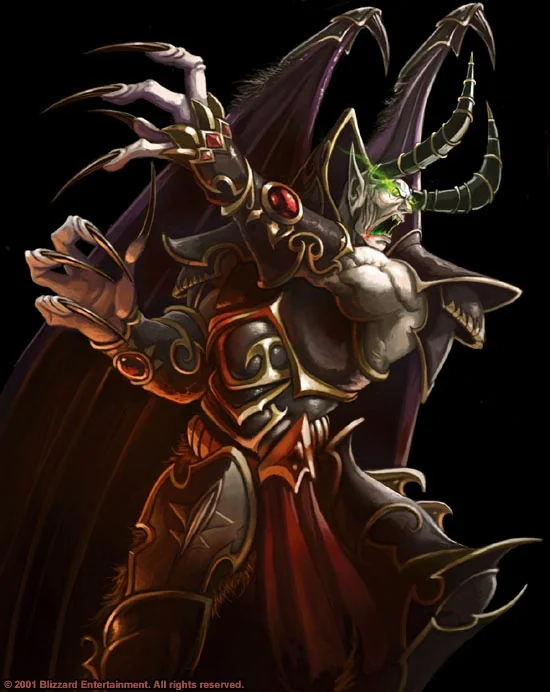
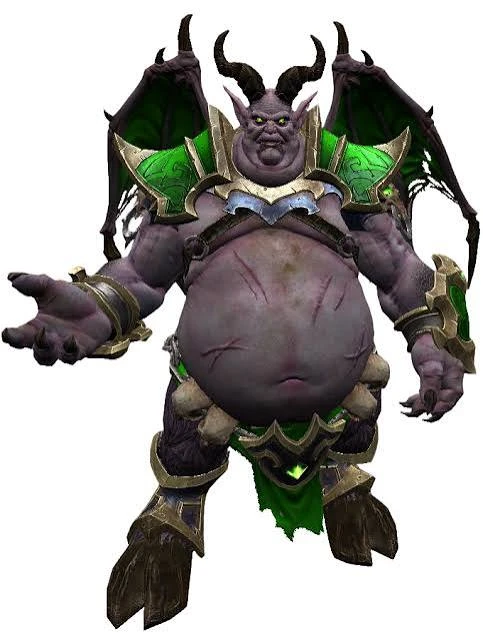
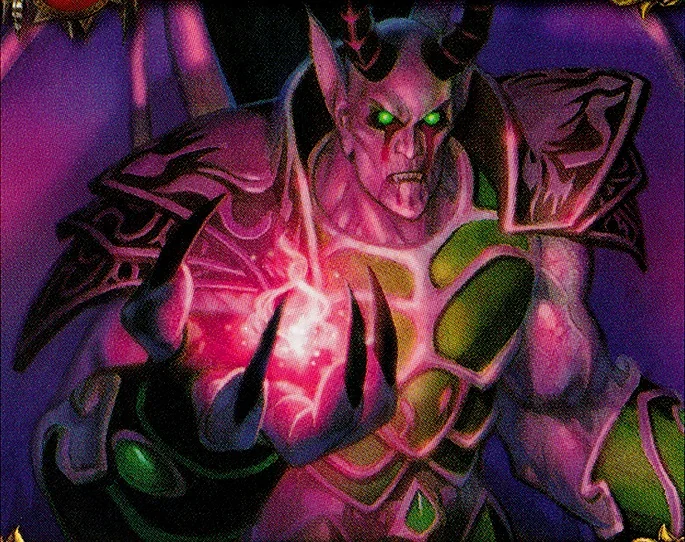
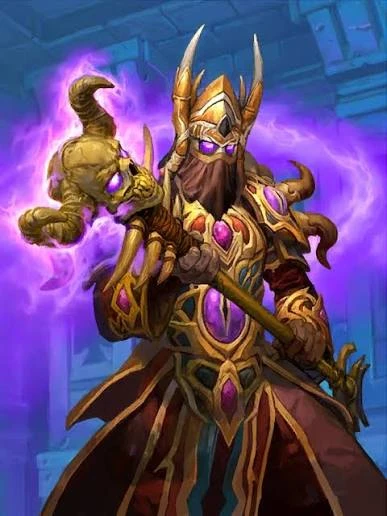
Sargeras was once the titans' champion against the demons of the Twisting Nether, but he lost faith in ordered creation and formed the Burning Legion. He tried to enter Azeroth through Queen Azshara's portal at the Well of Eternity, causing the War of the Ancients. His influence later helped corrupt Medivh and open the Dark Portal. Though the Legion was repelled at Mount Hyjal, its master remained a distant, unresolved threat when World of Warcraft began.
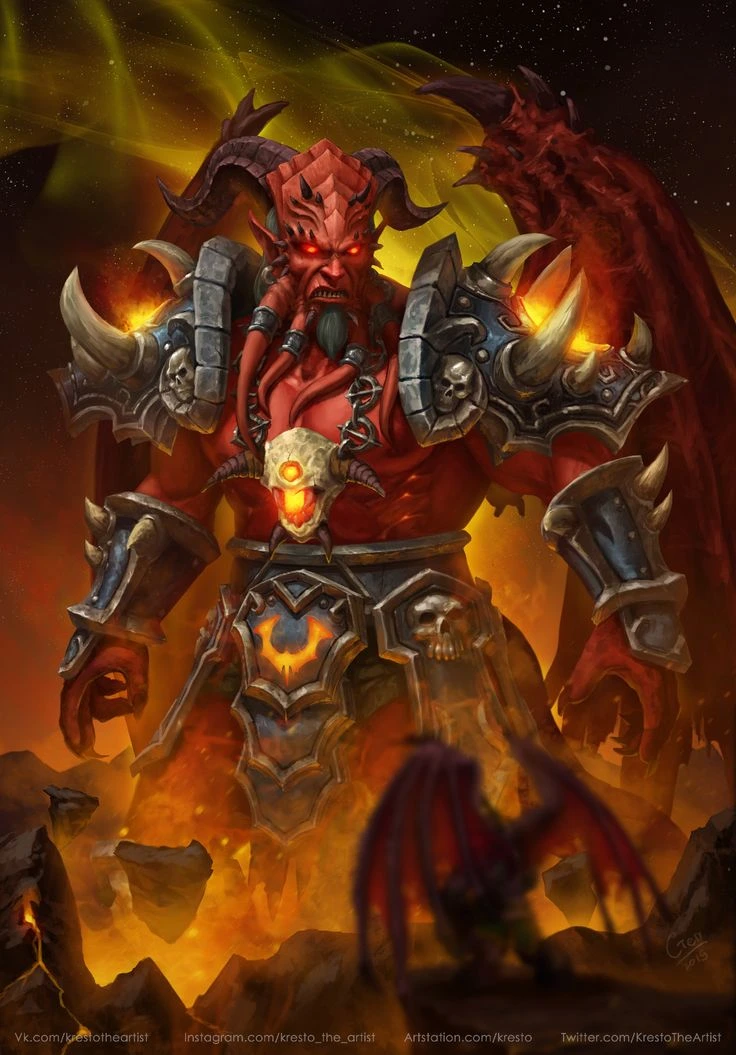
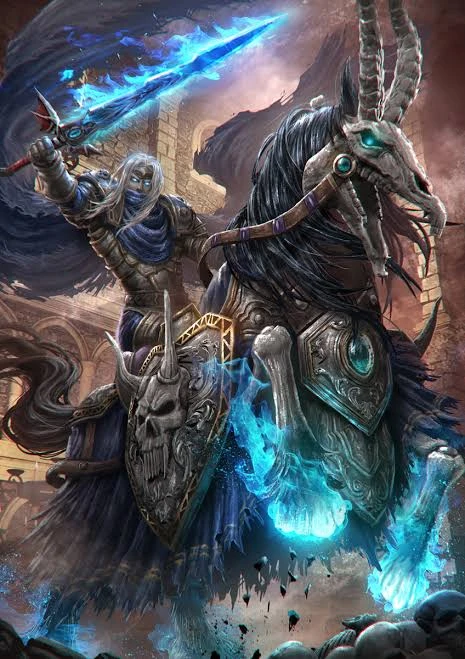
Kil'jaeden the Deceiver turned the orc clans of Draenor toward the Burning Legion, working first through Ner'zhul and then through Gul'dan. After the old Horde's defeat he transformed Ner'zhul into the Lich King, hoping an undead army would prepare Azeroth for another invasion. The Scourge developed ambitions of its own, and Kil'jaeden compelled Illidan to attack the Frozen Throne. Arthas's victory at Icecrown left the demon lord's designs unfinished at the launch of World of Warcraft.
Archimonde commanded the Burning Legion's armies during the War of the Ancients and returned to Azeroth in the Third War when Kel'Thuzad summoned him at Dalaran. He devastated the city and marched against Mount Hyjal, seeking the power of Nordrassil. Orcs, humans, and night elves fought together to delay his ascent. Malfurion called the wisps to destroy Archimonde, ending the immediate invasion but leaving Azeroth badly scarred.
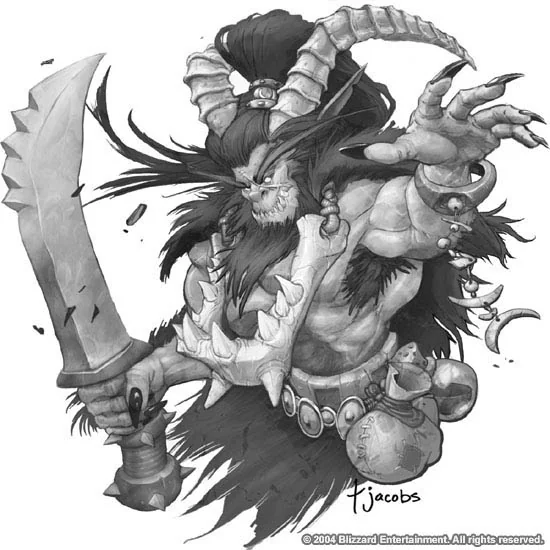
Mannoroth was the pit lord whose blood helped bind the old Horde to the Burning Legion. During the Third War his power again corrupted Grom Hellscream’s Warsong orcs, leading them to kill Cenarius in Ashenvale. Thrall sought to free Grom, who ultimately struck down Mannoroth and died in the explosion that followed. The demon’s death broke the direct blood curse, leaving its painful legacy at the heart of the new Horde’s history.
Tichondrius was a leading dreadlord of the Burning Legion and a supervisor of the undead Scourge as it devastated Lordaeron. He directed Arthas’s part in the campaign that secured Medivh’s book and enabled Archimonde’s arrival. During the invasion of Kalimdor, his forces corrupted Felwood. Illidan destroyed him using the power of the Skull of Gul’dan, but the act transformed Illidan and caused his banishment by Malfurion.
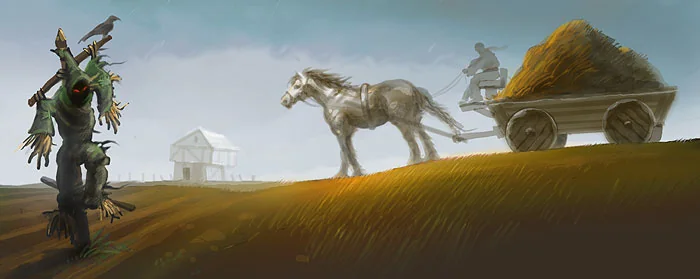
Mal'Ganis helped turn Lordaeron's plague into a trap for Prince Arthas. The dreadlord taunted the prince as infected grain spread undeath among the living. Their confrontation at Stratholme drove Arthas toward ever harsher choices. Mal'Ganis then lured him to Northrend, where the search for vengeance ended with Frostmourne in Arthas's hands.
Balnazzar was one of the dreadlords who contested the ruins of Lordaeron after the Burning Legion's defeat. Sylvanas Windrunner defeated his faction during her campaign to secure an independent kingdom for the Forsaken. Though apparently removed from the struggle for the capital, his influence endured through a disguise at the heart of the Scarlet Crusade. Behind the identity of Grand Crusader Saidan Dathrohan, Balnazzar turned a movement founded to fight evil into another weapon of deception.
Detheroc was a dreadlord who tried to preserve the Burning Legion’s influence over Lordaeron after Archimonde’s defeat. He enslaved the will of the human commander Garithos and used his soldiers to protect his position. Sylvanas and Varimathras destroyed his rule as they struggled to establish an independent Forsaken kingdom.
Varimathras was a dreadlord who tried to hold Lordaeron for the Burning Legion after the Scourge began to fracture. Sylvanas Windrunner defeated his forces and spared him only when he agreed to serve her rebellion against the remaining dreadlords. He helped the Forsaken overcome their enemies and seize the ruined capital, then took part in the betrayal of Grand Marshal Garithos. In the Undercity he stood as a powerful but deeply suspect servant of the banshee queen.
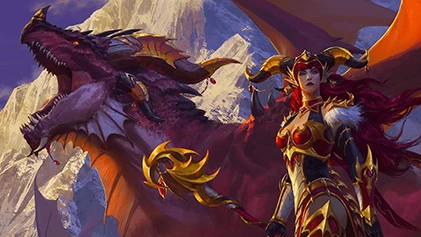
Alexstrasza, the Life-Binder, guided the red dragonflight and helped create Nordrassil after the Sundering. In the Second War, the Dragonmaw used the Demon Soul to imprison her at Grim Batol and force her children into warfare. Rhonin and his allies helped break the artifact and restore her freedom. At the original World of Warcraft era she remains a guardian of life whose flight bears the wounds of that captivity.
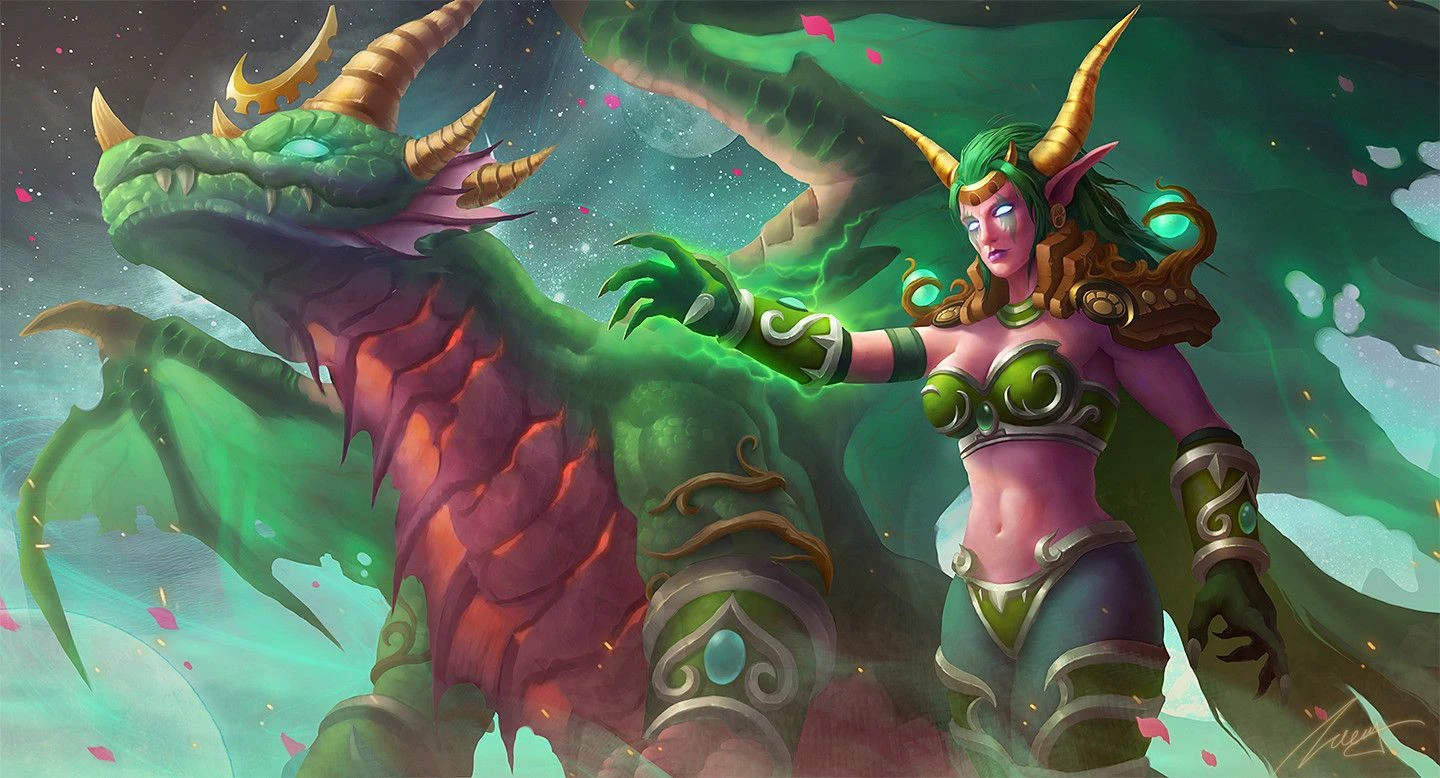
Ysera the Dreamer watches over nature and the Emerald Dream through the green dragonflight. After the Sundering she bound Nordrassil to the Dream and helped establish the night elves’ ancient pact with the dragons. She later buried the Atal’ai temple to hinder Hakkar’s return, leaving dragons to watch the marshes. In the world after the Third War, her guardianship remains closely tied to druids, sacred forests, and the balance of living things.
Malygos the Spell-Weaver leads the blue dragonflight and guards arcane magic. Neltharion’s betrayal during the War of the Ancients devastated his dragons, leaving him wounded by a loss that endured across ages. The destruction of the Demon Soul at Grim Batol later restored power to the Aspects but did not undo the blue flight’s suffering. At the original World of Warcraft launch, he remains a living guardian shadowed by grief.
Nozdormu, the Timeless One, leads the bronze dragonflight and guards the proper passage of time. He helped the surviving night elves after the Sundering by blessing Nordrassil, sheltering them from age while the World Tree endured. The Caverns of Time in Tanaris are associated with his mysterious charge. His place in the original World of Warcraft is that of an ancient, largely unseen protector of history itself.
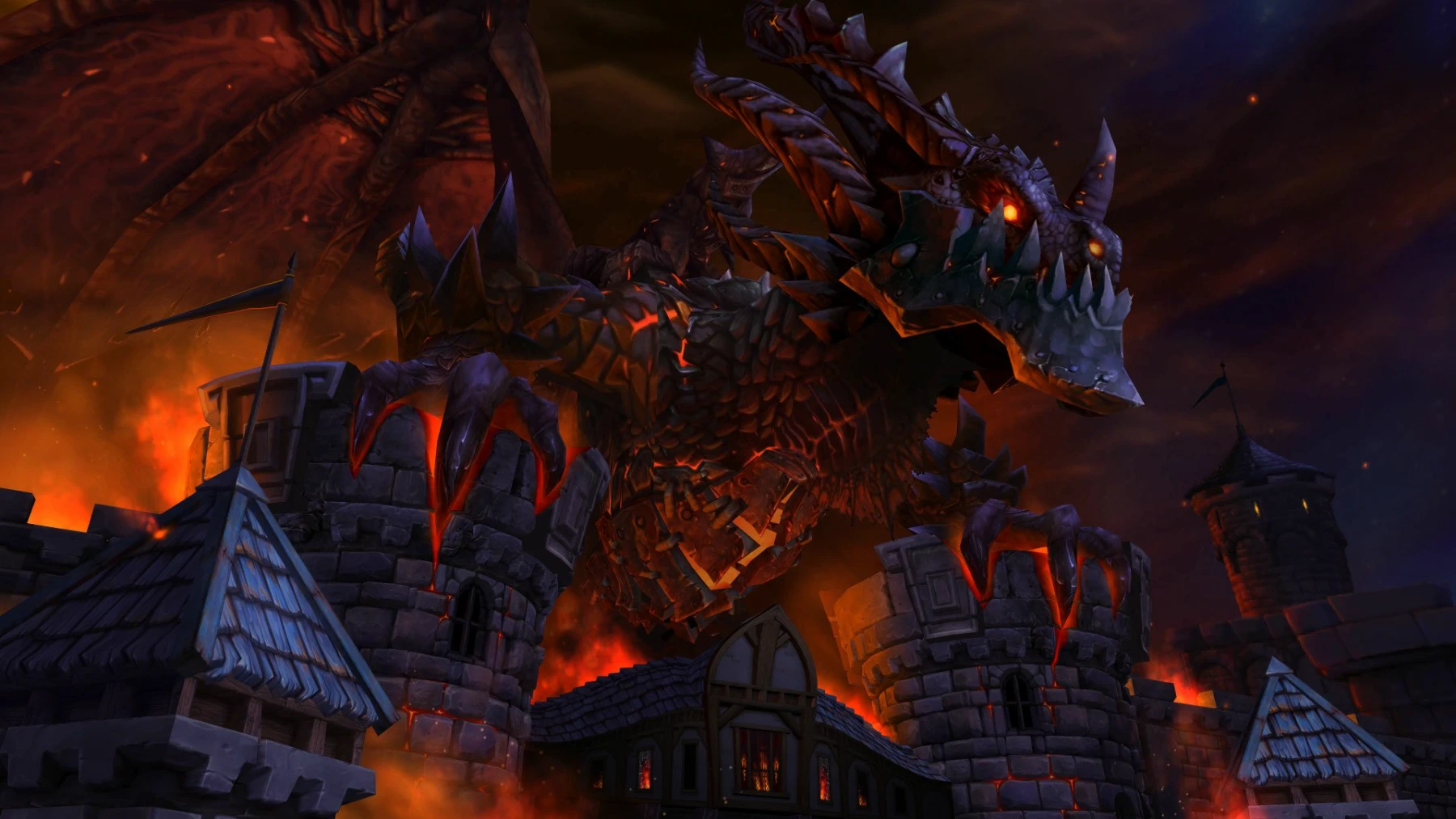
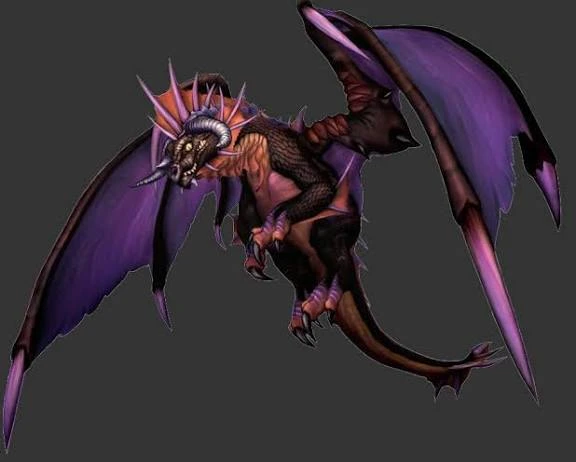
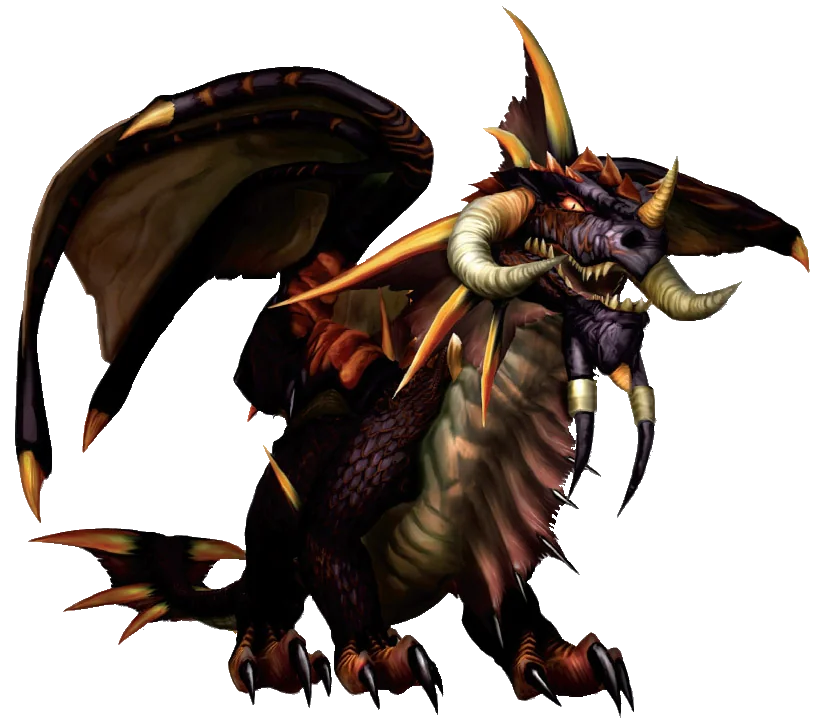
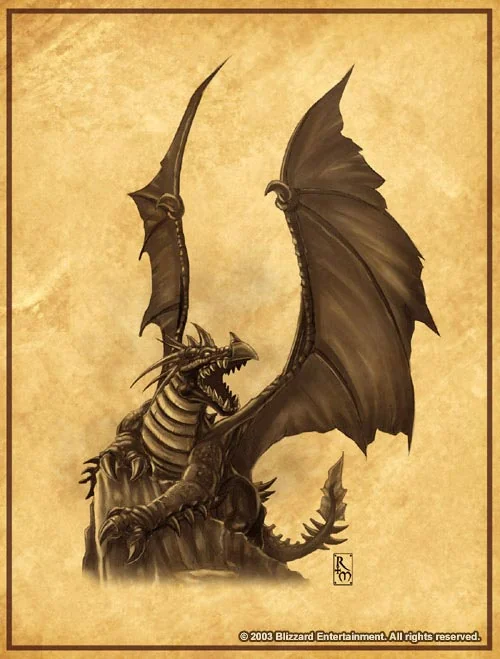
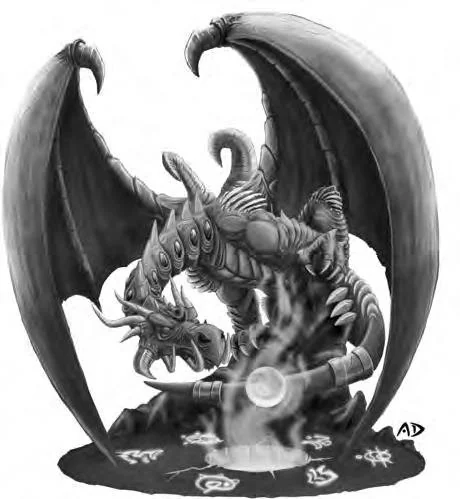
Neltharion was originally the Earth-Warder, guardian of the black dragonflight and one of the five Aspects. He betrayed the other dragons during the War of the Ancients by turning their shared power in the Dragon Soul against them and became known as Deathwing. His later schemes entangled mortal rulers and the Dragonmaw imprisonment of Alexstrasza. The Demon Soul’s destruction at Grim Batol restored the other Aspects’ power and drove him into hiding.
Krasus was the mortal guise of Korialstrasz, a red dragon whose fate was entwined with that of the Dragonqueen Alexstrasza. Rhonin, Krasus and the orc warrior Broxigar are displaced into the ancient war; this plot is part of the 2004–2005 novels. A small band of unlikely allies challenges the orcs at Grim Batol.
Rhonin was a human mage whose expedition to Grim Batol helped bring an end to the Dragonmaw's imprisonment of Alexstrasza. Rhonin, Krasus and the orc warrior Broxigar are displaced into the ancient war; this plot is part of the 2004–2005 novels. A small band of unlikely allies challenges the orcs at Grim Batol.
Vereesa Windrunner accompanied the mage Rhonin on a mission that led toward Grim Batol. There, the Dragonmaw orcs still held Alexstrasza captive with the Demon Soul. Vereesa helped Rhonin and their allies push through danger surrounding the fortress. Their efforts contributed to the Dragonqueen's release and the destruction of the artifact used to enslave her.
Onyxia inherited the cunning of the black dragonflight and the ambition of her father, Deathwing. Stormwind had already endured invasion, exile, and the difficult rebuilding that followed the First and Second Wars. The dragon's human name became bound to an age of intrigue in which the greatest danger did not announce itself from beyond the city walls.
Nefarian, son of Deathwing, claimed Blackrock Mountain as the seat of his designs. Orc clans, the remnants of the Dark Iron kingdom, and the servants of Ragnaros struggled for influence throughout the mountain. Deathwing had turned against the other dragonflights during the War of the Ancients, and his children continued to seek power over a world their father had failed to master.
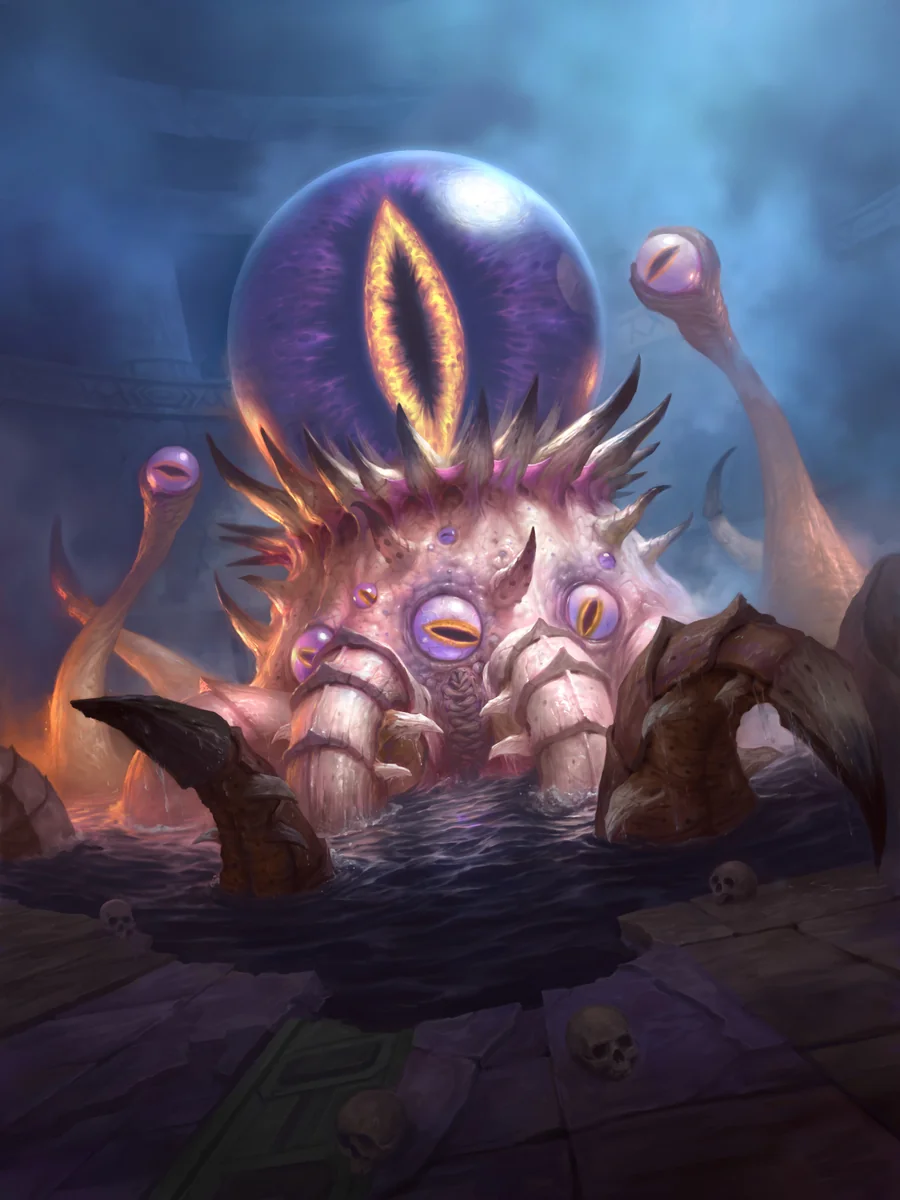
C'Thun is an ancient Old God whose influence festers beneath Ahn'Qiraj, far below the sands of southern Kalimdor. Its power lies behind the qiraji armies that once drove the night elves toward destruction in the War of the Shifting Sands. The night elves and dragonflights ended that invasion by sealing Ahn'Qiraj behind the Scarab Wall, not by destroying the threat within. As the silithid spread through Silithus, that unfinished struggle remains one of Azeroth's gravest dangers.
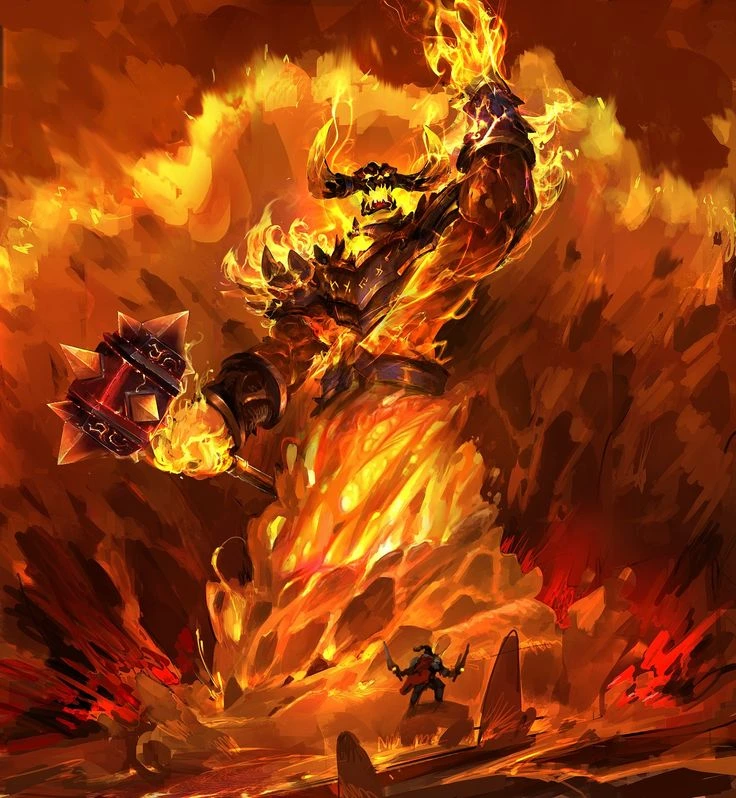
Ragnaros the Firelord is an ancient elemental ruler whose return to Azeroth ended the War of the Three Hammers in catastrophe. Desperate to defeat the Bronzebeard and Wildhammer dwarves, Sorcerer-Thane Thaurissan summoned him and unleashed a power he could not control. The eruption killed Thaurissan, raised Blackrock Mountain, and bound the surviving Dark Iron dwarves to the Firelord's will. In the years following the Third War, Ragnaros remained within the Molten Core, his fiery servants holding the depths of the mountain.
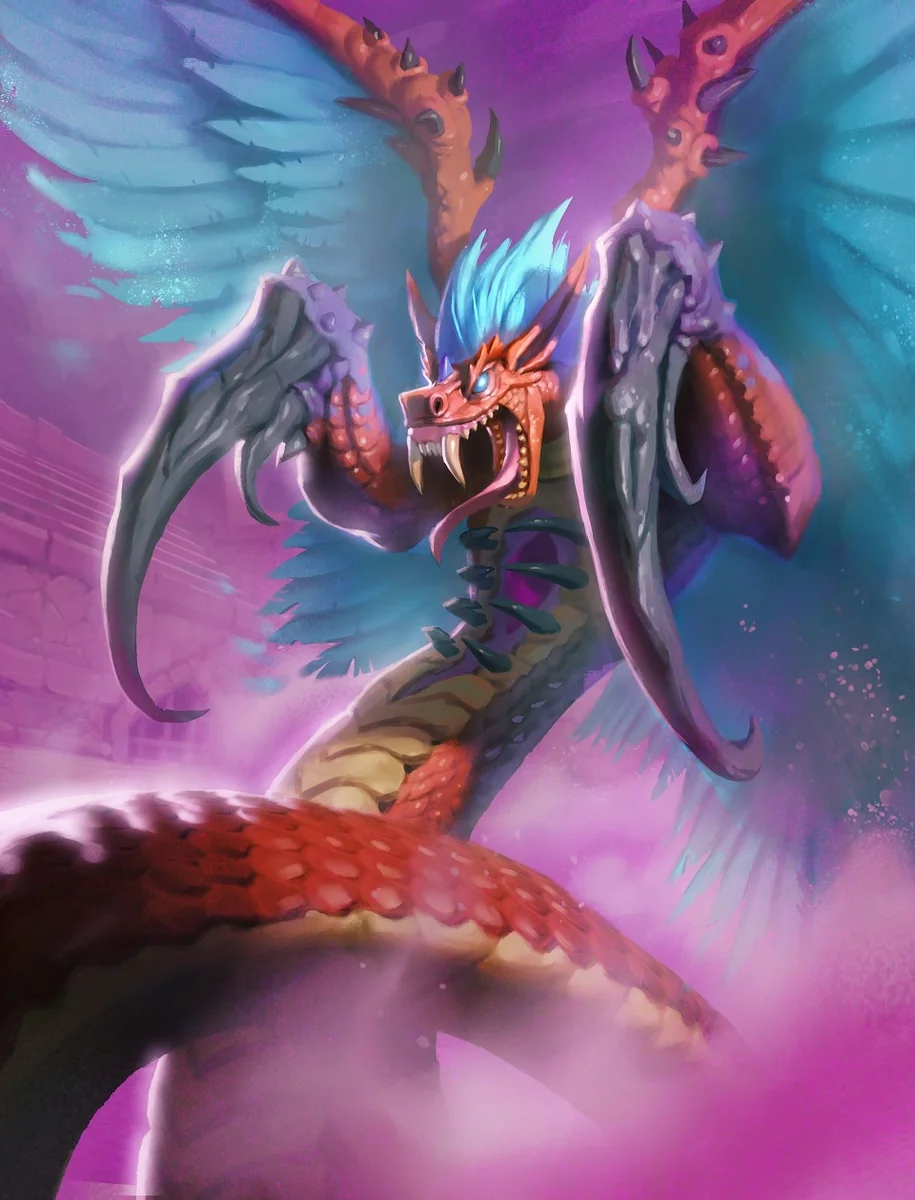
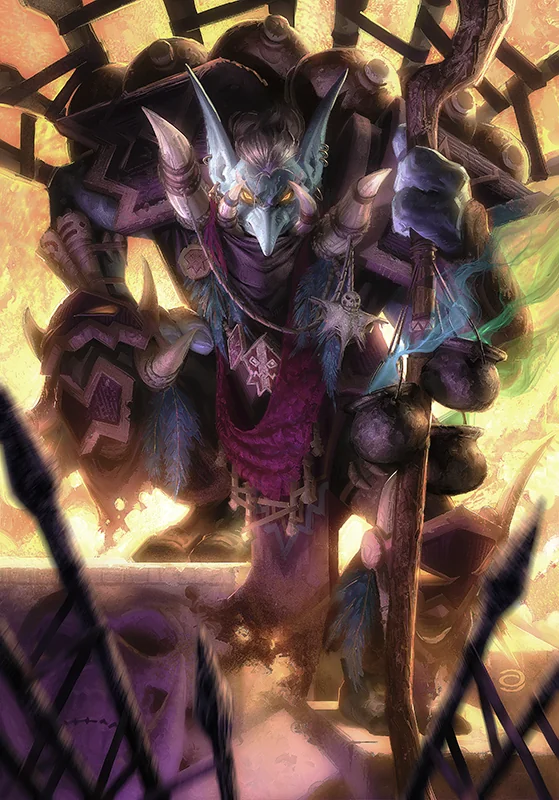
Hakkar the Soulflayer offered the desperate Gurubashi trolls terrible power in return for blood and sacrifice. The Gurubashi face Hakkar-worshipping fanatics; the Atal’ai eventually retreat to the Sunken Temple. The united trolls destroy Hakkar's avatar, devastate Zul'Gurub in the conflict, and drive the Atal'ai out of Stranglethorn.
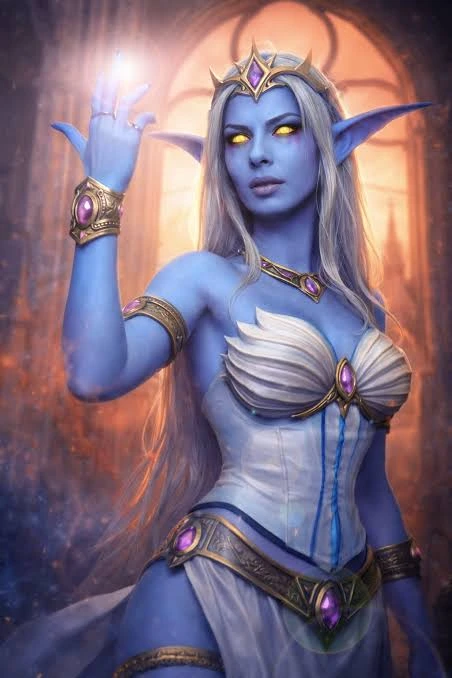
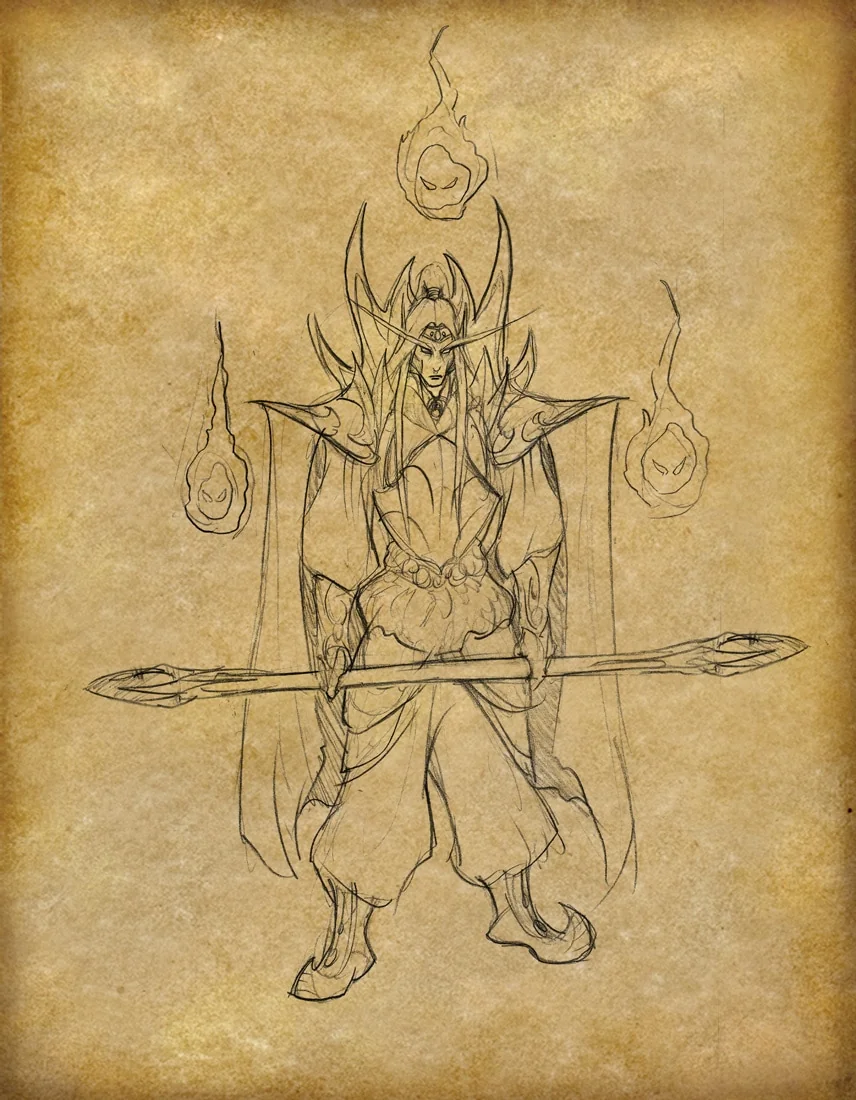
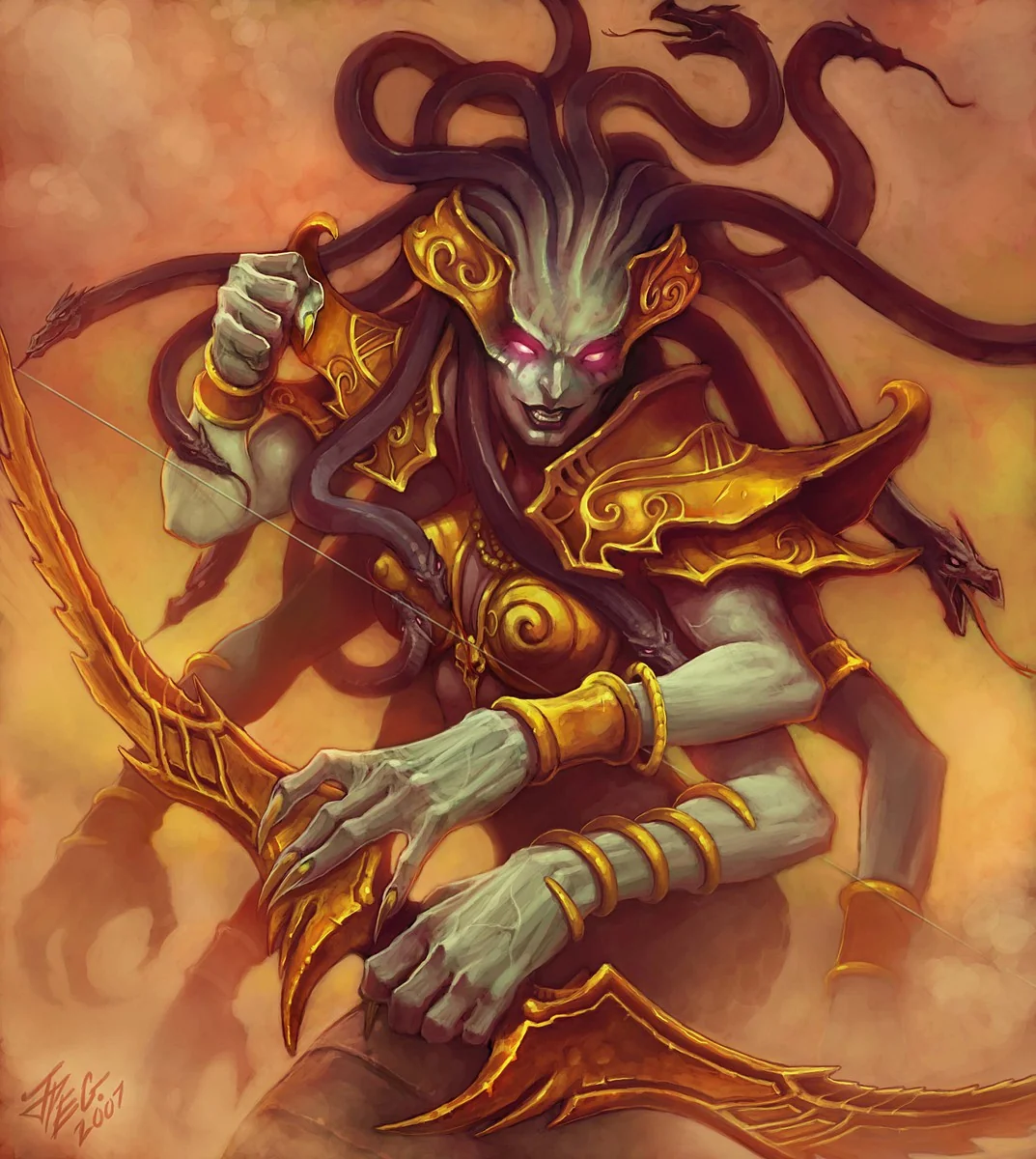
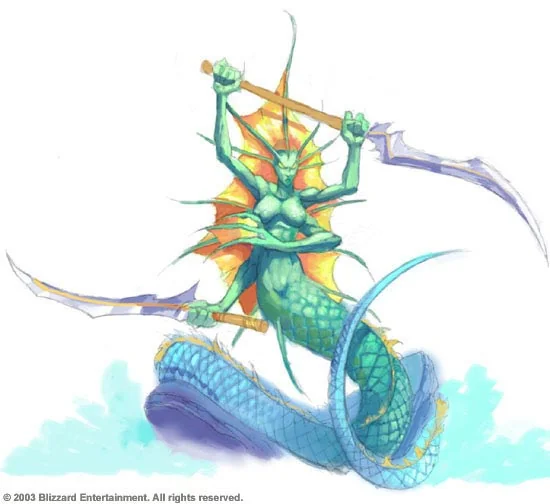
Queen Azshara ruled the ancient night elf empire beside the Well of Eternity, surrounded by powerful Highborne sorcerers. Her court accepted Sargeras's promises and opened a portal that brought the Burning Legion into Kalimdor. The War of the Ancients ended with the collapse of the Well and the Sundering of the world. The naga and ruined cities preserve the shadow of Azshara's empire, but her later designs are not established by the original WoW launch story.
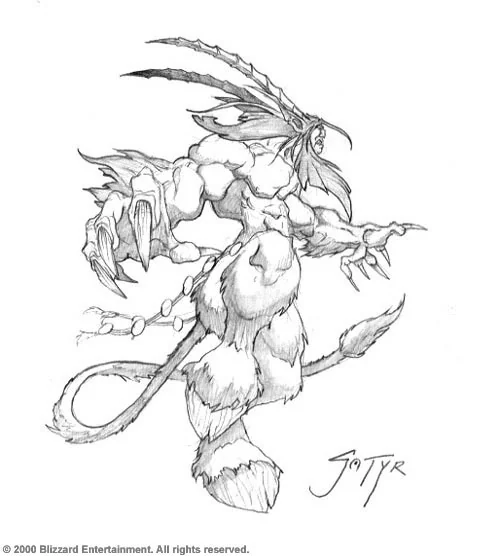
Queen Azshara's adviser helped turn a kingdom's fascination with magic into an opening for the Burning Legion. Xavius served the Highborne court in sustaining the portal at the Well of Eternity, placing him against Malfurion and the night-elven resistance. Demonic influence later transformed him into a satyr who drew other elves toward corruption. His descent connected the empire's political betrayal to the spread of a lasting demonic curse among its people.
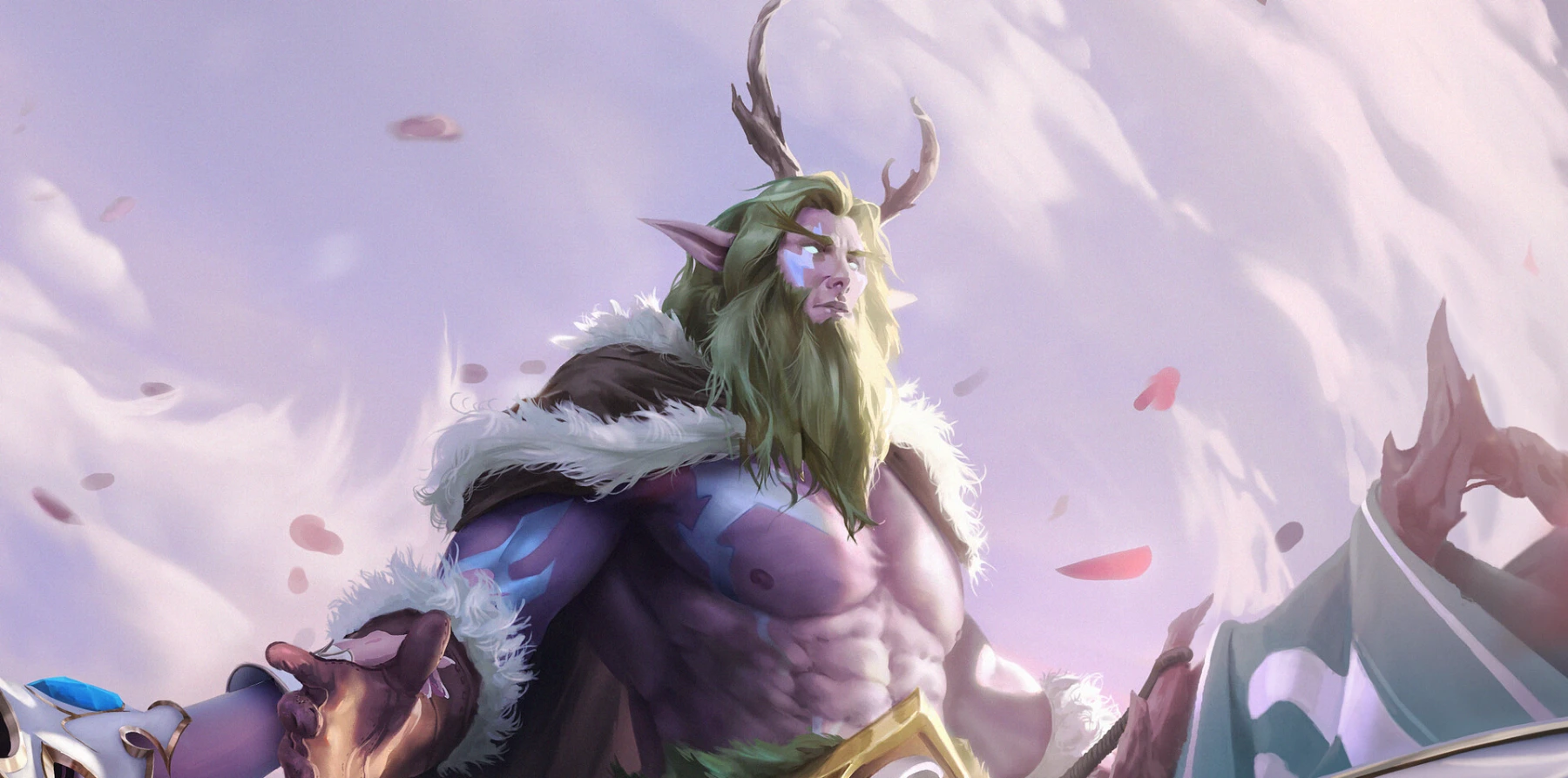
Malfurion, a student of Cenarius and one of the first great druids, helped resist the Burning Legion during the War of the Ancients. After the Sundering he opposed Illidan's second Well of Eternity and helped establish the night elves' bond to Nordrassil and the Emerald Dream. Awakened during the Third War, he led the night elves into an alliance with humans and orcs and helped destroy Archimonde at Mount Hyjal, costing his people their immortality. He later joined Tyrande and Maiev against Illidan's dangerous magic. At WoW launch his spirit is missing within the Emerald Dream; Tyrande governs while Fandral Staghelm acts as archdruid.
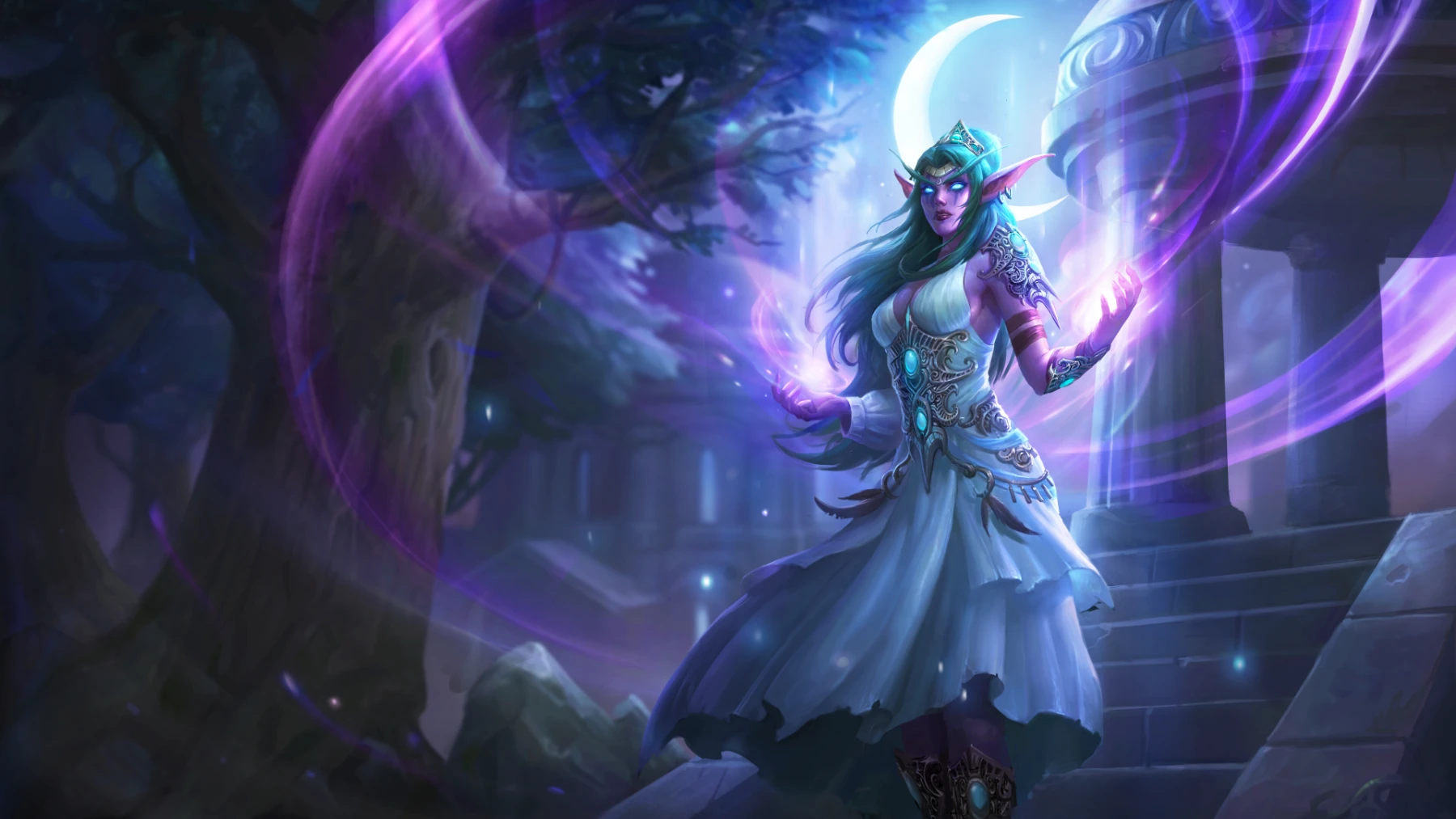
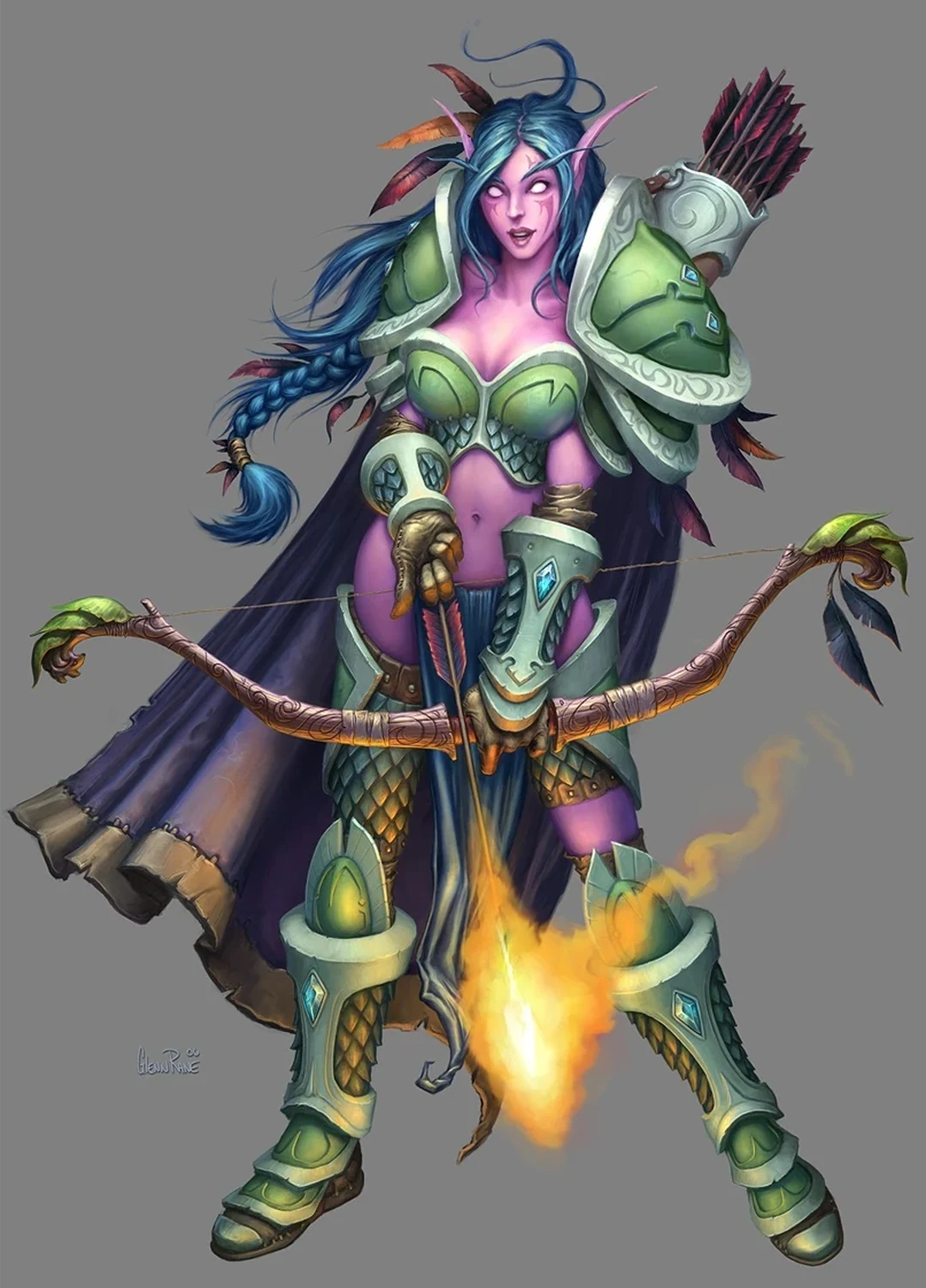
Priestess of Elune and longtime defender of the night elves, Tyrande fought in the War of the Ancients and guided the kaldorei while many druids slumbered in the Emerald Dream. During the Third War she awakened Malfurion, freed Illidan despite the Watchers' objections, and helped unite her people against the Burning Legion at Mount Hyjal. She survived Maiev's deception during the pursuit of Illidan. At the original WoW launch she leads the night elves from Darnassus, facing the loss of immortality and the demands of a world no longer kept at a distance.
Illidan, twin brother of Malfurion, sought arcane power during the War of the Ancients and created a second Well of Eternity after the Sundering, earning millennia of imprisonment. Freed by Tyrande in the Third War, he consumed the Skull of Gul'dan and defeated Tichondrius, then was banished. Pursued by Maiev, he allied with Lady Vashj's naga and Kael'thas's blood elves. Ordered by Kil'jaeden to destroy the Lich King, Illidan failed after a battle with Arthas at Icecrown. His original-era story concerns both real sacrifices and dangerous bargains; later Burning Crusade raid events are excluded.
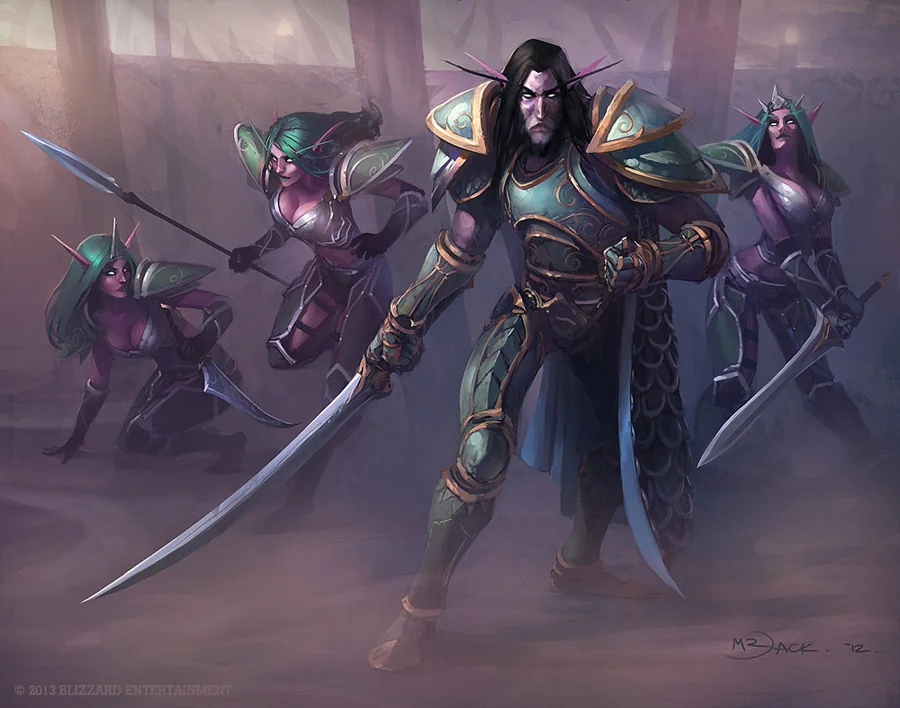
Jarod Shadowsong rose from the night-elven resistance during the War of the Ancients, when invasion and betrayal shattered the authority of Azshara's court. Following the deaths of Ravencrest and subsequent commanders, Jarod Shadowsong takes command of the night elf army. Jarod assumes the defense after command losses and works with allies from other peoples.
Shandris Feathermoon survived the War of the Ancients and rose within the night elves' military tradition. Her bond with Tyrande Whisperwind helped shape her service to the Sentinels. Long after the Sundering, she commanded the defenders of Kalimdor through new threats. Her story joins the survival of ancient kaldorei society to the armies that protected it in later ages.
Maiev Shadowsong led the Watchers assigned to guard Illidan Stormrage after the War of the Ancients. His release during the Third War turned her long duty into a relentless pursuit through the Broken Isles, Dalaran, and Outland. She fought Illidan's naga and blood elf allies, and her determination sometimes endangered cooperation with Malfurion and Tyrande. Her original-era story remains an unfinished hunt rather than the later account supplied by subsequent expansions.
Fandral Staghelm became a powerful voice among the night elves after the Third War. Signs of imbalance challenged the belief that a second tree could simply replace the first. Teldrassil became a living reminder of their determination to rebuild and of the dangers inherent in trying to restore an ancient order by command.
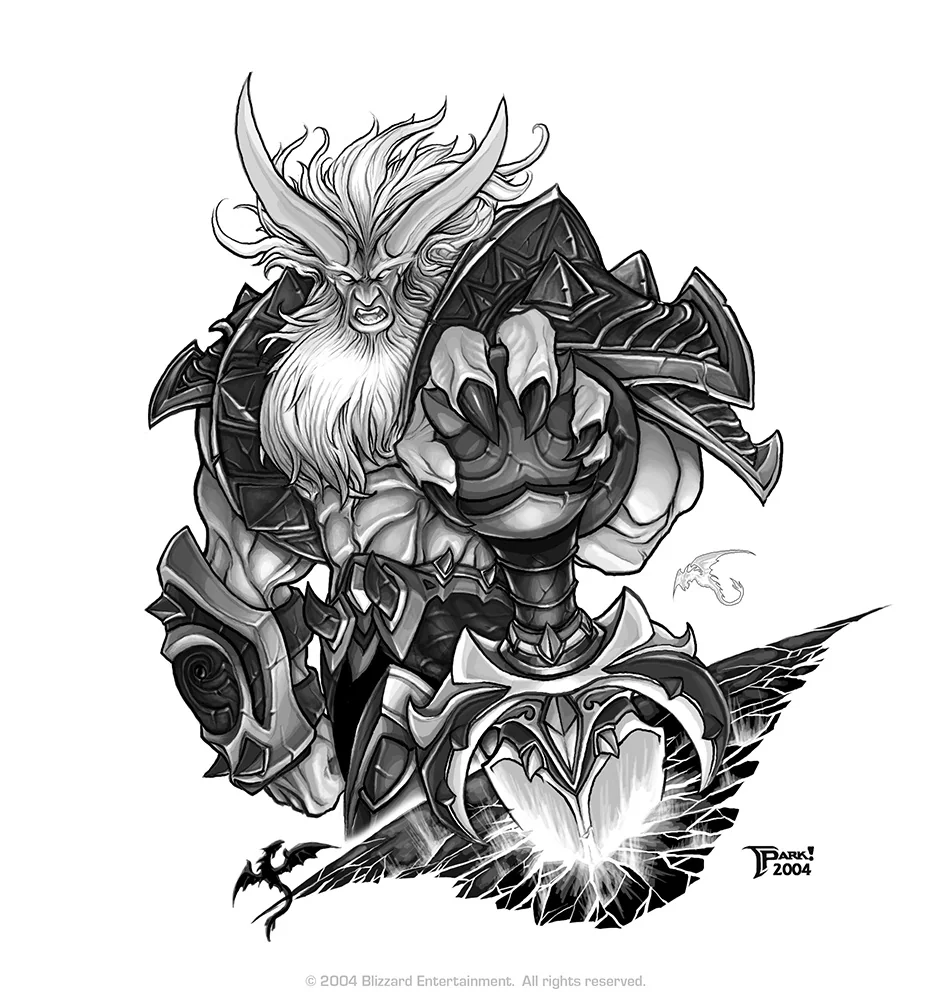
Cenarius, the demigod of the forests, helped teach Malfurion Stormrage the ways of druidism and defended Kalimdor during the War of the Ancients. When Grom Hellscream's Warsong clan began cutting Ashenvale's timber, Cenarius opposed them. Empowered by Mannoroth's blood, Grom and his warriors slew the forest guardian. His death deepened the wound between orcs and night elves even after both peoples helped defeat the Legion at Mount Hyjal.
Broxigar was an orc veteran who had survived wars against overwhelming enemies before a mysterious displacement sent him into Azeroth's distant past. Rhonin, Krasus and the orc warrior Broxigar are displaced into the ancient war; this plot is part of the 2004–2005 novels. The 2004 novel opens with three modern-era characters displaced into the ancient conflict.
Dath'Remar Sunstrider led Highborne exiles who would rather leave Kalimdor than abandon arcane magic. After the Sundering, he guided his followers across the sea toward the lands that would become Quel'Thalas. There they built a new kingdom around the Sunwell, even as conflict with the forest trolls threatened its survival. His settlement established the high elves' homeland and the royal line that would rule it for thousands of years.
Thoradin united the scattered human tribes into Arathor and established Strom as the heart of a growing kingdom. His unification transformed rival settlements into a power capable of resisting the forest trolls who threatened both humans and high elves. When Quel'Thalas sought help against the Amani, Thoradin forged an alliance that led to victory in the Troll Wars. The kingdom he built became the ancestor of the later human realms and of a magical tradition that would reshape their future.
Aegwynn was a Guardian of Tirisfal who protected Azeroth from the Burning Legion for centuries. Her apparent victory over Sargeras concealed the means by which the demon would corrupt her unborn son, Medivh. Defying the Council's demand that she surrender her office, she chose her own successor and passed on an extraordinary legacy. Her choices helped set the conditions for the opening of the Dark Portal and the First War.
Nielas Aran was a human mage and the father of Medivh, the child chosen by Aegwynn to inherit her Guardian powers. Aegwynn chooses Nielas Aran and gives birth to Medivh, inheritor of Guardian power and Sargeras’s influence. Medivh's extraordinary gifts carried a peril that neither parent fully understood.
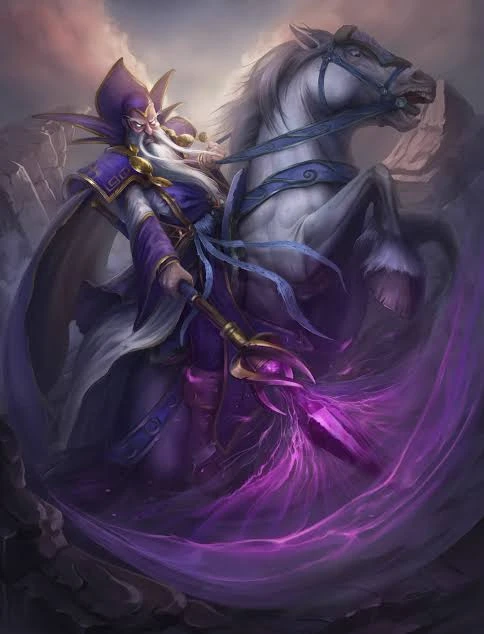
The last Guardian of Tirisfal, Medivh inherited Aegwynn's power alongside Sargeras's hidden corruption. From Karazhan he helped Gul'dan open the Dark Portal, enabling the First War. Khadgar, Garona, and Anduin Lothar uncovered his betrayal, and Medivh was killed. Resurrected before the Third War, he returned as a prophet and warned Jaina and Thrall to sail to Kalimdor. Their cooperation with the night elves helped destroy the Legion at Mount Hyjal. At launch his legacy is divided between the invasion he unleashed and the alliance that helped save Azeroth.
Llane Wrynn was king of Stormwind when the Dark Portal opened and the orcish Horde invaded the southern human kingdom. He relied on his old friend Anduin Lothar to defend the realm, while the secret corruption of another friend, Medivh, helped bring the invaders into Azeroth. Llane's confidence that Stormwind could endure faltered as the Horde strengthened and the war reached his capital. His assassination by Garona helped seal the kingdom's defeat and drove its survivors north.
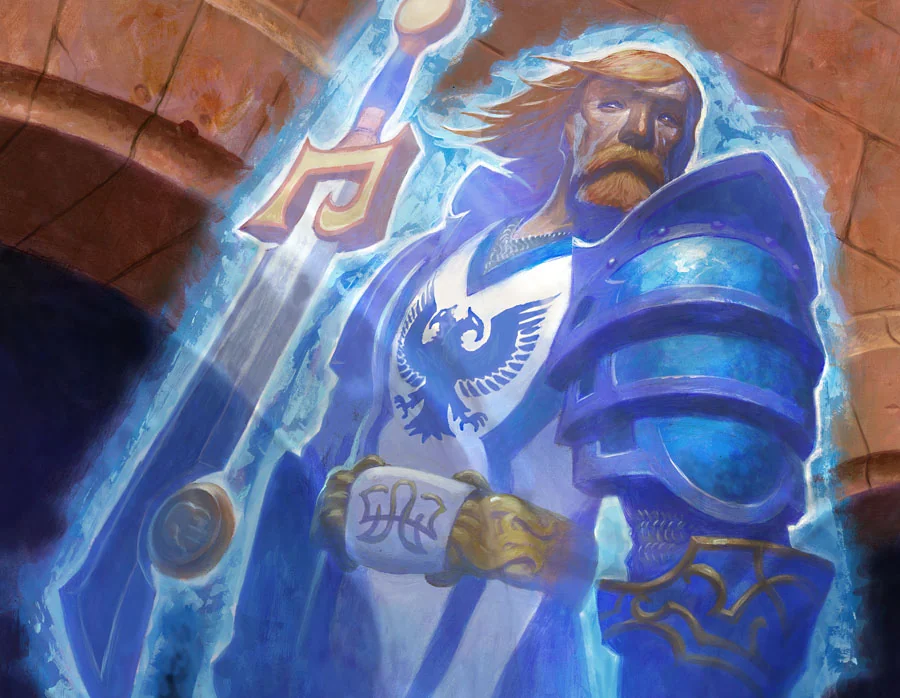
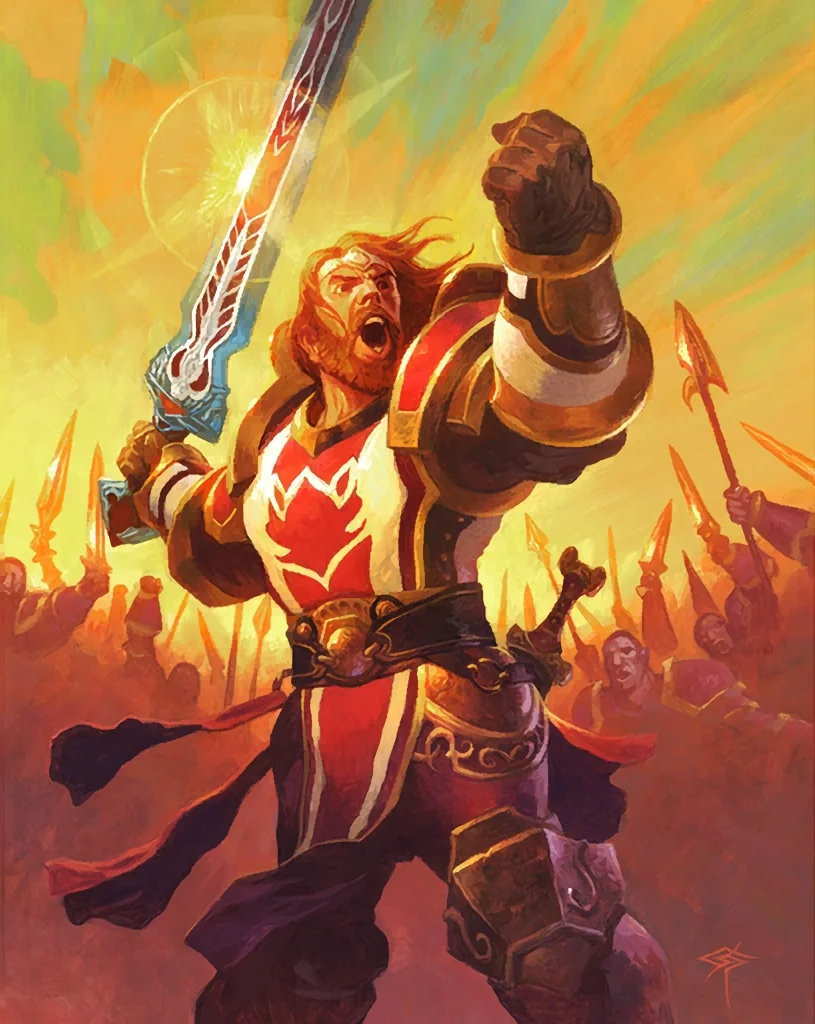
Anduin Lothar was Stormwind's great knight and commander during the First War. Friend to King Llane and Medivh, he helped expose the corrupted Guardian, then led survivors north after Stormwind fell. He organized the Alliance of Lordaeron against Orgrim Doomhammer's Horde and commanded the Second War until he was killed near Blackrock Spire. His lieutenant Turalyon rallied the Alliance to victory. The rebuilt Stormwind of WoW's launch owes much to Lothar's decision to save its people after losing their city.
Khadgar was Medivh's apprentice at Karazhan when he discovered his master's corruption and helped end the Guardian's life. He served the Alliance during the Second War and studied the Dark Portal at Nethergarde. During Beyond the Dark Portal he led efforts to stop Ner'zhul's catastrophic use of portals on Draenor. Khadgar helped seal the rift from the far side, protecting Azeroth at the cost of becoming lost with the Alliance expedition beyond the Portal.
Garona was an orcish emissary and agent caught between the Horde, the Shadow Council, and the humans she came to know during the First War. She helped Khadgar and Anduin Lothar expose Medivh's corruption, yet later assassinated King Llane of Stormwind in circumstances shaped by the council's influence. Her actions contributed to Stormwind's fall and the formation of the wider Alliance. Much of her early ancestry and later fate remains uncertain under the original-era source rules.
King Terenas sheltered Stormwind refugees and helped forge the Alliance of Lordaeron against the Horde. After the Second War, the internment of defeated orcs complicated the peace he had won. His son Arthas pursued the plague into Northrend and returned as a death knight, murdering Terenas and opening the way for the fall of Lordaeron. The ruined kingdom at World of Warcraft’s launch bears the mark of his achievements and tragic death.
A prince of Lordaeron and Uther's pupil, Arthas began as a zealous defender against the undead plague. His decision to slaughter Stratholme and his pursuit of Mal'Ganis into Northrend led him to the cursed Frostmourne, which bound him to the Lich King. He murdered King Terenas, raised Kel'Thuzad, destroyed Sylvanas's homeland, and helped summon Archimonde. After the Lich King's power faltered, Arthas returned to Icecrown and defeated Illidan. At the original WoW launch, the fallen prince has joined with Ner'zhul upon the Frozen Throne, while the Scourge still scars the lands he once protected.
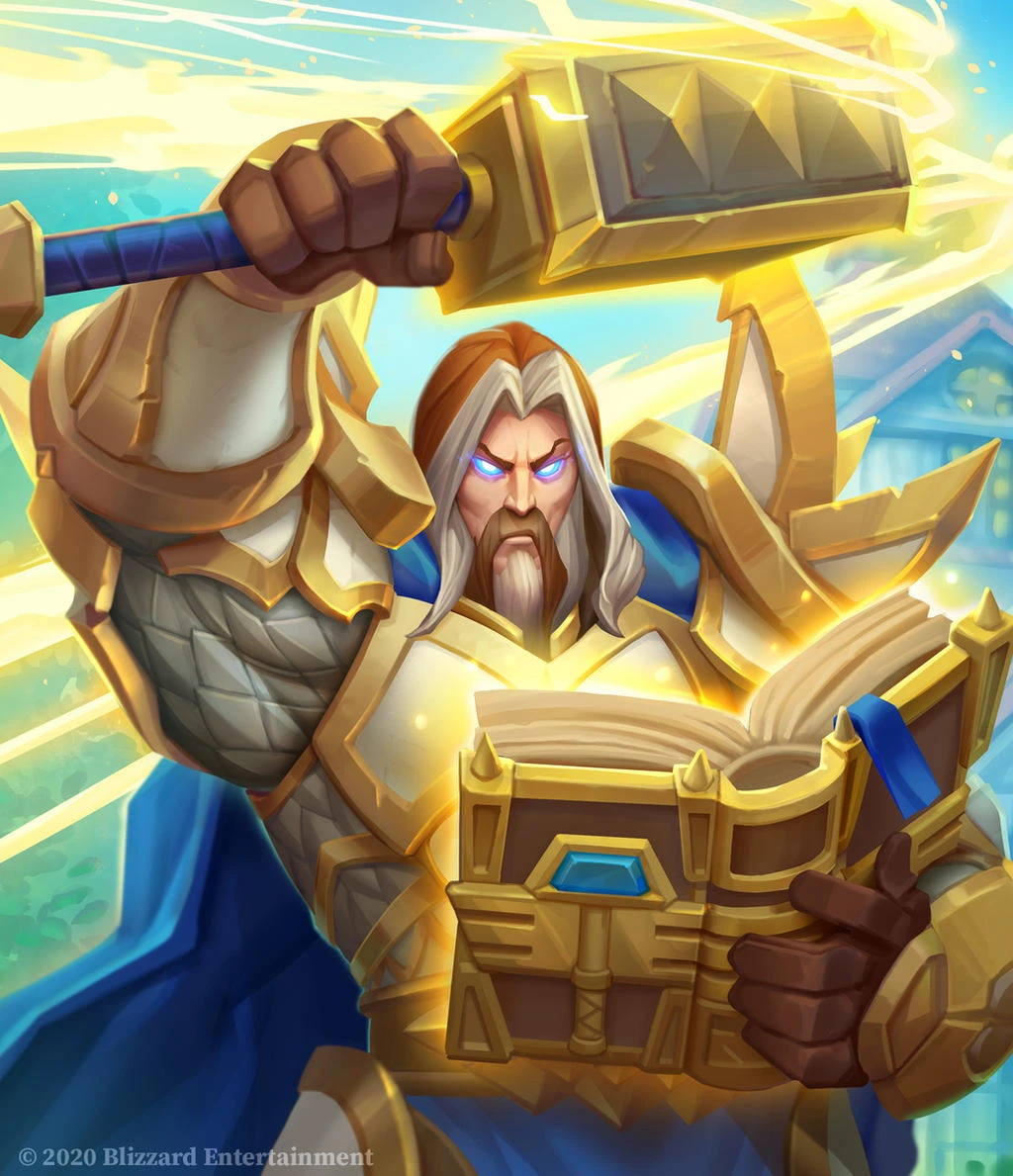
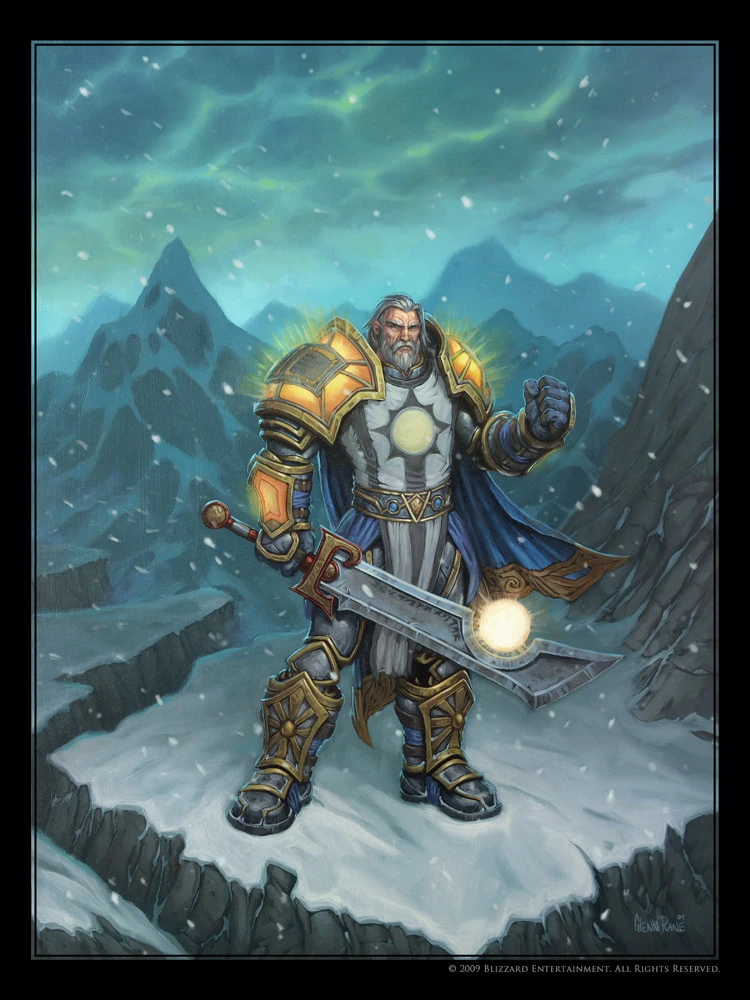
Uther the Lightbringer helped found the Knights of the Silver Hand and taught Prince Arthas the duties of a paladin. As the plague spread across Lordaeron, teacher and pupil parted over Arthas's order to purge Stratholme. After Arthas returned as a death knight and murdered King Terenas, Uther protected the king's ashes and died resisting his former student. His legacy remains a standard of conscience for those who still fight in Lordaeron's name.
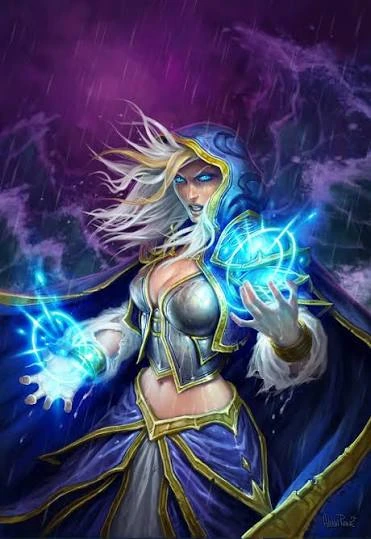
Jaina Proudmoore, daughter of Grand Admiral Daelin and a talented mage of Dalaran, helped Arthas investigate the plague but refused his massacre at Stratholme. She obeyed Medivh's warning and led human refugees to Kalimdor, where she joined Thrall and the night elves against the Burning Legion at Mount Hyjal. She established Theramore and fought to preserve peace between Horde and Alliance, even when her father's attack on Durotar forced a devastating family choice. At WoW's launch she governs the refugees of Theramore and works to prevent another war.
Antonidas was Dalaran’s venerable archmage and leader of the Kirin Tor, as well as Jaina Proudmoore’s teacher. He doubted Medivh’s warning to flee Lordaeron, trusting in the kingdoms’ and magi’s ability to withstand the coming crisis. When Arthas attacked Dalaran for the Book of Medivh, Antonidas was killed defending his city. His death preceded the summoning of Archimonde and the destruction of Dalaran.
Turalyon rose from Uther’s early paladins to become one of the Alliance’s greatest commanders after Anduin Lothar fell at Blackrock. He marched with the Sons of Lothar through the Dark Portal to stop Ner’zhul’s renewed threat. When Draenor broke apart, the expedition closed the gateway to save Azeroth and vanished beyond it. His fate remains unknown to the Alliance at the beginning of World of Warcraft.
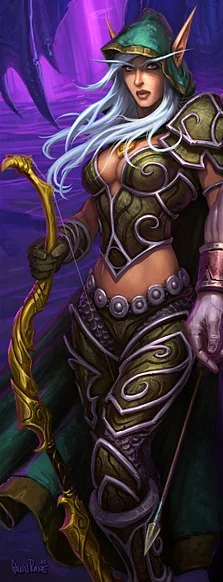
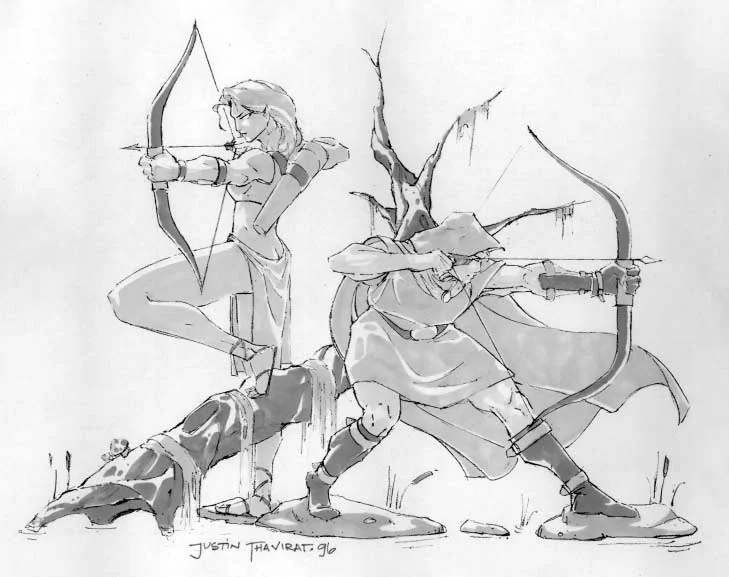
Alleria Windrunner was a ranger of Quel’Thalas whose losses in the Second War drove her to pursue the Horde. Fighting beside the Alliance and Turalyon, she became one of the Sons of Lothar who crossed into Draenor. The expedition sealed the Dark Portal amid Draenor’s destruction, leaving her missing beyond it. As the world enters World of Warcraft, her sister Sylvanas has become a leader of the Forsaken, but Alleria’s fate is still unknown.
Danath Trollbane fought for the Alliance in the wars against the orcish Horde. He belonged to Stromgarde's ruling house and became one of the commanders sent beyond the Dark Portal. The expedition sought to stop Ner'zhul from unleashing more destruction after the Second War. Danath's path carried the human struggle against the Horde onto Draenor itself.
Tirion Fordring's faith faced its severest test when an orc showed him the honor his own countrymen denied their enemies. He protected Eitrigg despite the demands of his fellow paladins, sacrificing his position in the Silver Hand rather than breaking his word. Exile could not extinguish his belief that the Light required mercy as well as courage. His decision later stood in sharp contrast to the intolerance spreading among Lordaeron's embattled survivors.
Aedelas Blackmoore was the human officer who found the orphaned Thrall and raised him as a captive. The infant Thrall is found by Aedelas Blackmoore and raised under his control. Defeated orcs become prisoners of the Alliance, and Blackmoore secretly raises Thrall.
Taretha Foxton befriended Thrall while both lived under Aedelas Blackmoore's control at Durnholde. She secretly helped him learn, endure captivity, and eventually escape. When Thrall returned to free the imprisoned orcs, she tried to prevent another bloodshed. Blackmoore executed her, and her death preceded Thrall's assault on Durnholde.
Daelin Proudmoore commanded the seafaring kingdom of Kul Tiras and its powerful navy through the wars against the Old Horde. After the fall of Lordaeron, his search for his daughter Jaina brought him to Theramore, where he discovered a fragile peace with Thrall's orcs. Convinced that the Horde could never change, he attacked Durotar and drew Kalimdor into another war. Jaina helped prevent the destruction of Thrall's nation, but could not prevent her father's death.
Bolvar Fordragon assumed the burden of governing Stormwind when King Varian Wrynn disappeared. He served as regent for the young Anduin, trying to hold together a kingdom already strained by internal rebellion and threats at its borders. Lady Katrana Prestor's influence complicated decisions at court. Bolvar's position made him central to the kingdom's uneasy survival rather than its distant wars.
Anduin Wrynn was the young prince of Stormwind in the original World of Warcraft era, heir to a kingdom still recovering from the First War. His father, King Varian, was absent, and the kingdom's government faced pressures from within as well as beyond its borders. The restored capital stood atop memories of King Llane's assassination and Anduin Lothar's desperate defense. The prince represented the future of the Wrynn dynasty amid a fragile peace.
Edwin VanCleef led the stonemasons who helped rebuild Stormwind after its destruction in the First War. When the city's nobles refused to pay the workers, the dispute broke into bitterness and violence. VanCleef formed the Defias Brotherhood from the betrayed laborers and their allies. The rebellion turned the kingdom's own reconstruction into a threat from within.
Renault Mograine commanded within the Scarlet Crusade at Scarlet Monastery as Lordaeron's survivors fought the Scourge. The order's defense of the living had hardened into fanaticism and distrust of outsiders. His name also tied the Crusade to the Mograine family and the celebrated Ashbringer, while Scarlet Monastery continued to stand as one of the order’s greatest bastions.
A brilliant Dalaran archmage, Kel'Thuzad embraced forbidden necromancy and answered the call of Ner'zhul, the Lich King. He founded the Cult of the Damned, which prepared Lordaeron for the undead plague. Arthas killed him as a prince, then resurrected him at the Sunwell as a death knight serving the Scourge. Restored as a lich, Kel'Thuzad used the Book of Medivh to summon Archimonde, helping turn the Third War into a catastrophe for Azeroth.
Anub'arak once ruled the nerubians beneath Northrend, until the Lich King's armies defeated and raised him. Forced to serve the enemy that conquered his kingdom, he became a powerful commander of the Scourge. When Arthas returned north to defend the Frozen Throne, Anub'arak guided him through Azjol-Nerub. Their passage helped Arthas reach Icecrown before Illidan's forces could destroy the Lich King.
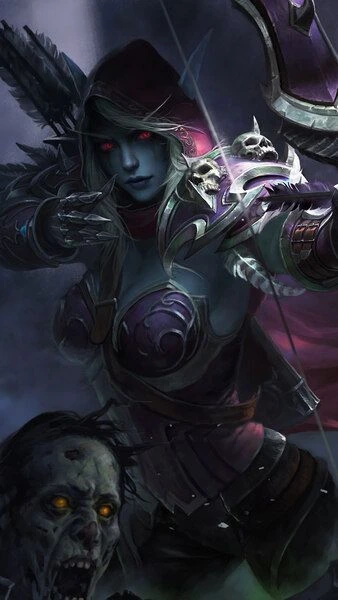
As Ranger-General of Silvermoon, Sylvanas defended Quel'Thalas against Arthas but was murdered and enslaved as a banshee. When the Lich King's grip weakened, she regained her will and attempted to kill Arthas. She defeated rival dreadlords in Lordaeron, formed the free-willed Forsaken, and established their rule beneath the ruined capital in the Undercity. At the original WoW launch she leads an uneasy Horde ally committed to securing her people against the Scourge, the Scarlet Crusade, and the possibility of enslavement again.
Kael'thas, prince of Quel'Thalas and a mage of the Kirin Tor, led the blood elves after Arthas devastated Silvermoon and defiled the Sunwell. Fighting the Scourge alongside Alliance survivors, he encountered Garithos's prejudice and accepted aid from Lady Vashj's naga. Condemned for that association, he escaped to Outland and pledged his followers to Illidan for help with their magical hunger. His forces helped take the 2003 Frozen Throne Black Citadel and later failed to stop Arthas at Icecrown. Later Burning Crusade plots are outside this biography.
Anasterian Sunstrider ruled Quel'Thalas as the high elves defended their kingdom against the wars of the wider world. During the Second War, the Horde's invasion damaged the forests and threatened the kingdom's borders. Years later, Arthas brought the Scourge against Silvermoon and the Sunwell. Anasterian stood against the invasion but fell as the high elven kingdom was broken.
Lady Vashj was a naga leader who emerged as an ally of Illidan Stormrage in the aftermath of the Third War. She assisted his struggle against the forces pursuing him and became involved in the conflict surrounding the Eye of Sargeras. Her naga later helped Prince Kael'thas and the blood elves resist the Scourge. When Garithos condemned the elves for accepting that help, Vashj intervened in their escape.
Dar'Khan Drathir was a magister of Quel'Thalas whose betrayal helped bring ruin upon his own people. Dar'Khan abandoned his allegiance to the elven kingdom and aided the invaders. Its ruler and countless defenders fell, the Sunwell was lost, and the remaining elves struggled with the consequences of dependence on its magic.
Kalecgos belonged to the blue dragonflight, whose ancient charge was the care of magic. Kalecgos became involved with the struggle surrounding the Sunwell after the Scourge had ruined Quel'Thalas. The danger was not simply that an enemy might seize a powerful object.
Anveena Teague appeared to be an ordinary young woman, but her origins concealed a mystery bound to the Sunwell's surviving power. The first installment of The Sunwell Trilogy introduces Kalec’s quest and Anveena’s mystery. Two pre-BC-published Sunwell stories follow a blue dragon and a mysterious human girl.
Tyrygosa's story links the blue dragonflight's guardianship of magic with the devastation of Quel'Thalas. The destruction of the Sunwell left consequences that reached far beyond the surviving blood elves. Her involvement belongs to the early Sunwell stories, while her later fate remains outside this historical account.
Jorad Mace was a paladin drawn into the dangers surrounding the shattered Sunwell and the dragonflights. The Scourge's destruction of the northern kingdoms had left survivors searching for allies and security amid powerful magic. His journey forms part of the early Sunwell narrative without assuming what came afterward.
Modimus Anvilmar was the last high king able to hold the three great dwarven clans beneath a single crown. The Bronzebeard, Wildhammer and Dark Iron factions coexist under Anvilmar despite increasing tensions over authority and territory. Anvilmar’s death ends an uneasy balance among three rival clan leaderships.
Madoran Bronzebeard led his clan through the civil war that followed High King Anvilmar's death. Anvilmar's divided kingdom fractures; Thaurissan and Modgud confront Madoran and Khardros in a war that unleashes the Firelord. The Bronzebeards fought to keep Ironforge as the Wildhammers and Dark Irons sought their own futures.
Khardros Wildhammer led his displaced people from Ironforge to Grim Batol, determined to establish a home for his clan. Thaurissan's wife Modgud leads the Dark Iron assault; Khardros Wildhammer kills her during the city's desperate defense. Anvilmar's divided kingdom fractures; Thaurissan and Modgud confront Madoran and Khardros in a war that unleashes the Firelord.
Sorcerer-Thane Thaurissan refused to accept Dark Iron defeat after the struggle for Ironforge. Sorcerer-Thane Thaurissan leads the Dark Iron clan to the Redridge Mountains and establishes a settlement named after himself. The Dark Iron exile, settlement, and renewed war unfold before Ragnaros is called.
Modgud was the Dark Iron sorceress whose assault on Grim Batol helped turn the War of the Three Hammers into a catastrophe. Thaurissan's wife Modgud leads the Dark Iron assault; Khardros Wildhammer kills her during the city's desperate defense. Anvilmar's divided kingdom fractures; Thaurissan and Modgud confront Madoran and Khardros in a war that unleashes the Firelord.
Magni Bronzebeard ruled Ironforge while the dwarves balanced ancient clan divisions, dangerous discoveries, and allegiance to the human kingdoms. His brother Muradin's disappearance in Northrend brought distant events of the Third War into the heart of his family. The abduction of his daughter Moira by the Dark Iron emperor renewed a feud rooted in the War of the Three Hammers. From Ironforge's throne Magni defended his people, but the deepest dangers to his kingdom were both political and personal.
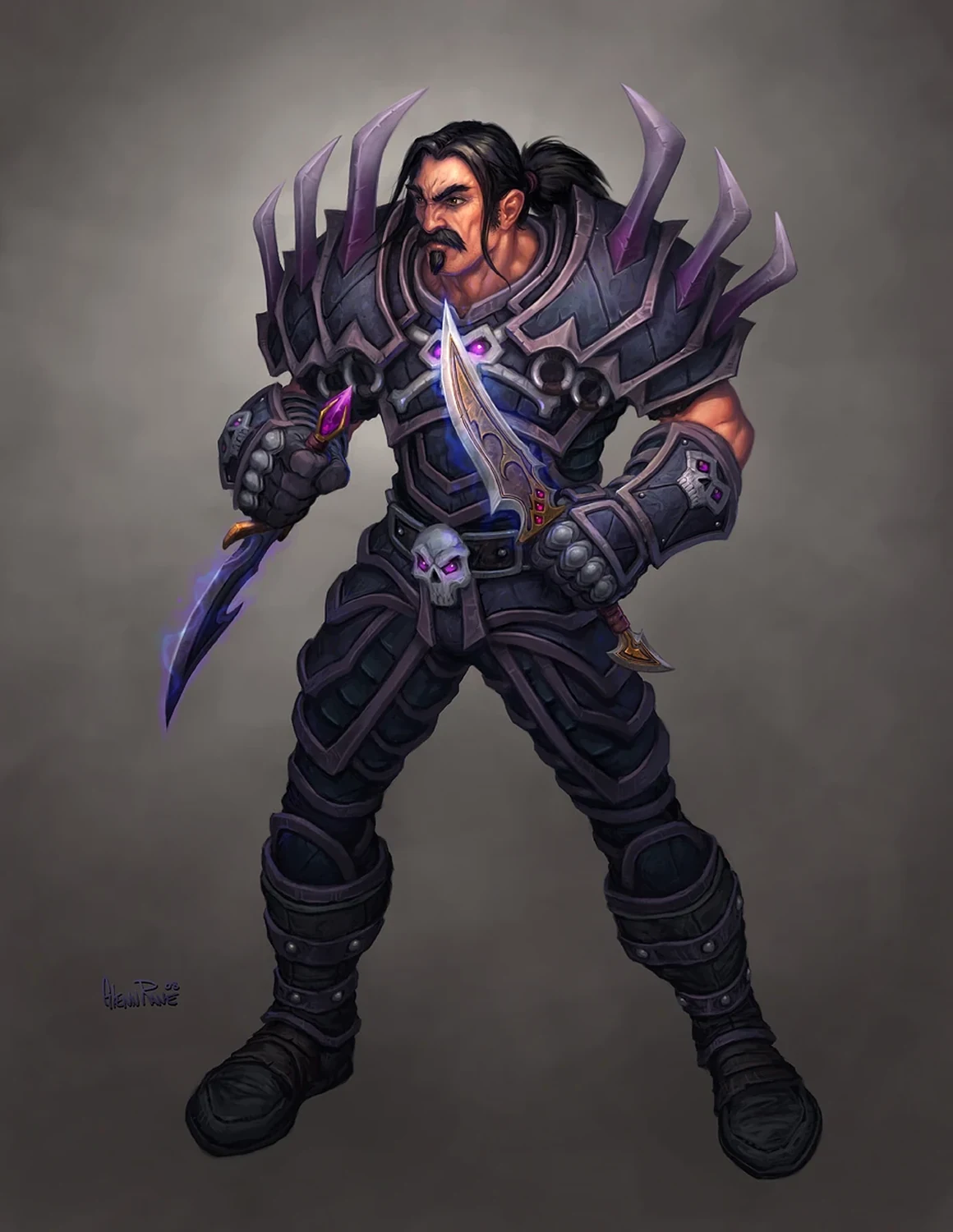
Muradin Bronzebeard, brother of King Magni, represented Ironforge at Lordaeron's court and taught the young Prince Arthas the art of fighting. He also helped establish the dwarves' Explorers' Guild, seeking answers about the world beyond the mountain kingdom. Years later, Arthas encountered his old friend in Northrend, where Muradin's expedition had been hunting the runeblade Frostmourne. Muradin warned that the weapon was cursed, but Arthas claimed it anyway, leaving his mentor apparently dead and his family grieving.
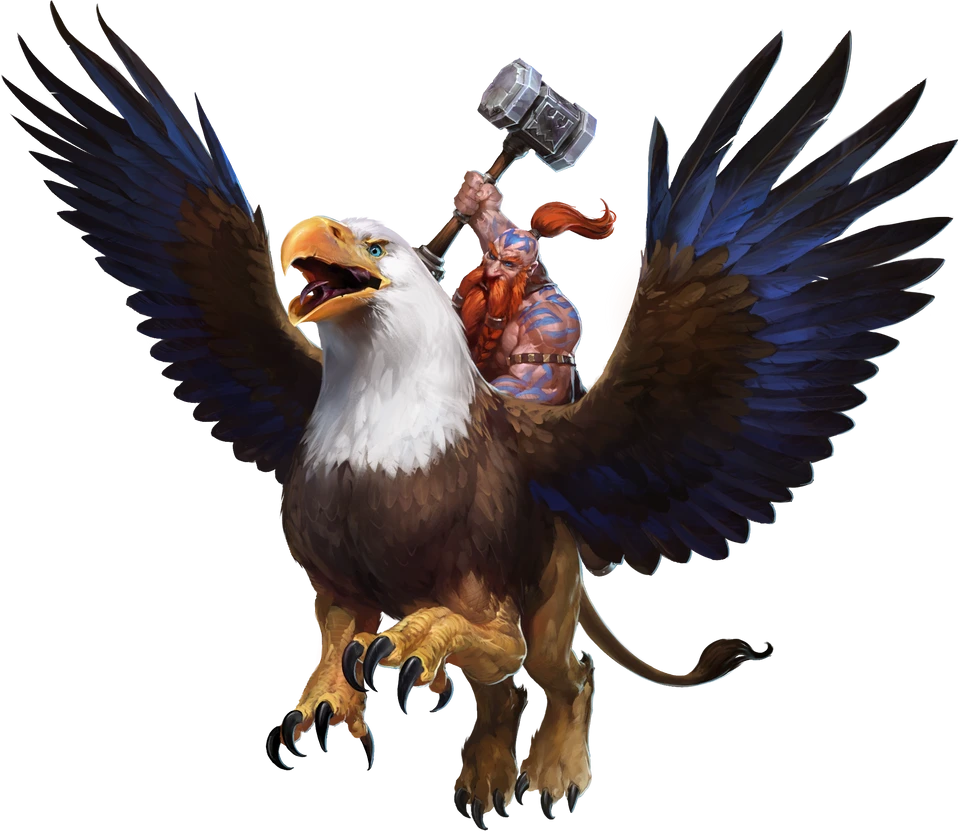
Kurdran Wildhammer was a celebrated gryphon rider whose partnership with Sky'rie made him a formidable foe of dragons and orcish armies. Turalyon, Khadgar, Alleria, Kurdran, and Danath help lead the Sons of Lothar. Kurdran and his gryphon fight for the Alliance; Kurdran later joins the expedition.
Falstad Wildhammer emerged from the long tradition of gryphon riders who defended the Wildhammer dwarves after their exile from Grim Batol. When the mage Rhonin undertook a perilous journey toward Grim Batol, Falstad and other gryphon riders became involved in the expedition. With the dragon queen freed, the orcs lost their most terrible means of breeding and controlling red dragons for war.
Gelbin Mekkatorque led Gnomeregan when a trogg invasion overwhelmed its defenses. On Sicco Thermaplugg's advice, he authorized the release of radiation intended to stop the attackers. The plan devastated the gnomes as well as their enemies. Mekkatorque led the survivors to Ironforge, carrying the burden of a decision that cost his people their capital.
Sicco Thermaplugg stood close to Gnomeregan's leadership before the city was lost. The defenders could not hold every tunnel against the creatures burrowing through their works. Twisted by the radiation, he remained amid the ruins and proclaimed himself ruler over the leper gnomes.
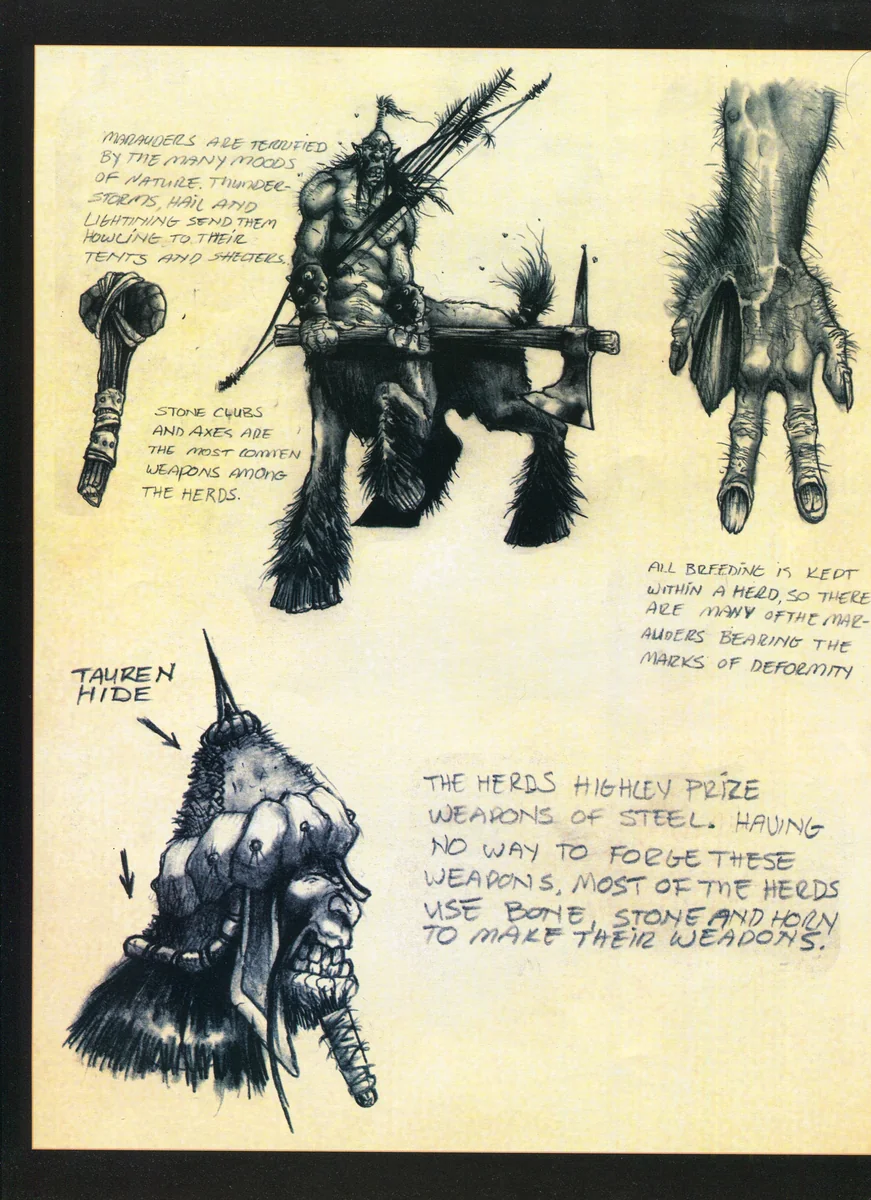
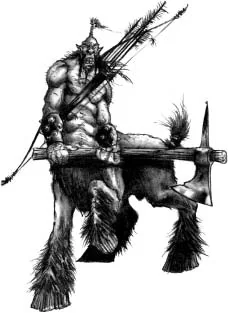
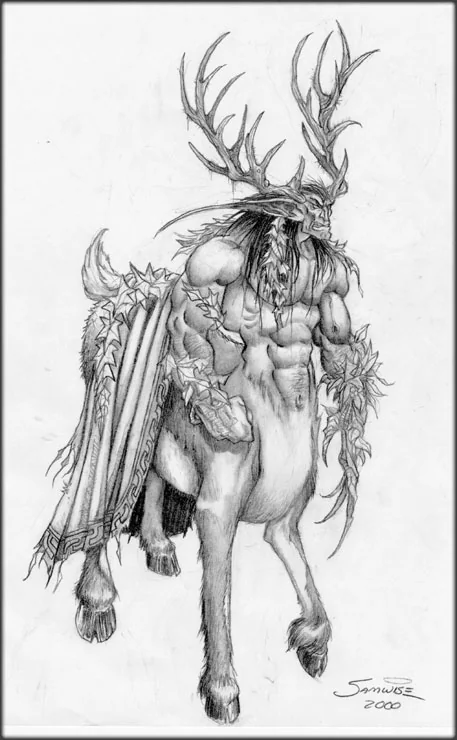
Zaetar, a son of Cenarius, became entangled with Princess Theradras, a powerful being of earth. The centaur drive tauren migrations on Kalimdor; Maraudon lore links Theradras and Zaetar to the centaur. The family of Cenarius and the forbidden union of Zaetar and Theradras produce the centaur whose expansion devastates tauren homelands.
The union crossed the boundaries between elemental power and the natural guardians of the world, and its consequences extended far beyond the caverns where Theradras dwelt. Theradras remained associated with the deep places of Maraudon, where his spirit and the taint of earth magic became entangled. The rise of the centaur thus began as an ancient family tragedy and developed into a crisis that shaped an entire people.
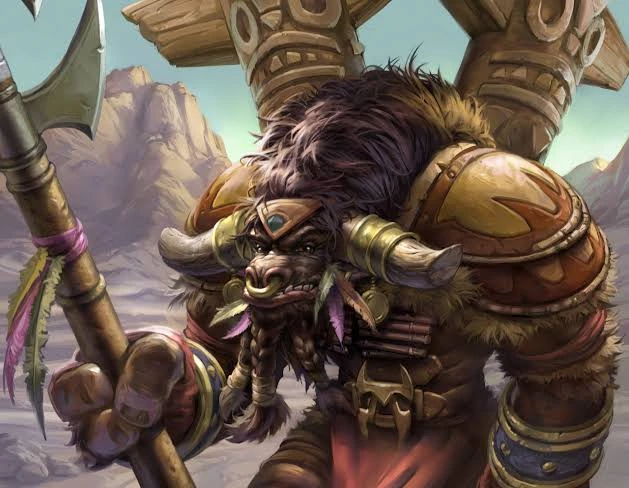
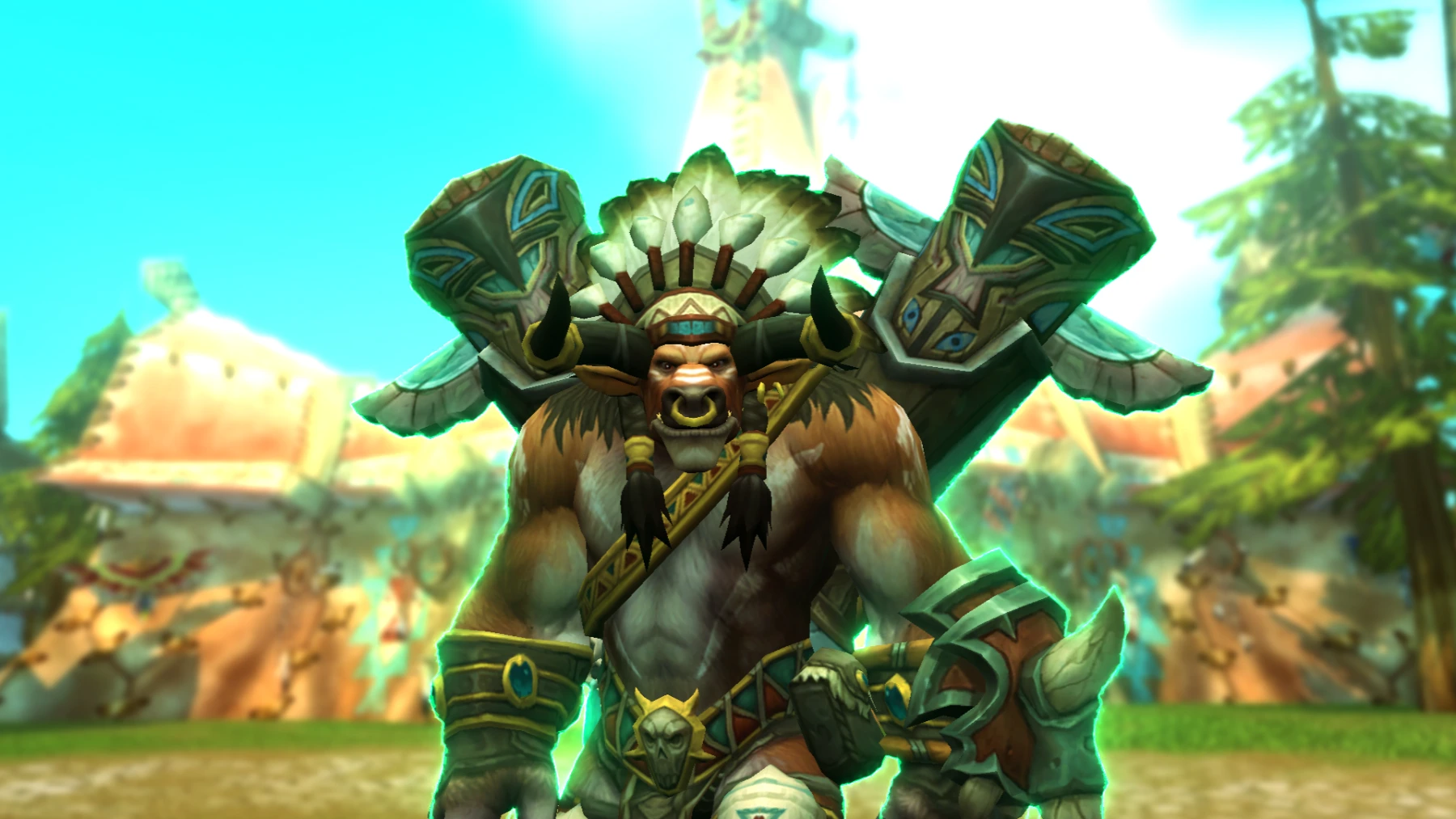
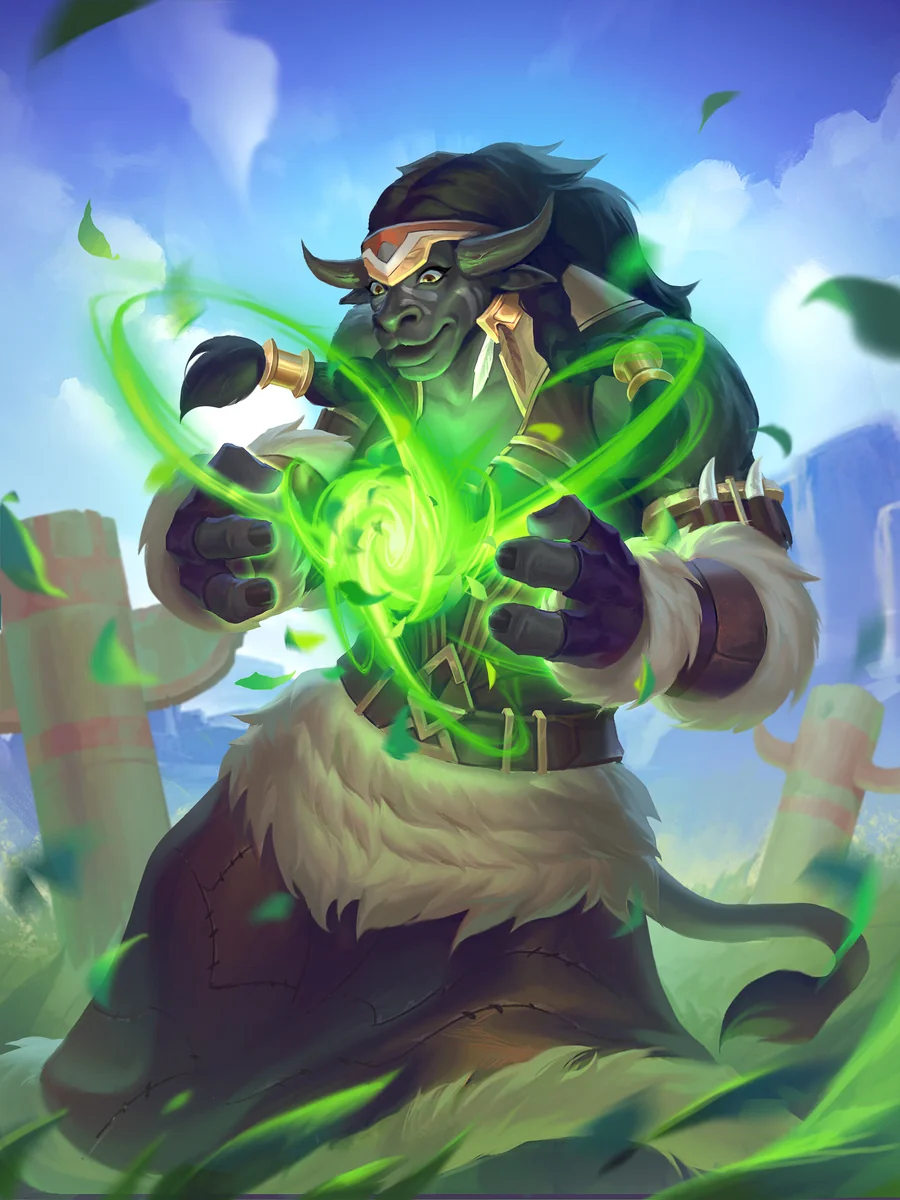
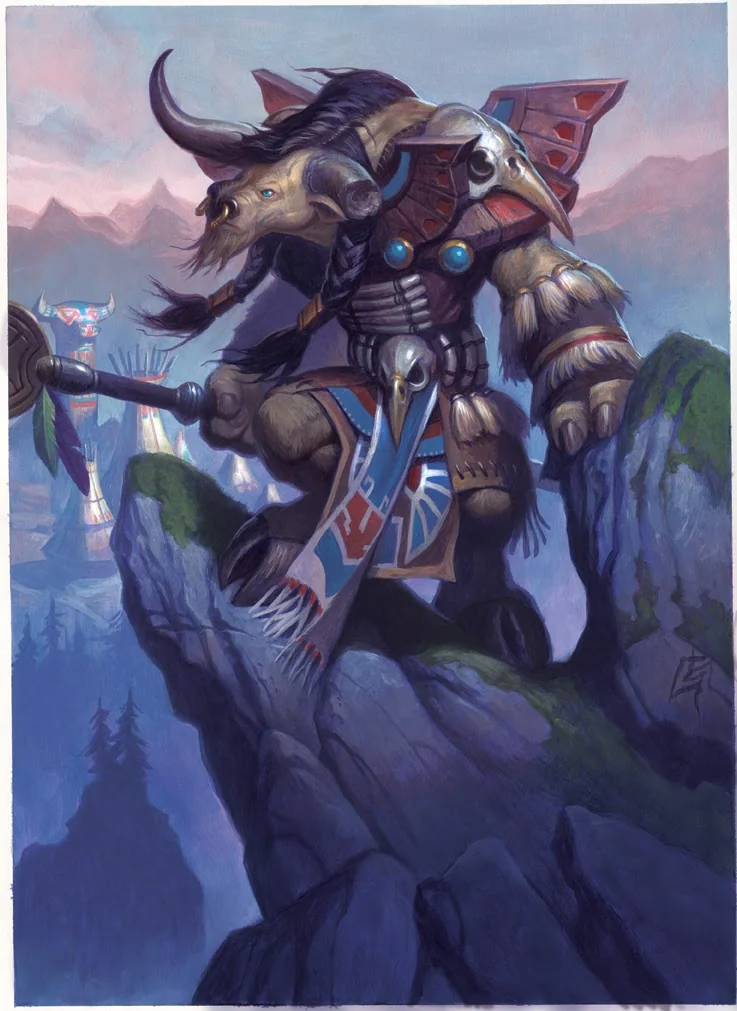
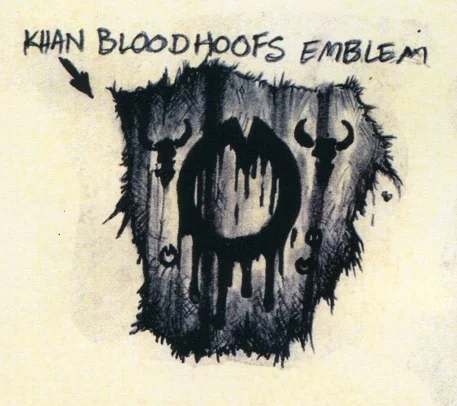
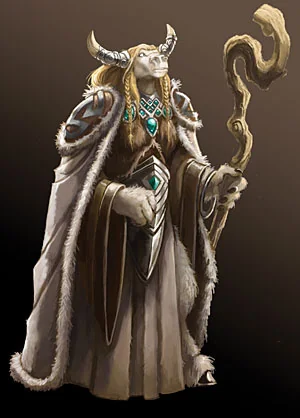
Cairne Bloodhoof led the tauren against the centaur and helped his people establish a lasting home in Mulgore. He befriended Thrall during the Horde's journey across Kalimdor and became one of the new Horde's wisest allies. Cairne supported the defense of Mount Hyjal and later aided Rexxar during the conflict over Durotar. By World of Warcraft's launch he ruled from Thunder Bluff, embodying the Horde's hope for strength without demonic conquest.
Baine Bloodhoof was the son of Cairne, leader of the tauren who allied with Thrall's Horde. During the campaign, Rexxar helps Cairne rescue his son Baine amid escalating threats to the Horde. Rexxar assists Cairne during the dangers confronting the new Horde homeland.
Magatha Grimtotem is an influential tauren elder and a leading voice for the Grimtotem tribe during Cairne Bloodhoof's rule. As Cairne gathered scattered tribes under his authority at Thunder Bluff, the Grimtotem represented persistent internal dissent. Her contemporary significance is political opposition and contested loyalty within the tauren tribes.
Hamuul Runetotem had been a friend of Cairne Bloodhoof since childhood, sharing the uncertainties of tauren life before the tribes found safety in Mulgore. Malfurion taught him the disciplines of druidism, and Hamuul's learning won him a place within the Cenarion Circle. Returning to the tauren, he taught others to follow the same path.
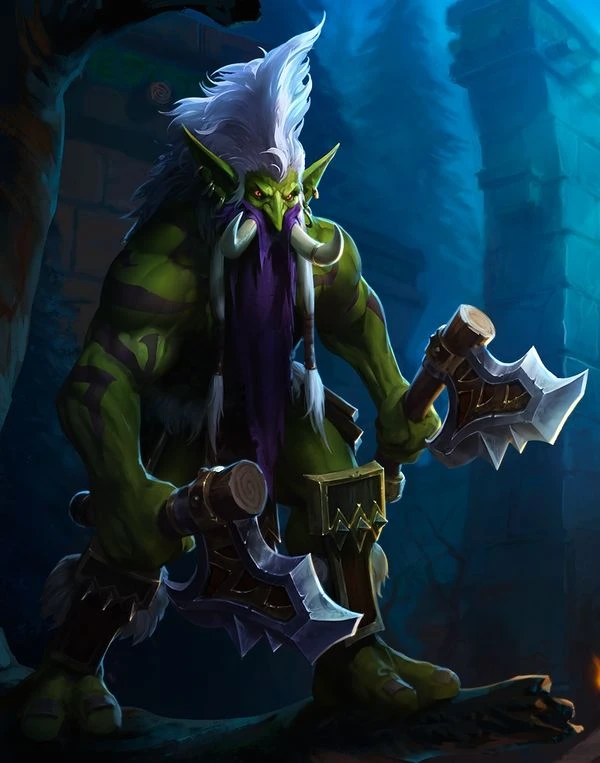
Zul'jin was the legendary warlord of the Amani forest trolls, who united rival warbands against the high elves occupying lands his people considered their own. During the Second War he initially rejected Orgrim Doomhammer's invitation to join the old Horde, but accepted an alliance after Horde forces rescued him and his captured warriors near Hillsbrad. His trolls helped carry the war toward Quel'Thalas, hoping to restore Amani power, only to see Doomhammer's campaign collapse without delivering the promised victory. Zul'jin disappeared after the war, while the forest trolls followed separate paths; his story belongs to an earlier Horde than the one joined by Sen'jin and his son Vol'jin.
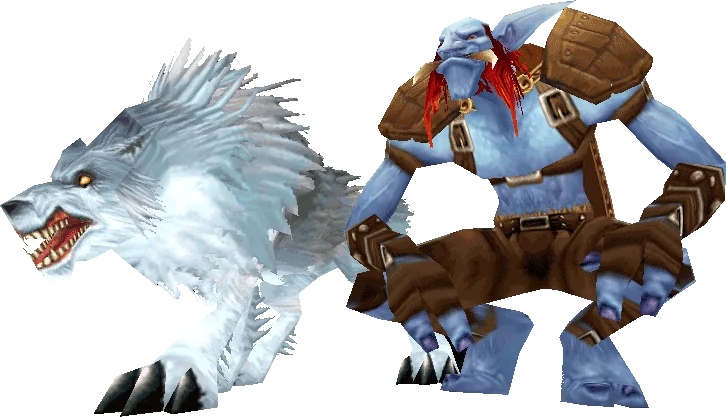
Sen'jin was the Darkspear chieftain who welcomed Thrall's battered orcs when they landed on his people's island during their voyage west. He recognized that both groups faced enemies greater than either could defeat alone. Captured during a murloc assault, Sen'jin died after pleading with Thrall to protect the Darkspear from destruction. His son Vol'jin carried that charge forward as the trolls joined the new Horde and built a home in Durotar.
Vol’jin succeeded his father Sen’jin as leader of the Darkspear trolls and brought the displaced tribe into Thrall’s new Horde. The Darkspear settled on the Echo Isles and helped defend Durotar from Daelin Proudmoore’s campaign. When Zalazane seized control of the islands through dark magic, Vol’jin led the free trolls to the Durotar mainland, establishing Sen’jin Village. He remains a trusted adviser to Thrall while seeking security for his people.
Rokhan was a Darkspear shadow hunter who helped defend Thrall's fledgling homeland in Kalimdor. Rexxar and Rokhan assist with problems facing Thrall’s new homeland during its early development. Rexxar's orc-ogre heritage and outsider ethics shape his encounters with Durotar, with Chen, Rokhan and Thrall.
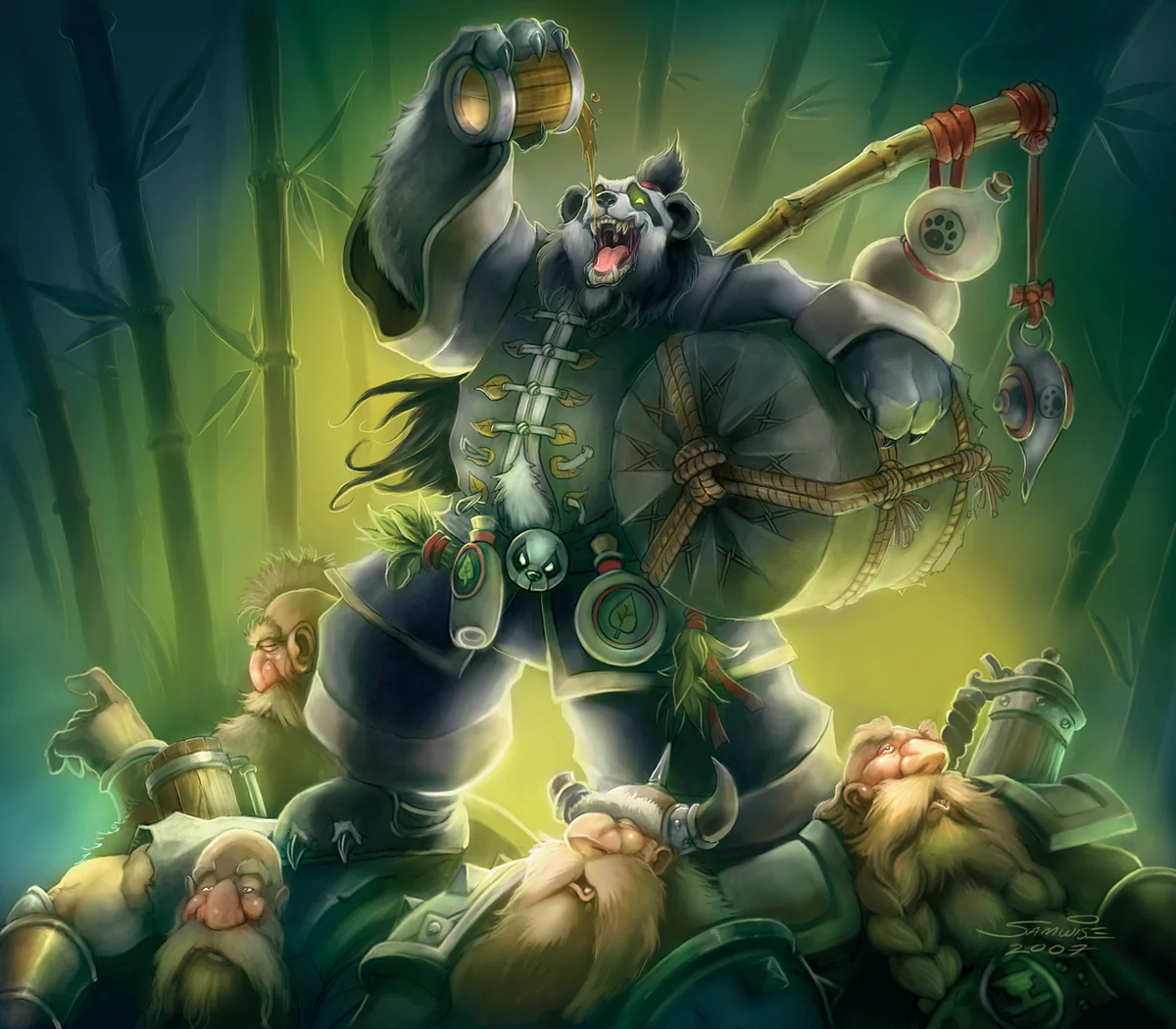
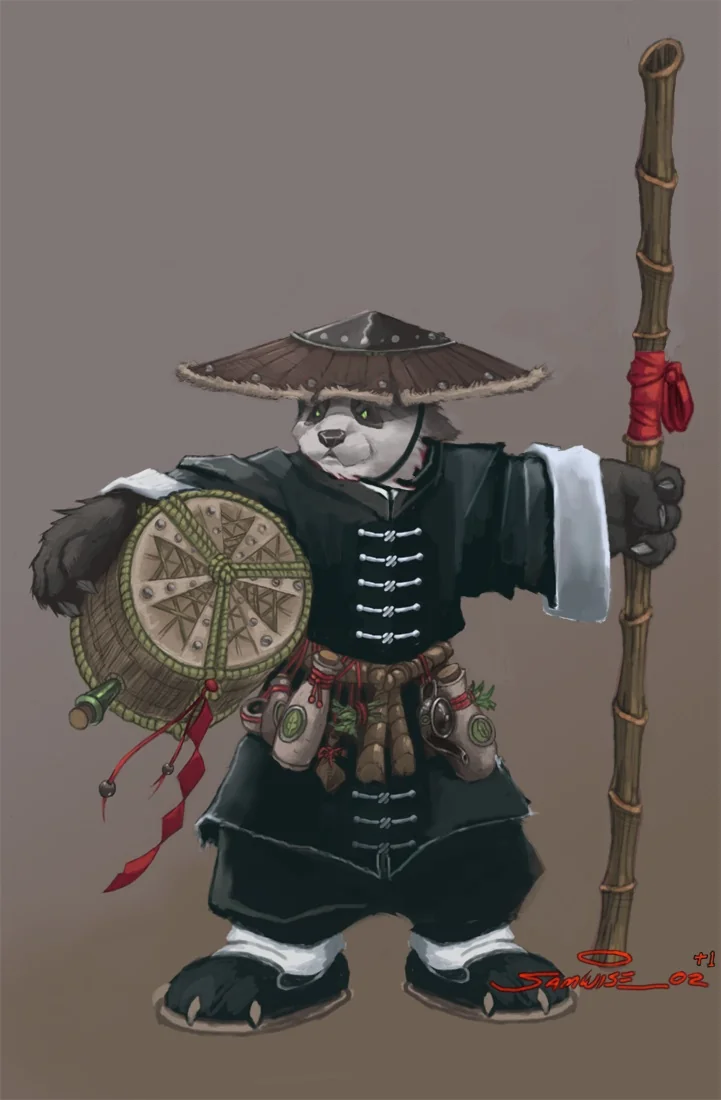
Chen Stormstout traveled through Kalimdor during the founding of Durotar and joined Rexxar's company. A wandering pandaren brewmaster, he brought an outsider's curiosity to the struggles of the new Horde. He helped the group through dangers surrounding the young settlement. His journey placed him among the allies who defended Durotar against forces determined to resume the old wars.
Durotan was the Frostwolf chieftain who resisted the demonic corruption of the Old Horde. Though he could not save Draenor from war or his clan from exile, he refused Gul'dan's blood pact and tried to warn his friend Orgrim Doomhammer. Assassins murdered Durotan and his mate Draka after that warning, leaving their infant son in the wilderness. The survival of that child, later called Thrall, carried Durotan's defiance into the founding of the New Horde.
Draka and Durotan stood with the Frostwolf clan against the demonic corruption of the old Horde. Their defiance brought exile and ultimately murder, leaving their infant son Thrall to be discovered by Aedelas Blackmoore. His survival carried the legacy of their resistance into the founding of a different Horde.
Orgrim Doomhammer overthrew Blackhand and crushed much of Gul'dan's Shadow Council, then led the old Horde in the Second War. Betrayed when Gul'dan deserted in pursuit of the Tomb of Sargeras, Orgrim fell to the Alliance after Anduin Lothar's death at Blackrock Spire. In later years he joined Thrall to free interned orcs and died during those campaigns, entrusting Thrall with his armor, hammer, and the mantle of Warchief. At the original WoW launch Orgrimmar bears his name and Thrall seeks a different future from the conquests Orgrim once led.
Ner'zhul was the elder Shadowmoon shaman deceived by Kil'jaeden as the Horde began its descent into demonic corruption. After the Second War, his effort to open portals beyond Draenor shattered his homeworld. Kil'jaeden bound his spirit into the Frozen Throne, transforming him into the Lich King and master of the Scourge. He summoned Kel'Thuzad, drew Arthas to Frostmourne, and ultimately joined with the fallen prince atop Icecrown during The Frozen Throne.
Gul'dan was the warlock who helped corrupt the orc clans, established the Shadow Council, and used Blackhand as the old Horde's public Warchief. In concert with Medivh, he helped open the Dark Portal and bring war to Stormwind. After Orgrim Doomhammer destroyed much of the Shadow Council, Gul'dan outwardly submitted but betrayed the Horde during the Second War to seek the Tomb of Sargeras. Demons in the tomb killed him. His surviving influence includes the old Horde's blood debt, the ruins of the First War, and the Skull of Gul'dan later consumed by Illidan.
Blackhand commanded the first Horde during its conquest of Stormwind, but his power concealed the influence of Gul'dan's secret Shadow Council. As the visible warchief he united fierce orcish clans behind an invasion that devastated the southern human kingdom. His brutality and dependence on the warlocks made him both a dangerous enemy and a vulnerable ruler. Orgrim Doomhammer killed Blackhand and seized the mantle of warchief, changing the Horde's leadership without ending the war.
Grom Hellscream led the Warsong clan through the old Horde's corruption and later aided Thrall's liberation of orc prisoners. On Kalimdor he pursued victory against Cenarius through Mannoroth's corrupted blood, killing the demigod and renewing the demonic curse over his warriors. Freed from immediate domination, Grom accompanied Thrall to face Mannoroth and died delivering the blow that ended the pit lord's hold on the orcs. By the WoW launch he is remembered for both the catastrophe his choices caused in Ashenvale and the sacrifice that freed his people.
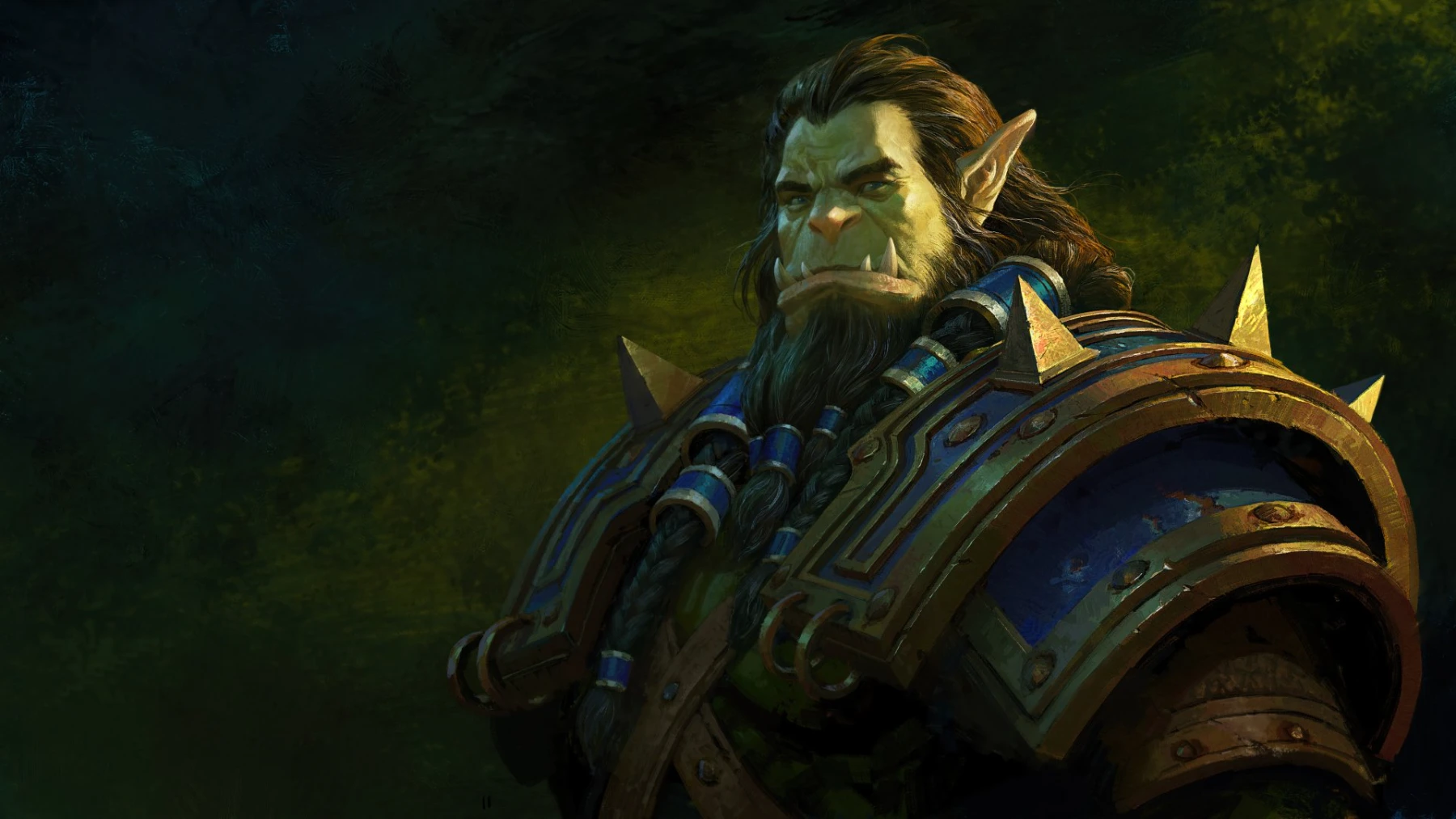
Born to Durotan and Draka of the exiled Frostwolf clan, Thrall lost his parents to Gul’dan’s assassins and grew up enslaved by Aedelas Blackmoore at Durnholde. Helped by his childhood friend Taretha Foxton, he escaped, rediscovered his heritage under Grom Hellscream and the shaman Drek’Thar, and joined Orgrim Doomhammer in freeing the imprisoned orcs; after Orgrim’s death, Thrall became Warchief. He led the New Horde across the sea, forged bonds with the Darkspear trolls and tauren, freed the orcs from the Legion’s blood curse alongside Grom, and helped defeat the Burning Legion at Mount Hyjal. At the launch of World of Warcraft, he rules from Orgrimmar, striving to defend Durotar, hold the Horde’s diverse peoples together, and preserve a fragile peace with the human survivors of Theramore.
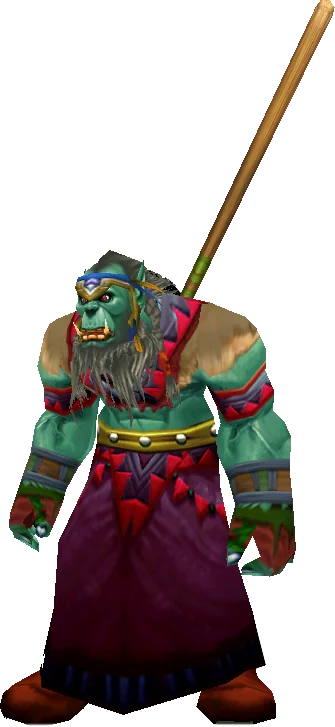
Drek’Thar is the elder shaman of the Frostwolf clan, whose people survived exile after resisting the worst demands of the old Horde. When Durotan’s lost son Thrall found them in Alterac, Drek’Thar taught him the orcish spiritual traditions that warlocks had displaced. His guidance helped turn a former gladiator into a shaman and future Warchief. His enduring legacy is the restoration of a people’s memory and an alternative to demonic servitude.
Disillusioned by the old Horde and the loss of his sons, Eitrigg withdrew to a lonely tower near Hearthglen. A chance meeting with the human paladin Tirion Fordring became an unlikely bond when the orc saved his adversary's life. Tirion's attempt to return that mercy cost him his place among the Silver Hand, but it spared an honorable enemy. Eitrigg later joined Thrall's renewed Horde, carrying both the memory of its earlier failures and proof that honor could cross the boundaries of war.
The Blackrock clan became one of the greatest powers in the war machine that rose under Blackhand; Varok Saurfang is remembered among its warriors. The death of Grom Hellscream after his victory over Mannoroth broke the demonic blood curse that had bound the orcs' fate. The orcs are no longer merely an invading army, but neither are they strangers to war. He matters because the Horde's story cannot be told only through the dreams of its new warchief.
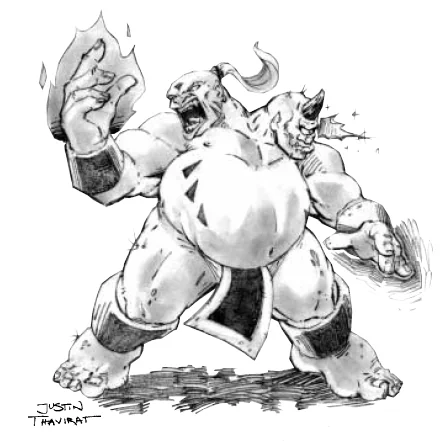
Cho'gall rose within the old Horde as an ogre-mage and a disciple of the Shadow Council. When Orgrim Doomhammer took power and struck against Gul'dan's influence, the Shadow Council was devastated. Gul'dan's ambition cost the Horde dearly, and his followers suffered the consequences of their master's betrayal.
Rend Blackhand inherited both his father's name and a grievance against Orgrim Doomhammer, who killed the old warchief. With his brother Maim, he broke away to command the Black Tooth Grin clan while still taking part in the Horde's Second War campaigns. The clans' defeat did not persuade him to join Thrall's later rebuilding of orc society. Instead Rend clung to Blackrock Mountain and a rival vision of authority rooted in the old Horde's violent legacy.
Kilrogg Deadeye led the Bleeding Hollow clan through the First and Second Wars. His warriors guarded the Horde's occupied territories in Khaz Modan. After the Horde's defeat, he evaded the Alliance's attempts to capture him. The reopening of the Dark Portal gave him a path back to Draenor and a renewed place among the clans gathered by Ner'zhul.
Kargath Bladefist led the feared Shattered Hand clan, renowned for its ruthless methods and warriors who replaced maimed hands with weapons. He supported Ner’zhul’s renewed campaigns after the Second War and brought his fighters through the Dark Portal. The destruction of the gateway left his force stranded on Azeroth, far from the world they had fought to defend.
Teron Gorefiend was one of the first death knights created through the Horde's dark sorcery. His spirit inhabited the body of a fallen human knight, joining orcish warlock power to the dead. After the Second War, Gorefiend helped Ner'zhul pursue magical artifacts needed for new portals. His ambitions drove him beyond the conquest of Azeroth toward the opening of other worlds.
Zuluhed led the Dragonmaw clan during the Second War, commanding a smaller but formidable part of the Horde. Zuluhed entrusted its use to the warlock Nekros Skullcrusher, whose mastery of its power enabled the Dragonmaw to hold Alexstrasza captive at Grim Batol. The Dragonmaw became feared for its mastery of dragons, but its power was founded on bondage and could endure only while the artifact worked.
Nekros Skullcrusher served the Dragonmaw clan under Zuluhed, its chieftain, and became the keeper of the weapon that brought the red dragonflight into the Second War. The Dragonmaw held Alexstrasza at Grim Batol and compelled her flight to supply the Horde with dragons for war. After the Second War, the captivity at Grim Batol remained a wound that victory over the Horde had not healed.
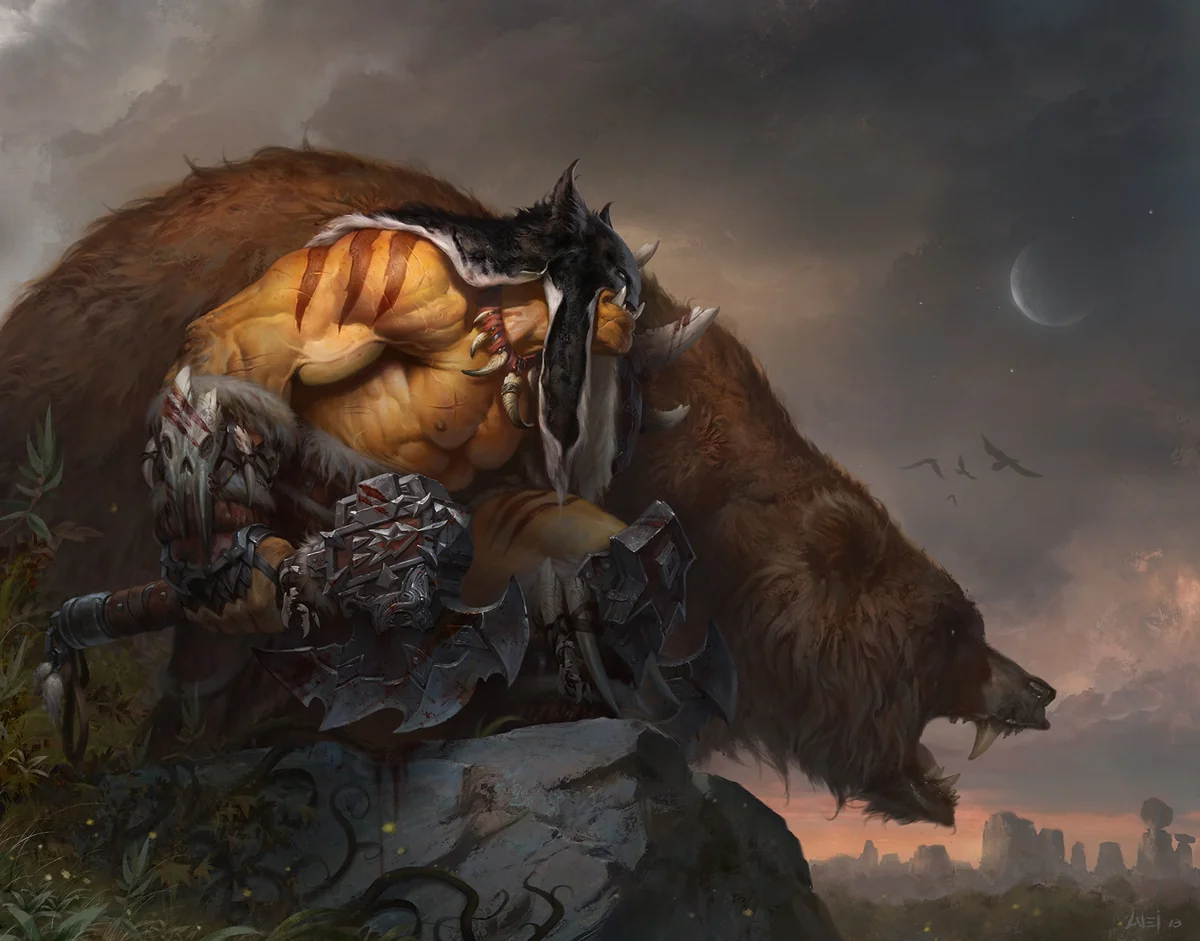
Rexxar, the Mok'Nathal beastmaster who traveled with his bear Misha, preferred the wilds to the wars of kings. After carrying a dying orc messenger's charge to Thrall, he became the principal hero of The Founding of Durotar. Alongside Rokhan, Chen Stormstout, and Cairne he uncovered threats to the new Horde and helped resist Grand Admiral Daelin Proudmoore. He remained a wandering champion rather than accepting a throne or permanent command.
Nazgrel served Thrall as the new Horde took root in Durotar. He worked alongside the warriors and leaders struggling to establish a home in a harsh land. During the conflicts surrounding Theramore and Admiral Proudmoore's campaign, Nazgrel stood with the Horde's defense. His service belongs to the founding years in which the orcs sought a future beyond the wars of the old Horde.
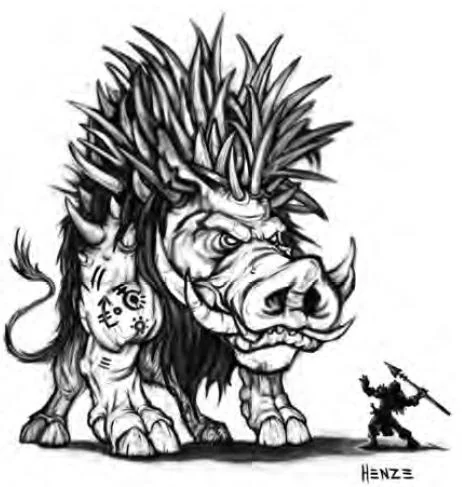
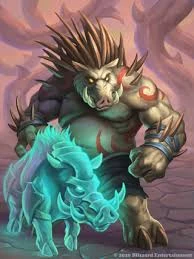
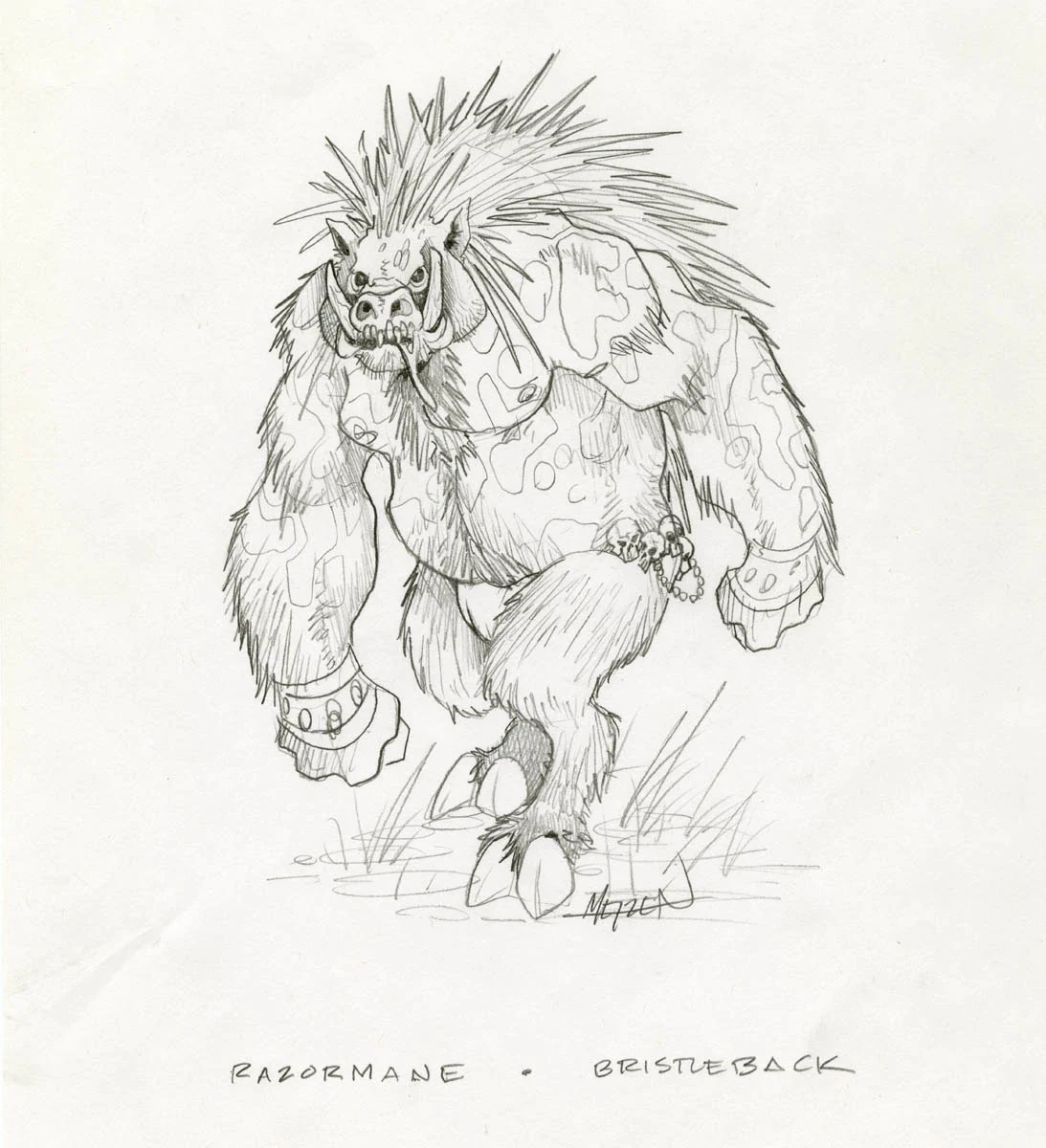
Agamaggan, the great boar demigod, fought the Burning Legion during the War of the Ancients. He fell in the struggle, but his death became part of the history of the Barrens. The quilboar revere him as their ancestor and hold the great thorn-covered Razorfen sacred. His story links the ancient resistance to the Legion with the beliefs and conflicts of later Kalimdor peoples.
Kur'talos Ravencrest commanded night-elven defenders as Azshara's pact with the Burning Legion plunged Kalimdor into war. Azshara directs Captain Varo'then to arrange the death of the resistance commander; the assassin kills Kur'talos Ravencrest. Ravencrest commands organized defenders, and is assassinated under Azshara's order.
Malorne was an ancient demigod whose presence inspired the defenders of Kalimdor during the War of the Ancients. The demigod Malorne is killed in combat with Archimonde while protecting Cenarius during the ancient war. Ancient guardians fight alongside the defenders; Malorne is killed in battle with Archimonde.
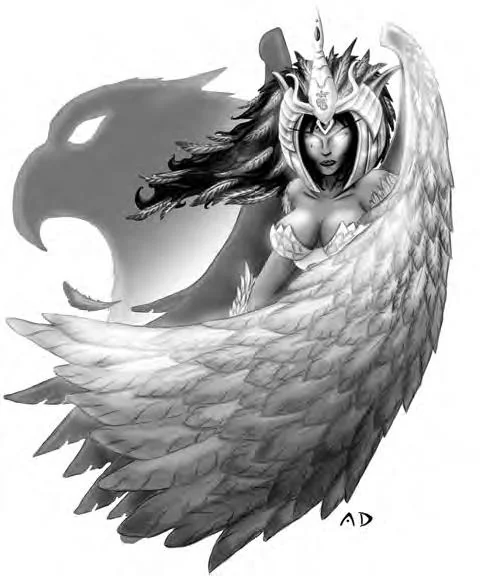
Aviana was one of the great wild spirits revered in ancient Kalimdor, closely associated with birds and the open sky. Demons crossed into Kalimdor through the Well of Eternity, and ancient guardians rallied to defend the land. Aviana's memory endured among those who remembered the sacrifice of the ancient guardians, even as the Sundering divided the lands over which she had once flown.
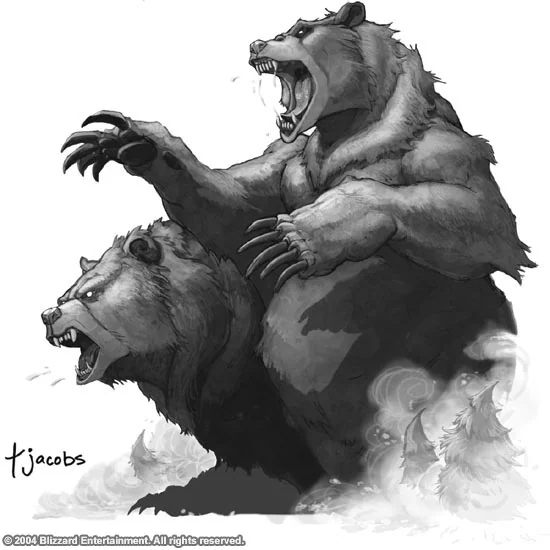
The war against the Burning Legion claimed more than soldiers and cities: even the ancient defenders of Kalimdor were vulnerable. Ursoc and his brother Ursol belonged to the bear spirits who guarded the natural world before Azshara's disastrous alliance opened the way for demons. Ursoc joined the resistance and died opposing the invasion. His sacrifice endured in the memory of those who revered nature and mourned its fallen champions.
Ursol was a great bear spirit who shared the guardianship of Kalimdor's wilds with his brother Ursoc. As demons spread through the night elf lands, the ancient guardians joined the resistance against the forces drawn through the Well of Eternity. The legacy of Ursol was not measured by lands conquered or a throne inherited.
Hakkar the Houndmaster was a demon of the Burning Legion who unleashed felhounds against Azeroth's defenders during the War of the Ancients. His place was among the invaders passing through the Well of Eternity, not the trolls who later worshipped a blood god with a similar name. The two Hakkars belong to different histories and must not be confused. The houndmaster represents the brutal demonic forces brought into ancient Kalimdor by Azshara's betrayal.
Varo'then's military loyalty placed him beside Queen Azshara when her court invited catastrophe into Kalimdor. As the Highborne worked to open a gateway for the Burning Legion, he defended the authority of a ruler increasingly estranged from her people. The resistance fought to save the world while the captain remained committed to the doomed palace regime. His role reveals how obedience to a powerful sovereign could become complicity in an empire's destruction.
Kelorn Nightblade moved through the deadly politics of Queen Azshara's court as the Burning Legion entered Azeroth. Assassination and divided loyalties threatened the night-elven resistance alongside the demonic invasion itself. The surviving ancient-war account establishes his place in that conflict without resolving every aspect of his ultimate fate.
Desdel Stareye fought among the night elves resisting the Burning Legion during the War of the Ancients. After Kur'talos Ravencrest's assassination, the defenders struggled to sustain their command and hold together. Desdel's part in that struggle shows the peril facing the resistance beyond its more celebrated leaders.
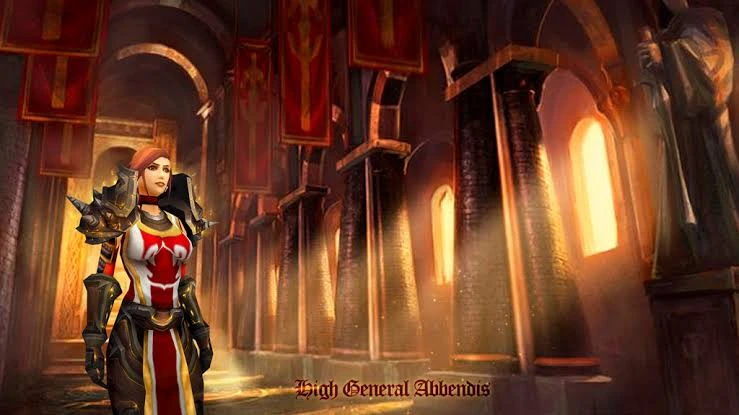
High General Abbendis belonged to the Scarlet Crusade's leadership as the survivors of Lordaeron turned against the Scourge. Original-era accounts link former Lordaeron defenders to the anti-undead Crusade. Elder High General Abbendis is associated with the Crusade’s command at Tyr’s Hand.
Grand Inquisitor Isillien was a prominent Scarlet Crusade inquisitor active in the Western Plaguelands. Original WoW quest text reveals the apparent grand crusader as the dreadlord Balnazzar; all exact substitution-history details from 2008 comic remain excluded. Isillien is associated with Scarlet Crusade inquisitions in the Western Plaguelands.
Saidan Dathrohan belonged to the order of paladins that defended Lordaeron before its destruction. From the ruins arose the Scarlet Crusade, convinced that Lordaeron could be purified by uncompromising war against the undead. Dathrohan's fate therefore belongs to the story of Lordaeron's second defeat: after the undead destroyed its armies, a demonic enemy helped corrupt the desperate hope of reclaiming the kingdom.
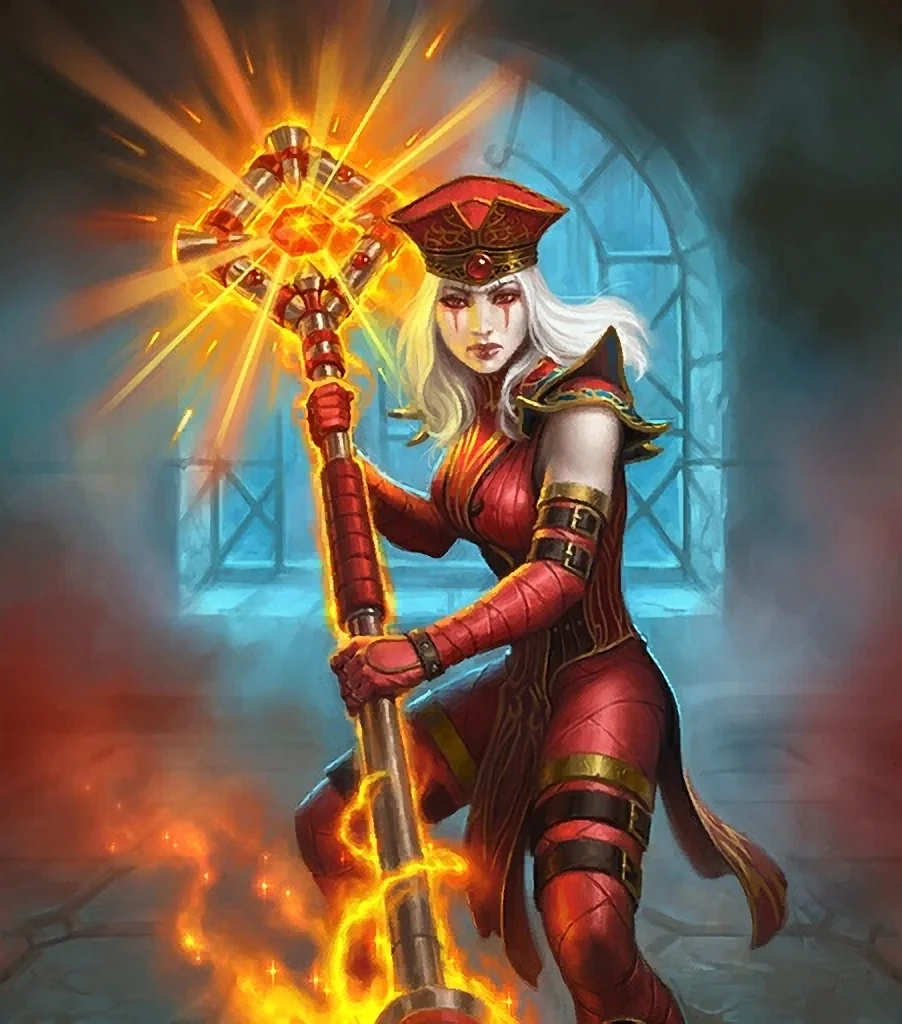
Sally Whitemane rose within the Scarlet Crusade after the fall of Lordaeron, when the Scourge had destroyed the old kingdom and left its survivors terrified of undeath. Under her authority, the monastery was no longer simply a place of learning and worship. Together they represented the Crusade's central contradiction: an organization formed to fight the Scourge had become ruthless toward many of the people it claimed to defend.
Alexandros Mograine earned the name Ashbringer as a champion of the Holy Light in the war against the Scourge. His sword became a symbol of the resistance that survived Lordaeron's destruction, yet betrayal came from within his own family. His son Renault was responsible for his death and the corruption of the blade. In the original Scourge stronghold of Naxxramas, the fallen highlord remained a terrible reminder of how even Lordaeron's greatest defenders could be turned against it.
Taelan Fordring inherited his father's place at Mardenholde after Tirion Fordring was exiled. He later rose to command Scarlet Crusaders at Hearthglen, even as the order hardened into intolerance. The memory of his father remained a challenge to the loyalties he had accepted.
Herod was the Scarlet Champion at the monastery where the Crusade made one of its strongest stands after Lordaeron's fall. The order began by resisting the Scourge but grew increasingly suspicious of outsiders. His place among the monastery's defenders shows how fiercely the Crusade guarded its strongholds and how far that commitment had hardened into zealotry.
Arcanist Doan guarded Scarlet Monastery's library after the Scourge shattered Lordaeron. The old center of learning had become a militant fortress, with scholarship and magic turned toward an order that feared the world beyond its walls. Doan's position reflects the transformation of the Crusade from a refuge for survivors into a suspicious and uncompromising power.
Archivist Galford remained amid Stratholme's ruins after the Scourge devastated Lordaeron. Scarlet Crusaders and undead occupied opposing parts of the shattered city, leaving little of the life it once sustained. His presence belongs to the story of people and institutions trapped within a kingdom that could not be restored simply by holding its streets.
Executor Zygand served the Forsaken in Tirisfal Glades as they struggled to hold the lands around ruined Lordaeron. Executor Zygand sends recruits against Scarlet forces occupying the ruined towers of Tirisfal. Executor Zygand directs operations against Scarlet Crusade garrisons in Tirisfal.
Alonsus Faol became an influential leader of the Church of the Holy Light after the destruction of Stormwind. With Uther and other champions, he established the Knights of the Silver Hand. Faol's legacy was the belief that strength had to serve more than conquest.
Genn Greymane ruled Gilneas while the human kingdoms faced the growing threat of the orcish Horde. Victory left the kingdoms with the burdens of imprisoned orcs, devastated provinces and disagreements over who should pay for the peace. The kings had learned to fight together under the pressure of invasion, but they had not agreed what permanent cooperation should mean.
Thoras Trollbane ruled Stromgarde, heir to Arathor's oldest human traditions, during the wars against the Horde. Stromgarde organizes its martial support around the threatened Khaz Modan frontier. As other kingdoms weighed the price of Alliance, Stromgarde remained a fiercely martial power.
Lord Perenolde ruled Alterac, the weakest of the human kingdoms to join the Alliance against the Horde. Afraid that his realm could not survive another invasion, he weighed surrender against loyalty to the other kingdoms. His eventual betrayal shattered the Alliance's trust in Alterac.
Maim Blackhand was one of Blackhand's sons and a leader in the Black Tooth Grin, a remnant of the old Horde. Blackhand’s sons oversee a force tasked with guarding the gateway into Azeroth. He and Rend held fast to their father's legacy even as Orgrim Doomhammer reshaped the Horde's command.
Zalazane was a Darkspear witch doctor whose sorcery drove fellow trolls from their homes on the Echo Isles. The Darkspear establish a new home on the Echo Isles as part of their post-exile history. The tribe had only recently found a new beginning beside Thrall's Horde after Sen'jin's death and the flight from their former islands.
Primal Torntusk belonged to the Revantusk trolls of the Hinterlands, who maintained a cautious relationship with Thrall's Horde. Their tribe remembered its earlier association with the orcs but valued its own independence amid rival forest-troll powers. Torntusk's place in this history lies in the Revantusk effort to survive without surrendering their identity.
Grand Marshal Garithos commanded surviving Alliance forces in Lordaeron after the Scourge destroyed much of the kingdom. His treatment of Kael'thas and the blood elves revealed deep hostility toward nonhuman allies. He later made a temporary arrangement with Sylvanas Windrunner against the dreadlords occupying Lordaeron's capital. Once the common enemy was defeated, Sylvanas betrayed that alliance and ordered his death.
Sapphiron was a mighty blue dragon in Northrend when Arthas returned to the frozen continent. Arthas and the crypt lord Anub'arak crossed paths with Sapphiron during their race toward the Frozen Throne. The dragon's fate showed how the Scourge turned the strength of its enemies against them.
Mogrin was an orc whose final message brought Rexxar into the affairs of Thrall's fledgling Horde in Durotar. Rexxar encounters the mortally wounded orc Mogrin and delivers his message to Thrall at the growing Horde settlement. Rexxar meets Thrall through Mogrin’s message and works alongside Rokhan.
Brann Bronzebeard sought answers about Azeroth's lost past through the Explorers' Guild. The youngest of Ironforge's three ruling brothers, he surveyed distant lands before his journeys became a search for Muradin's fate. When Brann disappeared on that quest, his family was left with another mystery among the ruins and frontiers he had explored.
High Explorer Magellas helped direct Ironforge's search for the world's lost history through the Explorers' League. Prospectors and researchers preserve findings about history, relics and species. High Explorer Magellas directs prospectors and guild studies mapping and cataloging the world and its historical relics.
The throne of Shadowforge placed Emperor Dagran Thaurissan at the heart of Dark Iron power beneath Blackrock Mountain. His rule inherited the bitter feud with Ironforge and the oppressive elemental legacy unleashed during the War of the Three Hammers. The presence of Magni Bronzebeard's daughter Moira in his court brought those historic rivalries into a bitter family dispute. Blackrock Depths stood as the center of a dwarven kingdom whose conflicts were far from settled.
Moira Bronzebeard, daughter of King Magni, became the center of a crisis between Ironforge and the Dark Iron kingdom. Magni seeks Moira, whose presence with the Dark Iron emperor fuels the conflict. Her presence with Emperor Dagran Thaurissan in Blackrock Depths reignited old clan hatred and her father's fear for her safety.
Gann Stonespire's quarrel with the dwarves began in the southern Barrens, where the Bael Modan excavation tore into land the tauren had long treated as home. The excavators kept working, and Gann came to believe that protest alone would never make them leave. The tauren had survived generations of displacement under centaur attack, and Cairne Bloodhoof's alliance with Thrall at last offered them a stable refuge.
Prospector Khazgorm joined the dwarven excavations at Bael Modan in the Barrens. The search for the world's buried history brought Ironforge's explorers onto land already important to the tauren. His work exposes the tension between an expedition's pursuit of knowledge and the territorial costs borne by its neighbors.
General Twinbraid was a dwarven military leader associated with the Bael’dun expedition in the Barrens. Original-era accounts link former Lordaeron defenders to the anti-undead Crusade. His soldiers guarded a remote mining and excavation venture on lands claimed by the tauren and their Horde allies.
Overseer Oilfist was a Dark Iron craftsman associated with the Thorium Brotherhood. The Brotherhood's metalworkers sought independence from the rule and elemental tyranny surrounding Blackrock Mountain. Oilfist's work reflects their effort to preserve dwarven expertise without submitting to the Firelord or the emperor who ruled in Blackrock Mountain.
Sky'rie was the gryphon whose partnership with Kurdran Wildhammer became celebrated in the Alliance's wars. Kurdran and his gryphon fight for the Alliance; Kurdran later joins the expedition. Together they faced dragon-mounted foes and other dangers confronting the northern kingdoms.
Chief Hawkwind appears among the tauren elders connected to the rites by which young members of the tribes proved themselves. Chief Hawkwind appears as a Camp Narache leader in archived original vanilla quest descriptions. The tauren had only recently secured Mulgore with the help of Cairne Bloodhoof and the Horde.
Seer Graytongue guided young tauren through the Rite of Strength, part of the customs preserved as their people settled in Mulgore. Seer Graytongue appears as a rite-giver in the archived original-era Rite of Strength chain. The tauren had survived generations of centaur pressure before Cairne's alliance with Thrall gave them firmer ground.
Argent Officer Garush was an orc serving at the Bulwark, where Tirisfal meets the infected Western Plaguelands. Both oppose the undead; their different recruitment and methods keep their organizations distinct. Argent Officer Garush was an orcish Argent Dawn officer associated with the Bulwark.
Argent Quartermaster Hasana supplied the Dawn's fighters at the Bulwark on the edge of the Plaguelands. Both oppose the undead; their different recruitment and methods keep their organizations distinct. Argent Quartermaster Hasana, a troll, supplied Argent Dawn members at the Bulwark.
Argent Officer Pureheart served the Argent Dawn in the Western Plaguelands, where the undead still threatened roads and settlements. Both oppose the undead; their different recruitment and methods keep their organizations distinct. Argent Officer Pureheart was associated with Argent Dawn activity near the Western Plaguelands.
Lord Maxwell Tyrosus helped sustain the struggle against the Scourge after the fall of Lordaeron. Tyrosus became a leading voice of the Argent Dawn, which fought the undead while accepting allies beyond the divisions of Horde and Alliance. The Argent Dawn was not free of danger or loss, but its willingness to recruit across racial and political lines set it apart from the Scarlet Crusade.
Duke Nicholas Zverenhoff was a prominent figure of the Argent Dawn at Light's Hope Chapel. Argent Dawn links reach Stratholme, where Scarlet and Scourge threats overlap. Duke Nicholas Zverenhoff served among the Argent Dawn figures associated with Light’s Hope Chapel.
Leonid Barthalomew served the Argent Dawn at Light's Hope Chapel despite being undead himself. The Scourge had made undeath a terror across Lordaeron, but the Dawn fought the plague without adopting the Scarlet Crusade's blanket hatred. Leonid's service illustrated the order's willingness to judge allies by their actions rather than their condition.
Delgren the Purifier joined the struggle against the Dark Strand cult in Ashenvale. His work with Feero Ironhand brought the cause of the Light into a conflict far from ruined Lordaeron. The threat around the Tower of Althalaxx shows how dangerous cults and dark magic troubled regions beyond the Scourge's immediate reach.
Feero Ironhand aided the struggle against the Dark Strand cult in Ashenvale alongside Delgren the Purifier. Their mission carried the fight against sinister magic into the forests of Kalimdor, far from the Scourge's chief strongholds. His role belongs to an unresolved frontier campaign rather than a completed triumph over the cult.
Sargeras created the Burning Legion after rejecting the Pantheon he had once served. Its commanders used both demonic armies and corrupted mortal servants to bring worlds under attack. Azeroth resisted the Legion during the War of the Ancients, but the same enemy later manipulated the orcish Horde and helped create the Scourge. The invasion led by Archimonde in the Third War ended at Mount Hyjal, leaving the Legion’s long campaign marked by another costly defeat.
The Kaldorei Resistance began when the night elves' own empire opened Azeroth to the Burning Legion. The struggle drew together soldiers, priestesses and druids, then widened beyond the kaldorei. The Legion was denied the victory it sought, but the cost broke the world itself.
The Forsaken arose from undead who broke free of the Lich King’s control after the destruction of Lordaeron. Sylvanas Windrunner rallied these survivors and defeated rivals seeking power over the ruined human capital. They founded the Undercity beneath Lordaeron’s remains and made their former homeland the center of a new political identity. Their uneasy membership in Thrall’s Horde gave them allies, but neither the Scourge nor the hostility of living humans ceased to threaten them.
The Scarlet Crusade rose from Lordaeron’s collapse with a vow to purge the undead from the land. Its founders inherited the language of holy war and the example of the Silver Hand, but fear hardened their mission into persecution and fanaticism. Under its crimson banners, the Crusade treats suspicion as proof of corruption and wages war against enemies both living and dead. The Scarlet Monastery and its other strongholds preserve a terrible distortion of the kingdom it claims to defend.
The Council of Tirisfal arose from the need to contain the dangers unleashed by human arcane magic. Its magi entrusted great power to a single Guardian who would oppose demons without exposing the wider world to their threat. The system produced formidable protectors, including Aegwynn and Medivh. It also concentrated decisions about Azeroth's defense in the hands of a secretive order whose safeguards could fail.
The Alliance of Lordaeron began with the ruin of Stormwind. The alliance joined rival human realms to the dwarves of Khaz Modan, the elves of Quel'Thalas and other allies whose interests had seldom been perfectly aligned. Keeping the orc prisoners in camps strained royal treasuries, and old disputes among the kingdoms returned.
The Old Horde was forged when demonic manipulation and the Shadow Council turned the orc clans of Draenor toward conquest. Under Blackhand it invaded Azeroth and destroyed Stormwind. Orgrim Doomhammer later seized command and led the Second War, but Gul'dan's betrayal helped break the campaign. Defeat and internment scattered the orcs, leaving the next generation to decide whether their people could survive without the corruption that had united them.
The Darkspear are a jungle-troll people whose later history was shaped by displacement, Sen’jin’s leadership, and an alliance with Thrall. They belong to the greater Gurubashi-descended world but did not follow every policy of the old jungle empire. After leaving Stranglethorn they struggled for a home and settled near the new Horde in Kalimdor. Their distinct political identity emerged long after Tyr, Kith’ix, and the earliest empires.
The faction appears in the original-era world before the later events. The available research does not specify a separate later outcome within the original starting-world cutoff.
The Scourge rose from the Lich King’s designs and turned Lordaeron’s plague into an army of the dead. Its servants included living conspirators, necromancers, mindless undead and mighty commanders whose wills had been bound to a single purpose. The fall of Stratholme, the destruction of the kingdom and the rebirth of Kel’Thuzad were stages in its ascent. Though Sylvanas later freed part of the undead from its control, the Scourge remains entrenched across the Plaguelands.
The Kingdom of Azeroth lost its capital when the first Horde invaded through the Dark Portal. King Llane was murdered, Stormwind fell, and Anduin Lothar led survivors north to Lordaeron. Their exile helped bring the human kingdoms together against the Horde in the Second War.
Lordaeron became the political center of the northern human kingdoms when Terenas Menethil helped forge an Alliance against the Horde. Victory in the Second War brought prestige but also divisions over the treatment of captive orcs. A later plague spread by the Cult of the Damned drew Prince Arthas into a disastrous campaign that ended with his corruption by Frostmourne. His murder of Terenas and the Scourge's conquest destroyed the kingdom, leaving refugees, rival resistance orders, and newly freed undead among its ruins.
Stromgarde was the surviving martial heart of the old human kingdom of Arathor. Its warriors helped forge the Alliance against the Horde, but the settlement of the Second War did not restore the city's former dominance. Rival claims and the fragmentation of its surrounding lands continued to trouble the old kingdom.
Kul Tiras entered the Second War as one of the great maritime powers of the human kingdoms. The Alliance's eventual victory did not end Kul Tiras's bitterness toward the orcs. The campaign ended in Daelin's death after Jaina refused to support his assault on the New Horde.
Gilneas was one of the proud human kingdoms of the north when Stormwind fell to the orcs. The Alliance of Lordaeron defeated the Horde in the Second War, yet its victory brought expensive obligations. The kingdom believed strong borders and its own rulers could protect it without binding its future to the quarrels of the other human realms.
Dalaran became a home for human mages when the study of arcane power outgrew the old courts of Arathor. The Kirin Tor emerged as Dalaran's most influential circle of magi, preserving spellcraft and gathering knowledge that could be used either to defend the world or imperil it. Archmage Antonidas fell during the defense, and Kel'Thuzad used the stolen book to summon Archimonde.
Fear of defeat led King Aiden Perenolde to betray the human Alliance during the Second War. Alterac's mountain passes made its loyalty strategically important, but its ruler secretly aided the very Horde the northern kingdoms had united to resist. Once exposed, the conspiracy cost Alterac its independence and left its territory disputed by stronger neighbors. Its downfall revealed how a kingdom's attempt at self-preservation could undermine the coalition meant to defend it.
Quel'Thalas began when the exiled Highborne crossed the sea and founded a new kingdom in the northern Eastern Kingdoms. During the Second War, forest trolls joined the orcish Horde, threatening Quel'Thalas again. Sylvanas fell resisting him, Silvermoon's defenses were breached, and the Sunwell was defiled in the ritual that restored the lich.
The Blackrock clan became one of the most powerful forces in the old Horde. Orgrim Doomhammer overthrew Blackhand after learning of Gul'dan's treachery and took command of the Horde. Defeat broke the old Horde's advance, leaving its survivors scattered or imprisoned.
Gul'dan formed the Stormreaver clan to protect his own power after Orgrim Doomhammer destroyed the Shadow Council. During the Second War, its warlocks served the Horde while preparing to pursue the Tomb of Sargeras. When Gul'dan abandoned the campaign, his followers sailed with him across the sea. Their betrayal forced Doomhammer to divert warriors from his invasion of Lordaeron.
The Twilight's Hammer followed Cho'gall into the Horde's wars with a devotion to ruin rather than conquest alone. Its fanatical warriors saw devastation as an end in itself. When Gul'dan deserted the campaign to seek the Tomb of Sargeras, Cho'gall and his clan followed him.
The Black Tooth Grin arose from a struggle over the leadership of the old Horde. During the Second War, the clan held a duty crucial to the entire invasion: guarding the Dark Portal in the Black Morass. When the Horde was defeated, its clans faced captivity, flight or renewed war among themselves.
Kilrogg Deadeye commanded the Bleeding Hollow, one of the most formidable clans to follow the Horde through the Dark Portal. During the Second War, the Bleeding Hollow fought beside the Blackrock clan and was entrusted with protecting the Horde's operations in occupied Khaz Modan. The Alliance's victory broke the Horde's hold on the Eastern Kingdoms, but Kilrogg did not disappear with its defeated armies.
The Dragonmaw clan gained terrifying power during the Second War through the captivity of Alexstrasza. The imprisoned queen was compelled to produce young dragons that could be trained and forced into battle for the Horde. Rhonin and his allies eventually broke the enchantment and freed Alexstrasza, ending the Dragonmaw's greatest advantage.
The Burning Blade of the Second War was feared even by the Horde it served. Horde leaders relied on ogres to restrain Burning Blade warriors until they could be released against an enemy. The wider Horde's fortunes changed with the defeat of its armies and the struggle to recover an older orcish identity.
The Amani formed the great forest-troll power of northern ancient Kalimdor and later the northern Eastern Kingdoms. Their traditions centered on territory, warrior authority, and reverence for the loa, while their capital at Zul’Aman became a symbol of independence. Later accounts identify the defeat of Kith’ix as a formative ancient victory near that site. By the beginning of original WoW the Amani retained Zul’Aman but had lost much of their empire to the high elves and the human–elven Troll Wars.
The Gurubashi governed the major jungle-troll civilization of ancient southern Kalimdor and later Stranglethorn. They shared early ancestry and loa traditions with the Zandalari but developed distinct southern territories and imperial leadership. Their history passed through the aqir war, the Sundering, famine, and the crisis surrounding Hakkar. By original WoW, Zul’Gurub and its surviving factions embodied both the achievement and the division of the old empire.
In the declining days of the Gurubashi Empire, desperation made the promises of Hakkar the Soulflayer attractive to some troll priests. Those who opposed Hakkar resisted his priesthood, and the conflict ended with the worshippers driven from their old centers of power. The priesthood's story helps explain the fractures among the jungle trolls.
The Atal'ai priests clung to the worship of Hakkar the Soulflayer long after other trolls came to fear the bloodthirsty god. The Temple of Atal'Hakkar became the center of rituals intended to accomplish what the Gurubashi had rejected. The priesthood endured because it was organized around a promise of power greater than any jungle kingdom.
The Revantusk are forest trolls whose home lies along the coast of the Hinterlands, far from the larger strongholds of the Amani and Vilebranch. The Revantusk survived among stronger neighbors, particularly the Vilebranch trolls who held Jintha'Alor and treated smaller tribes as enemies. Their friendship with the Horde distinguished them from forest trolls who remained hostile to outsiders.
The land that became Tanaris offered neither the forests nor the abundance their ancestors had known. Chief Ukorz Sandscalp leads a people whose enemies have multiplied while their allies have grown few. What can be said is that the hydra, the chief, and the city's guarded tombs make Zul'Farrak more than the remnants of a vanished empire. A traveler in Tanaris encounters a living people resisting outsiders and defending an old sacred city.
To an adventurer beginning in Dun Morogh, the Frostmane may look like another menace in the snow. The Frostmane occupy caves, slopes, and remote places that dwarven patrols have difficulty securing. Dun Morogh also contains the consequences of discoveries that released troggs into dwarven territory. The appearance of ice trolls near Ironforge, however, does not make Northrend a playable launch area, nor does it place the later Gundrak dungeon into the 2004 world.
The Bronzebeard clan held Ironforge after the death of High King Modimus Anvilmar brought the dwarven civil war into the open. The Bronzebeards survived that catastrophe, but the division of their people remained a permanent fact of dwarven politics. When the orcish Horde entered Khaz Modan in the Second War, the clan helped defend the mountain realm and stood beside the Alliance.
The Wildhammer clan once claimed part of the great dwarven kingdom centered on Ironforge. Rather than return as defeated dependents of Ironforge, the clan moved north to the Hinterlands and established Aerie Peak. When the Dragonmaw orcs later used the fortress to imprison the red dragon queen Alexstrasza, Wildhammer riders such as Falstad became involved in the struggle to free her.
The Dark Iron clan separated from Ironforge after the death of Modimus Anvilmar and fought its Bronzebeard and Wildhammer rivals for dominion. Under Sorcerer-Thane Thaurissan it established a southern kingdom and returned to war, only to suffer defeat on both fronts. Thaurissan's attempt to summon aid brought Ragnaros into the world and bound the surviving Dark Irons beneath Blackrock Mountain. Their subsequent rule from Shadowforge was powerful but overshadowed by the Firelord's control.
Ironforge once united three proud dwarf clans beneath High King Anvilmar. The Wildhammers left through Dun Algaz to establish Grim Batol, while the Dark Irons followed Thaurissan south into the Redridge Mountains. Ironforge survived under Bronzebeard rule and gradually found common cause with other peoples.
The Explorers' Guild arose from the dwarves' determination to understand a past older than their kings and clans. High Explorer Magellas led a community of researchers who mapped sites, recorded findings and studied ancient artifacts. Where the War of the Three Hammers had divided the clans over power and territory, the explorers pursued questions that preceded those rivalries.
Muradin Bronzebeard led a dwarven expedition into Northrend seeking discoveries beneath the frozen wastes. Muradin recognized the danger inscribed around the sword, but Arthas would not turn back from the power he believed it could offer. When Arthas claimed Frostmourne, the blade struck Muradin down, and the prince's fate changed with it.
The Bael'dun expedition came into the southern Barrens in search of the ancient past. The blasts, torn hillsides and displacement of tauren families made the expedition's work appear less like scholarship than another invasion. The dwarves hunted the physical traces of peoples who had lived long ago; the tauren defended a living relationship with the land.
Smiths of Dark Iron heritage sought to carry their craft beyond the rulers of Blackrock Mountain. Their independence emerged against the long history of dwarven clan warfare and the oppressive shadow of Ragnaros. The Thorium Brotherhood represented a different path for those who inherited the Dark Iron tradition without accepting every allegiance of its masters.
For generations the tauren tribes followed the herds and seasons across Kalimdor, preserving a shared reverence for the Earth Mother while living in separate communities. The orcs aided the tauren against their attackers and found in Cairne a guide who understood the land they hoped to cross. Unity did not erase every difference among the tribes.
The Bloodhoof tribe carried the traditions of the tauren through years when centaur attacks threatened to scatter the people of Kalimdor. Cairne encountered Thrall's orcs during the Third War, and cooperation against the centaur became the beginning of an enduring alliance. Cairne's founding of Thunder Bluff brought other tauren tribes into a shared political center.
The Grimtotem followed their own ambitions even as Cairne Bloodhoof struggled to unite tauren displaced by centaur attacks. The orcs helped the tauren resist the centaur threat, while the tauren aided the Horde on its journey through Kalimdor. The Grimtotem dispute survived the immediate victories over the centaur.
Druids shaped by Cenarius's teachings devoted themselves to guarding Azeroth's living world after the devastation of the Sundering. Under leaders such as Malfurion Stormrage, their work extended through the Emerald Dream and endured as mortal kingdoms rose and fell. The Third War demanded their return to battle as the Burning Legion assaulted Kalimdor and Cenarius himself was slain. Through Hamuul Runetotem and the tauren, the Circle's calling came to span peoples often divided by allegiance.
The centaur of central Kalimdor trace their origin to the union of Zaetar, a son of Cenarius, and the earth elemental Princess Theradras. Across Desolace and the Barrens, centaur raids struck the wandering tauren again and again. The centaur remained divided and dangerous, but they no longer determined every movement of the tauren tribes.
The Bristleback quilboar belong to a people whose traditions reach back to the great boar spirit Agamaggan. The arrival of the New Horde and the settling of tauren families in Mulgore changed the balance around the Barrens. The quilboar carried their own memory of ancestral strength, sacred places, and bitter rivalry with other peoples.
The red dragonflight received a charge unlike that of mortal armies. Though the Aspects sought to defend Azeroth from the Burning Legion, their surrendered power became an instrument of coercion. When the Demon Soul was broken, Alexstrasza and her kin could begin to reclaim the ancient responsibility stolen from them.
Ysera's green dragonflight guarded the natural world and the Emerald Dream. Its ancient charge helped tie the Aspects to the night elves' druidic traditions after the War of the Ancients. As generations passed in the waking world, the green dragons remained closely bound to the health of the forests and the hidden Dream.
The bronze dragonflight follows Nozdormu, the Timeless One, and is associated with safeguarding the flow of time. It is one of the original five Dragonflights entrusted with the protection of Azeroth. Its members are concerned with the continuity of history rather than the boundaries of mortal nations. In the original world, Tanaris and the Caverns of Time are among the clearest places connected with its mysterious duty.
Malygos and the blue dragonflight were charged with safeguarding magic. Their numbers and strength were devastated when Neltharion turned the Dragon Soul against the other dragons during the War of the Ancients. The survivors carried forward their ancient duty in a world where arcane power had repeatedly opened the way to catastrophe.
The black dragonflight was once entrusted with the world's earth and deep places under Neltharion. His corruption and betrayal as Deathwing turned that guardianship into a threat to the other dragonflights and mortal kingdoms. Even when Deathwing's whereabouts became uncertain, the black dragons remained dangerous.
As the Scourge spread through the ruins of Lordaeron, the Argent Dawn built a resistance that welcomed allies from both sides of the faction divide. Its agents held positions near the Plaguelands and Light's Hope Chapel, confronting plague and undead threats with discipline rather than indiscriminate hatred. This commitment separated the order from the Scarlet Crusade's growing fanaticism. The Dawn represented cooperation against a common danger even as the old northern kingdom remained shattered.
The Zandalar tribe stands near the beginning of the troll story, long before the human kingdoms and long before any orc ship reached Kalimdor. The rise of the night elves drove the ancient troll realms into retreat. The Zandalari helped oppose the god's followers, and the struggle ended with worshippers pushed away and the jungle realm fractured. For a Darkspear adventurer, Zandalar is the far older ancestry behind the tribe's exile and new allegiance to Thrall's Horde, not a later playable kingdom whose future conflicts have already occurred.
The Amani formed the great forest-troll power of northern ancient Kalimdor and later the northern Eastern Kingdoms. Their traditions centered on territory, warrior authority, and reverence for the loa, while their capital at Zul’Aman became a symbol of independence. Later accounts identify the defeat of Kith’ix as a formative ancient victory near that site. By the beginning of original WoW the Amani retained Zul’Aman but had lost much of their empire to the high elves and the human–elven Troll Wars.
The Gurubashi governed the major jungle-troll civilization of ancient southern Kalimdor and later Stranglethorn. They shared early ancestry and loa traditions with the Zandalari but developed distinct southern territories and imperial leadership. Their history passed through the aqir war, the Sundering, famine, and the crisis surrounding Hakkar. By original WoW, Zul’Gurub and its surviving factions embodied both the achievement and the division of the old empire.
The Darkspear are a jungle-troll people whose later history was shaped by displacement, Sen’jin’s leadership, and an alliance with Thrall. They belong to the greater Gurubashi-descended world but did not follow every policy of the old jungle empire. After leaving Stranglethorn they struggled for a home and settled near the new Horde in Kalimdor. Their distinct political identity emerged long after Tyr, Kith’ix, and the earliest empires.
The Drakkari are the principal ice-troll civilization associated with Zul’Drak in the distant north. The original Troll Compendium describes violent northern tribes separating from the Zandalari sphere and gradually adapting to snow and cold. Later history emphasizes northern campaigns during the war against the aqir as a formative stage of Drakkari territorial expansion. Their religious tradition retained loa worship even as their geography and conflicts diverged from the Amani and Gurubashi.
The Sandfury are descendants of a Gurubashi-affiliated jungle population isolated by the Great Sundering. As Tanaris became arid, they adapted to desert conditions and defended the surviving city of Zul’Farrak. Their culture retains troll religious traditions but follows its own local rituals and the cult surrounding Gahz’rilla. Their separation was the result of later geographic catastrophe, not an immediate division after Tyr’s battle.
Ancient troll civilizations fought a prolonged war against the insectoid aqir. The original Troll Compendium describes the Amani and Gurubashi as established powers whose conflict helped divide the aqiri realm. Later accounts make the reawakened Kith’ix central to the war and describe campaigns that carried the Amani east, Gurubashi south, and Drakkari north. These traditions should be connected, but their different chronologies must remain visible.
The night elves built a mighty civilization around the Well of Eternity, only to see arcane ambition open their world to the Burning Legion. Malfurion Stormrage and his allies resisted the invasion, and the Well’s destruction brought the Sundering of ancient Kalimdor. The survivors reorganized around nature, druidism, and the guardianship of Mount Hyjal. When the Legion returned in the Third War, the kaldorei joined humans and orcs to defeat Archimonde, losing their long-held immortality in the victory.
The high elves descended from the Highborne night elves who had once drawn upon the Well of Eternity. In time they founded Quel'Thalas and raised the Sunwell as the heart of a new magical kingdom. Arthas led the Scourge into Quel'Thalas, destroyed its defenses, and used the Sunwell to raise Kel'Thuzad as a lich.
The blood elves were survivors of Quel'Thalas who adopted a new name after the Scourge slaughtered much of their people. Led by Prince Kael'thas Sunstrider, they sought to preserve the high-elven traditions that had sustained their kingdom. The destruction and corruption of the Sunwell left their magical culture in crisis. Their service under Garithos ended when he imprisoned them for accepting naga assistance against the undead.
The satyrs emerged from the corruption that accompanied the Burning Legion's first invasion of Azeroth. After his fall, Xavius reappeared in demonic satyr form, a visible sign of what service to the Legion could do to an elf. The Sundering destroyed Azshara's old imperial order, but it did not end the danger of those who had embraced demonic power.
The naga descended from Azshara’s Highborne, whose empire was shattered by the destruction of the Well of Eternity. Transformed beneath the sea, they retained loyalty to their queen and the ambitions of her lost court. Under Lady Vashj, naga forces resurfaced to aid Illidan during the wars that followed the Third War.
The human tribes of the Eastern Kingdoms were once scattered among competing settlements, vulnerable to attacks from the Amani forest trolls. War with the Amani drew the new kingdom into an alliance with the high elves of Quel'Thalas. Lordaeron, Stormwind, Stromgarde, and other human powers grew from the descendants of those earlier migrations and alliances, each developing its own rulers and interests.
The fall of Stormwind in the First War made refugees of a kingdom that had once expected its walls to protect it. King Terenas helped form the Alliance of Lordaeron, bringing human kingdoms together with dwarves and high elves for the Second War. The two kingdoms came to represent opposite turns in human history.
The earthen were ancient stone-bodied beings whose history became central to the dwarves' search for their origins. Traces of their connection to forgotten vaults and makers raised questions far older than the clans of Ironforge. Discovering those roots changed how the Bronzebeards understood their own people.
The Bronzebeards came to rule Ironforge after a civil war that broke the older unity of the dwarves. Sorcerer-Thane Thaurissan later attempted to seize the capital, while his wife Modgud attacked the Wildhammers at Grim Batol. In later generations the Bronzebeards joined the Alliance against the orcish Horde.
The Wildhammers were once one of three great dwarf clans living beneath the mountain of Ironforge. Modgud's army invaded Grim Batol with sorcery and terror, and although Khardros killed the sorceress, her darkness left the city tainted. When the Alliance fought the Horde, Wildhammer gryphon riders became an important part of its strength, carrying into battle the courage of a clan twice driven from home.
The Dark Iron dwarves fought their Bronzebeard and Wildhammer kin in the War of the Three Hammers. Defeat drove their ruler Thaurissan to summon a power he could not control, bringing Ragnaros into Azeroth and transforming the land around Blackrock Mountain. The resulting catastrophe left many Dark Irons bound to the Firelord beneath the mountain. Their history became a warning about how a struggle for dominion could end in enslavement.
The troggs emerged from the deep places beneath Khaz Modan, where ancient titan works concealed creatures related to the earliest history of the dwarves. Excavations at Uldaman disturbed populations long cut off from the surface. Their attacks became a danger to dwarven settlements and later contributed to the catastrophe at Gnomeregan. The troggs' emergence joined two histories that dwarves and gnomes had once treated separately: the discovery of their ancient past and the sudden collapse of their modern security.
The gnomes built a culture renowned for invention and engineering, long tied to the dwarves of Ironforge. Their machines and technical skill supported the Alliance in war and daily life. The loss of Gnomeregan to a disastrous internal crisis forced many gnomes into exile among their dwarven allies.
For generations, the tauren wandered Kalimdor’s plains, hunting kodo and honoring the Earth Mother. Their oral traditions gave meaning to the sky, the land, and the spirits, but they lived under continuing pressure from the centaur. Cairne Bloodhoof’s meeting with Thrall brought the wandering tribes powerful allies at a decisive moment. With Mulgore secured and Thunder Bluff established, the tauren entered the original World of Warcraft era with a homeland and a stronger political unity.
The centaur of Kalimdor traced their descent to the unlikely union of Zaetar, a son of Cenarius, and Theradras, a princess of the earth. Over time, the centaur spread through Desolace and the Barrens, forming rival clans whose raids made the grasslands dangerous for neighboring peoples. The centaur were not a single obedient nation.
Cenarius, the forest demigod, left descendants who became guardians of Kalimdor's wild places. After the Sundering, night-elven society turned away from the reckless use of magic that had endangered the world. The destruction of Cenarius by Grom Hellscream's corrupted warriors showed that even a demigod's power could not place the forests beyond war.
Furbolgs are ancient bear-like peoples long associated with the forests of northern Kalimdor and the night elves. They were once regarded as relatively peaceful neighbors, but demonic corruption and the turmoil following the Third War drove several communities into violent conflict. Their different tribal fates in Ashenvale, Darkshore, Teldrassil, and Felwood should not be collapsed into one unified history.
The quilboar remembered the ancient boar spirit Agamaggan, who fought the Burning Legion in the War of the Ancients. Long afterward, their tribes defended territory and sacred places across the Barrens and neighboring lands. As the Horde and tauren established new homes in Kalimdor, competing claims to land deepened an already bitter frontier struggle.
Goblins made their name in the wars of Azeroth as merchants, builders and inventors whose services could be purchased by armies otherwise divided by bitter loyalties. Yet goblin commerce was not confined to a single warlord. That independence had its own consequences.
Five great dragonflights were entrusted with different duties in the care of Azeroth. Neltharion persuaded the others to invest part of their power in the Dragon Soul, promising a weapon against the Burning Legion. The eventual destruction of the Demon Soul ended that captivity and began to restore what the Aspects had lost.
Before the Dark Portal opened, the orcs of Draenor lived among separate clans whose elders, chieftains and shamans shaped their loyalties. Gul'dan and the Shadow Council undermined that order. Thrall's rise offered a different answer to the clans' history.
Ogres entered the wars of Azeroth alongside the orcs, bringing enormous physical strength to the Horde's armies. Gul'dan sought to make these warriors more dangerous still. The Second War ended in defeat for the Old Horde, leaving ogre groups scattered among the broken strongholds and disputed lands of Azeroth.
Rexxar belonged to the Mok'Nathal, a people of mixed orc and ogre ancestry whose place in the Horde was never simple. Rexxar helped the orcs defend their young settlement in Durotar and became central to the struggle against Admiral Daelin Proudmoore's invasion. Rexxar's story made the Mok'Nathal part of the founding of Durotar even though he lived apart from conventional clan politics.
The draenei inhabited Draenor before the orcish Horde invaded Azeroth. The corruption of the orcish clans brought violence to their communities and left survivors scattered across a devastated world. Some survivors appeared as Broken or Lost Ones, forms familiar from the original Warcraft games. Their earlier history belongs to the rise of the Old Horde, not to any later playable expansion campaign.
Chen Stormstout is a wandering pandaren brewmaster who befriends Rexxar during the events of The Frozen Throne. He represents a traveler and a distinctive people known in the original Warcraft era, even though their distant homeland is not explored in Vanilla WoW. His adventures connect him to the founding struggles of the New Horde. The article focuses on Chen's attested early role rather than later-developed histories of a new continent.
The Scourge and the Forsaken arose from the same catastrophe but followed different paths. Once a defender of Quel'Thalas, she had been transformed into a banshee and forced to serve the Scourge. The two groups remained bound by origin but divided by purpose: one an instrument of domination, the other a people struggling to survive after escaping it.
Long before the armies of the Third War marched across Azeroth, many smaller peoples lived beyond the attention of human kings and orcish warlords. Expansion brought these populations into closer conflict with settlers. It would be misleading to describe these different peoples as a single nation or common alliance.
Ironaya is a titan-forged guardian whose history connects Tyr’s final stand with Uldaman. Later histories credit her with commemorating his battlefield as Tyr’s Fall and helping preserve the Discs of Norgannon. Her presence in original Uldaman establishes an ancient guardian, but the full journey from Tirisfal was told much later. Through Ironaya, troll history and titan-forged history meet indirectly across thousands of years.
Archaedas guards the deepest mysteries of Uldaman in the original World of Warcraft. His presence embodies the ancient titan-forged order that shaped the earthen and preceded dwarven civilization. Later histories place him beside Tyr and Ironaya during the escape with the Discs of Norgannon. He thus links the original dwarf origin mystery to the consequences of Tyr’s battle for later troll history.
The old troll civilizations did not all seek rich soil and open forests. By the era of Warcraft III, the Lich King has made Northrend into a center of the Scourge. It is tempting to borrow the richly developed later Gundrak and Zul'Drak stories to fill the gaps. Zul'Drak and Gundrak belong on a historical map, not as launch-era dungeon markers.
Dark trolls were an elusive troll population associated with central Kalimdor and the wooded regions near Mount Hyjal. Original-era Warcraft included dark-troll encounters and the Shadowtooth clan, but it did not definitively settle their ancestry in relation to the night elves. Later histories state that a branch of ancient dark trolls became the first kaldorei near the Well of Eternity. That explanation must remain separate from the earlier speculative theory.
The troll peoples share traditions of loa reverence, priests, witch doctors, and powerful ritual obligations. Their differences arose over long periods through geography, independent rulers, conflict, and the devotion of particular communities to particular spirits. The Aqir–Troll War shaped political frontiers, but it did not establish every belief overnight. The contrast between Amani forest worship, Gurubashi conflicts over Hakkar, Drakkari northern shrines, and Sandfury ritual practices is best understood as several evolving histories.
The Defias Brotherhood arose from the Stonemasons Guild's bitter dispute with Stormwind's nobility over the rebuilding of the city. Under Edwin VanCleef, dispossessed laborers and criminals became a rebel organization operating from Westfall and the Deadmines. Their campaign exposes the social and political consequences of Stormwind's postwar reconstruction.
The Shadowmoon clan became the center of Ner’zhul’s power after the defeat of the Horde in the Second War. Its shamanic reputation gave him authority over competing Draenor clans, while fear and coercion maintained their obedience. His attempt to open gateways beyond Draenor drew the clan into a disaster that threatened the world itself.
The Shattered Hand clan distinguished itself by a warrior initiation that demanded a mutilated or sacrificed left hand. Kargath Bladefist embodied this discipline, wearing a weapon where his hand had been. The clan joined the violent politics of Ner’zhul’s Draenor during the campaign beyond the Dark Portal.
The Thunderlord clan was a powerful Draenor fighting house led by Fenris the Hunter. Its remaining wolfriders were prized by a Horde seeking renewed campaigns after the Second War. The clan maintained ties to the Blackrock and Lightning's Blade houses while retaining its own ambitions.
The Laughing Skull clan became notorious among the surviving peoples of Draenor for uncertain loyalty and expertise in ambush and assassination. Its chieftain was the ogre Mogor. The clan's place in Ner'zhul's campaigns reveals how the late Horde relied on dangerous allies it could not fully trust.
The Bonechewer clan was feared across Draenor for cannibalism and the trophies its warriors displayed from defeated enemies. Tagar Spinebreaker held the chieftainship as Ner'zhul sought to unite the surviving Horde. Its ferocious independence made it both a military resource and a source of conflict.
Lightning's Blade was an orc clan connected to the Thunderlords during the last great campaigns on Draenor. Few details of its own leadership survived the destruction that followed Ner'zhul's plans. Its known allies place it within the fragmented Horde that struggled for power after the Second War.
The Syndicate grew from dispossessed Alterac nobility after the kingdom’s betrayal during the Second War and its political ruin. It used banditry, fortified estates, and remnants of noble authority to challenge both the Alliance and the Horde. Its struggle with Ravenholdt made the mountain roads and ruined castles of Alterac part of a wider shadow war.
Ravenholdt was an association of highly skilled thieves and assassins concealed among the hills of Alterac. Under Lord Jorach Ravenholdt it judged recruits by cunning rather than noble birth or military rank. Its longstanding rivalry with the Syndicate brought the politics of a fallen kingdom into the secret world of spies and rogues.
The Stonemasons rebuilt Stormwind after the First War under Edwin VanCleef’s leadership. When the kingdom failed to pay the promised reward, the guild’s victory of craftsmanship became an economic disaster. Its ruin helped create the Defias Brotherhood and the rebellion that spread into Westfall.
SI:7 was Stormwind’s clandestine intelligence organization, led in the original era by Master Mathias Shaw. Its agents gathered information that ordinary soldiers and magistrates could not easily obtain. The investigation into Edwin VanCleef and the Defias Brotherhood shows how Stormwind’s spies were forced to confront failures within their own kingdom.
The Stonemaul ogres became allies of the New Horde during Rexxar’s campaign against Admiral Daelin Proudmoore. Their chief Kor’gall had ruled through cruelty until Rexxar defeated him in ritual combat. Later dragon attacks drove the clan from its village into Brackenwall, leaving its former home in ruins.
The Thistlefur furbolgs occupied villages and dens in Ashenvale, a forest they shared uneasily with night elves and the newcomers of the Horde. Their growing aggression troubled travelers and local Sentinels. The tribe’s decline reflects a wider crisis among once-familiar forest peoples during and after the Third War.
Arugal was a human mage whose attempt to wield the worgen against the undead brought catastrophe to Silverpine Forest. Creatures that could not be safely controlled overtook Shadowfang Keep, and Arugal withdrew among them. By the original world’s beginning his magic had helped turn Pyrewood Village into a community living under a terrifying nightly curse.
Aliden Perenolde inherited the political disgrace of his father, Alterac’s king Aiden Perenolde. With the kingdom stripped of legitimacy after the Second War, Aliden became associated with the Syndicate’s attempts to reclaim power. His story is one of a defeated dynasty using banditry and private force in place of lawful sovereignty.
Mathias Shaw led Stormwind’s secret intelligence service in the original era. He had known Edwin VanCleef since childhood and taught him the skills of stealth before their paths separated. Shaw’s investigation of the Defias Brotherhood revealed that Stormwind’s crisis was rooted partly in the kingdom’s treatment of the people who rebuilt it.
Lord Jorach Ravenholdt commanded a hidden league of thieves and assassins in the Alterac Mountains. The organization selected recruits for cunning and specialized skills rather than allegiance to a particular army. Its long rivalry with the Syndicate drew him into the struggle over the fallen kingdom’s surviving power.
Fenris the Hunter was the Thunderlord chieftain named in *Warcraft II: Beyond the Dark Portal*. He led the clan’s remaining wolfriders and hoped to bring his warriors into renewed fighting against humans. His ambitions belonged to the unstable Horde formed on Draenor after Orgrim Doomhammer’s defeat.
Mogor was the ogre leader of the Laughing Skull clan during the last campaigns on Draenor. His followers were known for treachery, stealth, and assassination. Their presence among the surviving Horde reveals its reliance on dangerous non-orc allies.
Tagar Spinebreaker was the chieftain of the Bonechewer clan during the wars beyond the Dark Portal. His warriors were notorious for cannibalism and for wearing the remains of enemies as grisly trophies. His leadership represents a brutal strain of the surviving Horde that Ner’zhul attempted to bind to a common campaign.
Kor'gall ruled the Stonemaul ogres in Dustwallow Marsh during Rexxar’s defense of Durotar. His brutal authority and possession of the axe Serathil made the clan difficult to recruit as an ally. Rexxar overcame him in the ogres' own trial of strength and brought the Stonemaul into the defense of Durotar.
The Frostwolf clan resisted the corruption that seized much of the old Horde and was exiled under Gul’dan’s influence. Durotan and Draka died after their flight into Azeroth, leaving an infant son who grew up captive in Durnholde. That son, Thrall, eventually recovered the clan’s shamanic teaching from Drek’Thar and helped forge the New Horde.
The Warsong clan survived the Horde’s defeat under the leadership of Grom Hellscream. Its warriors continued to fight instead of submitting to internment, becoming important allies in Thrall’s liberation campaign. In Kalimdor, their ferocity brought them into conflict with Cenarius before Grom sacrificed himself to break Mannoroth’s hold.
The New Horde grew from Thrall’s campaign to free interned orcs and recover traditions suppressed by demonic corruption. It united former enemies and exiles around the possibility of a new homeland rather than renewed conquest of the human kingdoms. Its arrival in Kalimdor created Durotar and brought the orcs into lasting relationships with the Darkspear trolls and tauren.
The Sentinels became the chief armed guardians of the night elves after the War of the Ancients shattered the old empire. Led through the authority of Tyrande Whisperwind and the Sisterhood of Elune, they protected forests and sacred settlements for thousands of years. Shandris Feathermoon carried that legacy into the wars that followed the return of the Burning Legion.
The Knights of the Silver Hand arose when the Alliance needed warriors who could defend its people with both steel and the Holy Light. Archbishop Alonsus Faol helped establish the paladin order, with Uther the Lightbringer among its foremost champions. Its ideals were tested and deeply wounded by Arthas Menethil’s descent during the Third War.
The Bloodsail Buccaneers challenge Booty Bay's maritime power from the southern coast of Stranglethorn. Their raids disrupt cargo traffic, while their camps and offshore ships threaten a more organized assault. Booty Bay's defenders answer with reconnaissance and plans to strike at the fleet's command.
The Night Watch protects Darkshire after Stormwind withdrew its guards from Duskwood. Led by Althea Ebonlocke, it confronts undead around the town and the graveyards of the surrounding countryside. Its limited strength leaves distant residents and travelers dependent on scattered patrols, local allies, and volunteers.
The Royal Apothecary Society serves Sylvanas Windrunner by developing a new plague against the Scourge. Its researchers gather biological samples and test substances across the territories reached by the Forsaken. Some apothecaries describe ambitions that extend far beyond defeating Arthas, making their work a threat to the living as well as the undead.
The Venture Company pursues commercial extraction through industrial camps and machinery. In the Stonetalon Mountains, its woodcutting operations have made engineering and control of the forest matters of open conflict. Competition over inventions and employees draws rival goblins into efforts to steal its plans and disrupt its leadership.
Gnoll bands threaten the roads and settlements of human-controlled regions. In southwestern Elwynn, Hogger has become notorious enough that failed attempts to capture him have led to a public bounty. Reports of cooperation with the Defias place some gnolls within the political violence spreading outward from Stormwind's troubles.
Harpy groups inhabit Kalimdor and contest the routes used by its expanding settlements. The Witchwing harpies of the northern Barrens raid caravans supplying the Horde's communities. Their organized leadership prompts Darsok Swiftdagger to plan a campaign reaching from lower-ranking fighters to Serena Bloodfeather.
Kobolds occupy mines and underground spaces across the Eastern Kingdoms. Their communities collide with human attempts to protect settlements and reclaim working ground, particularly around Northshire and Elwynn. Elsewhere, named groups such as the Drywhiskers appear within conflicts involving powers far removed from the struggles of a village mine.
Akama was the elder sage of a surviving draenei community in the shattered world of Outland during Warcraft III: The Frozen Throne. His people had suffered generations of war against orcish and demonic forces and were threatened by fel orcs serving Magtheridon. When Illidan Stormrage's coalition came to their aid, Akama saw an opportunity to reclaim some freedom for his people. He lent the coalition his draenei fighters and their ability to move unseen, helping the assault on Magtheridon's Black Citadel.
Magtheridon was a powerful pit lord who ruled Outland after the destruction of Draenor, commanding demons and fel orcs from the Black Citadel. He maintained his domination with armed strongholds and gateways bringing additional demonic forces into the shattered world. In Warcraft III: The Frozen Throne, Illidan, Kael'thas, Lady Vashj, and Akama's draenei joined forces against his armies. The coalition cut off his reinforcements, breached the citadel, and defeated him, allowing Illidan to claim the title Lord of Outland.
The dream that overtook Naralex began with a generous ambition. The Wailing Caverns were an alluring place for such an undertaking. As Naralex slipped into a deep magical slumber, his connection to the Emerald Dream became entangled with a nightmare.
The Druids of the Fang were born out of a failure of trust between a master, his disciples and the power they hoped to serve. Then Naralex's dream was invaded by something darker. The most revealing feature of the Fang was that its leaders had once understood the very principles they now violated.
Lord Serpentis was not always the monster waiting in the far reaches of the Wailing Caverns. When Naralex reached into the Emerald Dream, his sleeping mind came under the grip of a nightmare. The other fanglords made the extent of the corruption plain.
The greatest danger in the Wailing Caverns did not reveal itself at the entrance. Mutanus appeared as an enormous, pale murloc, grotesquely out of place among the corrupted druids and other cavern creatures. This gives the creature a different role from a territorial beast encountered while clearing a cave.
A wall of living thorns rises out of the southern Barrens, concealing a world the quilboar hold sacred. Charlga was a powerful quilboar geomancer and the dominant figure within Razorfen Kraul. Her reputation stretched beyond ordinary raiding.
A lich ruling among the tangled brambles of Kalimdor seems, at first, far removed from the devastation of Lordaeron. The setting matters. Original dungeon accounts describe a looming shadow over the Downs and an undead occupation led by a powerful lich.
For the quilboar, Razorfen Downs was more than a maze in the thorns. The Scourge's arrival changed the meaning of the burials. The Death's Head connect two neighboring sites that are sometimes mistaken for parts of a single undifferentiated dungeon.
Blackfathom Deeps concealed a blasphemy beneath the waves. Kelris was an orc who led the Twilight's Hammer in the Deeps. Kelris presided over a place where allegiance to the cult meant more than speaking its prayers.
Long before adventurers found their way into Blackfathom Deeps, the complex had served a very different purpose. The original dungeon tradition describes Aku'mai as a monstrous creature associated with the Old Gods. That human and orc choice—to serve rather than resist a terrifying creature—shaped the whole Blackfathom story.
A secret discovered at the wrong cost can still save lives. The Argent Dawn's decision to investigate shows the breadth of its mission. He discovered more than a group of raiders using an old shrine.
The old accounts of Duskwood speak often of beasts in the trees and graves that will not stay quiet. The Flintridges employed Stalvan to tutor their children, including their daughter Tilloa. The quest trail reveals the horror in stages.
The skeletal warrior haunting Raven Hill was once a man who believed his duty was to protect others. The conflict he entered was the Third War, when the plague of undeath and the collapse of the Silver Hand swept across Lordaeron. Grief broke his judgment.
Sven Yorgen's story begins in the most ordinary way imaginable for the people living near Darkshire. He had lost his family to strangers whose motives were difficult to understand. Adventurers who followed Sven's request uncovered a hidden journal.
Raven Hill Cemetery was a place where the dead did not always remain at rest. The distinction between Morbent and the lesser dead around Raven Hill is important. Sven's interest in Morbent had personal roots.
Jitters never set out to become a historian of Duskwood's troubles. His journey led through Darkshire, where he sought shelter and obtained paper on which to record his experience. To Jitters, the murders must have seemed connected to the terrible scythe that had already upended his life.
The rebuilding of Stormwind was one of the great civic labors to follow the wars with the orcs. Edwin VanCleef led the Stonemasons during the crisis. His own report on the Brotherhood is an unusually revealing source for the conflict.
From the tower at Sentinel Hill, Gryan Stoutmantle watched over a kingdom's neglected breadbasket. His work belonged to a different scale than the wars described in the great chronicles. The Brotherhood's origins made his problem particularly difficult.
The road to Darrowshire passes through a country where the dead have outnumbered the living for a long time. Once the missing pieces of the doll are gathered, the wider tragedy comes into focus. The outcome cannot make Darrowshire a thriving village, but Joseph's tormented spirit can be freed. Pamela belongs in the same historical reading trail as Darrowshire, Chromie, Carlin Redpath, the Argent Dawn, and the wars of Lordaeron.
Varian Wrynn inherited a kingdom that had already learned what it meant to lose everything. By the beginning of World of Warcraft, his absence is one of Stormwind's defining problems. An inquiry that begins under the cover of a missing envoy eventually reveals that Varian himself was the missing traveler. Varian's story connects the fall of Stormwind, the Alliance's rise, the Defias crisis, Onyxia's covert influence, and the quiet anxiety beneath the city's restored grandeur.
The houses of Sen'jin Village do not stand far from the sea, and the sea is a constant reminder of what the Darkspear have lost. Gadrin hears his brother Minshina calling to him in dreams, and a Classic quest sends an adventurer to recover Minshina's skull from a circle of power on the islands. The documented situation is already compelling: he is responsible for a vulnerable village while the tribe's former sanctuary has become a place of spiritual and political captivity. The Darkspear's great figures are often described in the language of military history: Thrall, Vol'jin, Sen'jin, and the defenders who sailed from the ruined islands.
No single soldier explains the fighting traditions of the trolls. Vol'jin is known as a powerful shadow hunter and adviser to Thrall; Rokhan's participation in the founding-of-Durotar campaign gives the tradition another visible representative. A jungle troll trained by the Darkspear does not necessarily share the loyalties of a Bloodscalp hunter, the religious practices of a Hakkari zealot, or the battlefield purposes of an Amani warrior. By the opening of World of Warcraft these traditions have been pressed into service by a small nation at risk.
The ruins of Stranglethorn are not empty monuments waiting for archaeologists. The smaller tribe left Stranglethorn and eventually joined the Horde under Thrall. Names such as Gan'zulah appear in original-era accounts of Bloodscalp leadership. At WoW launch, the Bloodscalp remain part of Stranglethorn's contested living history.
In central Stranglethorn the Skullsplitter tribe holds a different portion of the broken Gurubashi inheritance. Like the Bloodscalp, the Skullsplitter despise the Darkspear's association with Thrall's Horde. The recognized strands of troll spiritual life can bind a group together without making all worship or all uses of magic morally identical. At the launch-era frontier Zul'Mamwe is neither an untouched ancient ruin nor the capital of a reunited empire.
Not every remnant of the Gurubashi world is a fortress guarded by a hostile army. The modern Darkspear gained a place in the Horde and a voice in Orgrimmar. The placement of their settlement also suggests why records about them are scarce without proving any particular explanation. For an explorer, the important question is not whether the village can be transformed into another list of enemies.
A troll is recognizable from a distance, but that does not make all trolls physically identical. A visually dramatic body type should not be turned into a fabricated evolutionary sequence or assigned a precise origin without evidence. Physical difference has also been used by outsiders to justify crude judgments. The point of the physical record is not to catalogue monsters.
When the Second War broke the old Horde, most forest-troll tribes had little reason to remain beside its surviving orcs. For these trolls the fortress was both a shelter and a bargain. Joining Thrall's Horde did not make them kin in allegiance to every troll who once fought beside orcs. In original WoW, Blackrock Spire is a place where the old wars have not ended.
The Winterax belong to an old branch of troll history that reaches north to Zul'Drak. The Compendium records Korrak the Bloodrager as a Winterax leader and describes later fighting involving rival armies in Alterac Valley. Ice trolls also dwell in Dun Morogh, where the Frostmane contend with the dwarves of Ironforge. A Darkspear adventurer who encounters their story has traveled far from the shores where Sen'jin's people joined Thrall.
In the original-era history, adventurers could discover the Discs of Norgannon deep in Uldaman and learn of the earthen. The name of the keeper whose treachery led to their concealment was not part of that dungeon account.
Marshal Reginald Windsor served Stormwind when the kingdom could scarcely afford to lose another loyal commander. Captured during the struggle around Blackrock Mountain, he uncovered the terrible truth behind Lady Katrana Prestor’s influence at court. His return to Stormwind transformed a prisoner’s warning into an open confrontation with Onyxia. He risked his life to expose a dragon hidden at the heart of the kingdom.
Nathanos Marris was an exceptional human ranger, trained by the high elves at a time when such an honor was almost unheard of. Death did not end his skill or his service: as Nathanos Blightcaller, he became a feared champion of Sylvanas Windrunner. From the Eastern Plaguelands he serves the Forsaken and sends agents against enemies of the Dark Lady. His transformation is one of Lordaeron’s sharpest reminders that the fallen do not always share the same loyalties as the living.
Baron Rivendare commands the Scourge-held portion of Stratholme, the city that became a symbol of Lordaeron’s destruction. Once a nobleman, he now rides as a death knight and rules through terror and the powers of undeath. His position places him at the center of the surviving Scourge presence in the Eastern Plaguelands. The Argent Dawn regards his fall as a necessary blow against the darkness consuming the region.
Darkmaster Gandling is the cruel headmaster of Scholomance, the school of necromancy beneath Caer Darrow. His students are not ordinary scholars: they learn to bend death into an instrument of power for the Scourge. Gandling stands at the point where the Cult of the Damned’s promises became a disciplined practice of raising and tormenting the dead. The ruined noble estate above his classrooms conceals one of Lordaeron’s darkest institutions.
Ras Frostwhisper was once a man of Stromgarde; he became a lich serving the Scourge at Scholomance. His transformation left behind a terrible question: how much of the living man survives beneath the sorcery that sustains an undead tyrant? A keepsake from his old life becomes central to attempts to break his lich form. His story ties Stromgarde’s ruined fortunes to the necromancers of Caer Darrow.
General Drakkisath commands the dragonspawn serving Nefarian in the upper reaches of Blackrock Spire. His army forms the armed strength behind the black dragon’s designs and Rend Blackhand’s claim to rule the surviving Horde. From the Spire, Drakkisath watches a mountain divided among dragons, orcs and the Dark Iron dwarves. He is a military commander of the struggle for Blackrock Mountain, not merely a guardian at its summit.
Chromie appears in the ruined town of Andorhal as an unassuming gnome, but her concern is the stability of time itself. The Scourge’s corruption there has left more than dead streets and contaminated grain: unnatural disturbances threaten the order in which events unfold. Chromie works to contain those disturbances, calling upon capable adventurers when she cannot safely act alone. Her presence reveals that the Plaguelands’ wounds reach beyond ordinary war and disease.
Mankrik is an orc warrior whose grief has become inseparable from the dangers of the Barrens. After a fight with quilboar separated him from his wife, he sought news of her fate and turned his anguish against the creatures he blamed. His struggle shows the human cost of the Horde’s new settlement in Kalimdor: even after a great people find a homeland, individuals must still survive its conflicts. He is remembered less for command than for the loss he carries.
The Cult of the Damned prepared Lordaeron for ruin long before the Scourge openly marched upon its cities. Kel’Thuzad founded the secret brotherhood after answering the Lich King’s call, drawing followers with promises of power, belonging and eternal life. Its members spread the plague and studied necromancy, turning the structures of a living kingdom against itself. The cult’s surviving schools and agents remain among the most dangerous inheritances of the Third War.
Not every survivor of the old Horde followed Thrall into a new future. In Blackrock Spire, Rend Blackhand claimed the title of warchief and gathered orcs, ogres and forest trolls around the defeated traditions of the earlier wars. His renegade forces allied with Nefarian and the black dragonflight, gaining formidable protection in return for service. Their continued existence made Blackrock Mountain a place where the Second War’s ambitions remained dangerously alive.
Alexi Barov is one of the surviving heirs of the noble house whose bargain helped turn Caer Darrow into Scholomance. He remains undead, yet unlike many members of his family he has escaped the school’s control and stands among the Forsaken. His quarrel with his living brother Weldon centers on the family estates scattered across Lordaeron. The Barov inheritance shows how the collapse of a kingdom left old privileges intact even as the people who claimed them were transformed.
Weldon Barov is a living heir to the same wealthy house that surrendered Caer Darrow to the Cult of the Damned. His brother Alexi survived as an undead Forsaken, turning a family inheritance into a bitter feud across the division between living and dead. Weldon seeks the deeds that prove the family’s claims to lands in several ruined or contested towns. His greed and resentment show that Lordaeron’s destruction did not erase its old rivalries.
The Witherbark are a forest-troll tribe descended from the shattered Amani world. Their settlements span the Arathi Highlands and the Hinterlands, placing them between the remnants of Stromgarde, the Wildhammer dwarves, and rival troll peoples. They once followed Zul'jin into the Second War, but abandoned the defeated Horde and returned to older territorial struggles. In the original WoW era, their divided settlements reveal how the forest trolls' defeat produced many different loyalties rather than a single united nation.
The Vilebranch are one of the largest surviving forest-troll tribes of the Hinterlands, with their principal stronghold at Jintha'alor. They inherited the Amani hatred of the elves, followed Zul'jin during the Second War, and abandoned the defeated Horde afterward. Under Vile Priestess Hexx, they turned their strength against the smaller Revantusk tribe and used captives in violent rituals. Their conflict makes the Hinterlands a struggle between competing troll futures, not merely a frontier contested by dwarves and orcs.
The Mossflayer are forest trolls whose effort to reclaim ancestral land brought them into the Eastern Plaguelands. They left the Amani sphere after the Troll Wars, fought beside Zul'jin during the Second War, and later exploited the collapse of human defenses as the Scourge spread. Their recovery became a catastrophe when a hunting party ate deliberately contaminated game and undead trolls were sent back among their kin. Their history gives the plague a terrible second meaning: even people who initially escaped its human-targeted infection could be drawn into undeath.
The Gelkis are a centaur clan based in southwestern Desolace and locked in a bitter feud with their Magram kin. Their rivalry survived the wider centaur expansion that drove tauren communities from their former range. In the original World of Warcraft setting, both Alliance and Horde authorities see the quarrel as a weakness they might exploit. Through the Gelkis, Desolace's history becomes more than a war between outsiders and centaur: it is also a fight within a people who cannot agree on their own future.
The Magram are a centaur clan of southeastern Desolace whose hatred of the Gelkis shapes the politics of the region. Their war occurs against a larger history of centaur raids that helped drive the tauren from their old lands. In the original Warcraft world, foreigners can approach the Magram only by showing themselves useful against the Gelkis. The clan's story reveals how the centaur's divided leadership prevents their military power from becoming a lasting united kingdom.
The Kolkar are a centaur clan whose raiders spread from Desolace into the Barrens and other parts of central Kalimdor. Their attacks helped prevent the tauren from reaching a secure homeland until Thrall and Cairne Bloodhoof united their forces. In The Frozen Throne, a Kolkar khan also menaced orc settlers during Rexxar's defense of the young Horde. At World of Warcraft's beginning, the Kolkar illustrate why defeating one centaur warband never ended the wider struggle for the Barrens.
The Galak centaur occupy the canyons and mesas of Thousand Needles, beyond the centaur heartland of Desolace. Their settlements at Splithoof Crag and Camp E'thok threaten the routes linking tauren communities with the southern Barrens. They embody the expansion of centaur pressure across Kalimdor after the clans divided. Their continued raiding helps explain why the security of Thunder Bluff did not end the tauren's struggle with centaur warbands.
The Razormane are a quilboar tribe whose settlements reach from the Barrens toward Durotar. They are part of the broader descendants of Agamaggan, the boar demigod whose sacrifice helped halt the Burning Legion in the War of the Ancients. Their raids upon the Crossroads and surrounding routes threaten the New Horde's new settlements even while they quarrel with other quilboar. Their history shows that the Horde entered Kalimdor as a newcomer among peoples with older claims to its land.
The Crushridge are an ogre group holding strongholds in the Alterac Mountains. Their occupation of the ruined city of Alterac took place in the aftermath of the Second and Third Wars, when the human kingdom's betrayal and collapse left a power vacuum. They contend with the Syndicate and threaten travelers near Hillsbrad. Their presence turns the fallen kingdom's history from a tale of vanished human royalty into an ongoing struggle over abandoned territory.
The Boulderfist are ogres whose Azerothian strongholds stand across the Arathi Highlands. Their presence is a lasting consequence of the old Horde's passage through the Dark Portal and the Second War. They occupy positions around Boulder'gor and Boulderfist Hall amid the competing remnants of Stromgarde and the forces at Hammerfall. Their history shows how the wars against the old Horde permanently altered the borders of human kingdoms even after its armies were defeated.
Kurzen's Expedition began as a Stormwind military venture into Stranglethorn Vale under Colonel Conrad Kurzen. In the jungle, the colonel and his loyal troops fell under a corrupting influence associated with the ogre mage Mai'Zoth and his Mind's Eye. Dissident soldiers formed the Rebel Camp to resist their former commander. The expedition's collapse turns one of Stormwind's frontier operations into a tragedy of command, enchantment, and loyalty divided.
The Rot Hide are undead gnolls haunting Tirisfal Glades and Silverpine Forest. Their fate shows that the Plague of Undeath did not stop with the human communities of Lordaeron. Scourge-controlled bands disturbed graves and threatened settlements near the Forsaken heartland. Their presence reveals how thoroughly the fall of Lordaeron corrupted the surrounding living world.
The Timbermaw are furbolgs who survived the Burning Legion's corruption of northern Kalimdor without becoming servants of that darkness. They sheltered within Timbermaw Hold as Felwood sickened and neighboring tribes turned hostile. Their guarded tunnels connect Felwood, Moonglade and Winterspring, making them important to anyone crossing those wild lands. Their survival preserves a furbolg tradition of shamanism amid the consequences of the Third War.
The Deadwood are furbolgs living in Felwood whose settlements have been overtaken by corruption. Their hostility places them in direct conflict with the uncorrupted Timbermaw and links them to the Winterfall of Winterspring. The poisoning of their homeland is a consequence of the Burning Legion's assault during the Third War. Their history is the story of how a forest's ruin divided communities that once belonged to the same natural world.
The Winterfall are a furbolg tribe occupying settlements in Winterspring, including Winterfall Village and Timbermaw Post. Once associated with the neighboring Timbermaw, they became hostile under an influence tied to the corruption spreading through northern Kalimdor. Their conflict joins the frozen reaches of Winterspring to the poisoned woodlands of Felwood. The tribe's descent helps explain why the Timbermaw defended its passages so fiercely after the Third War.
The Stonesplinter are troggs who haunt the southern reaches of Loch Modan. Their incursions near Stonesplinter Valley threaten dwarven settlers, patrols and the routes around Thelsamar. Their presence reflects the wider trogg problem facing the dwarves of Khaz Modan after underground excavations brought violent subterranean peoples into contact with surface settlements. Their story links the history of dwarven discovery to the price of holding a country whose depths are not secure.
The Southsea Freebooters are pirates whose ships threaten commerce around Ratchet and the coast of Tanaris. Their raids challenge goblin merchants who depend on moving goods by sea between distant ports. The Freebooters belong to the unsettled maritime world that grew around the new Horde's arrival in Kalimdor. Their history shows why the ocean beside the Barrens could be as dangerous to a frontier settlement as any hostile army on land.
The Drywhisker are kobolds occupying a gorge and mine in the Arathi Highlands. Their cavern is linked to the imprisonment of Myzrael, an elemental being whose apparent call for freedom conceals a greater danger. The group is associated with the stone guardians of the binding site rather than the wars among Stromgarde, the Syndicate and the Horde. Their story adds an older underground peril to a region already scarred by the collapse of human power.
The Mosh'Ogg are ogres living in a fortified mound among the eastern mountains of Stranglethorn Vale. The ogre mage Mai'Zoth and the artifact called the Mind's Eye connect them to Colonel Kurzen's descent into cruelty. Their stronghold lies amid the older histories of jungle troll peoples, including the Darkspear who once lived in the region. The tribe's presence reveals a powerful magical enemy operating behind conflicts that outsiders first mistake for ordinary human rebellion.
The Blackwood are furbolgs whose villages lie among the northern woods of Darkshore. A satyr named Xabraxxis corrupted the tribe through magical talismans, turning neighbors of the night elves into a threat. The contamination reached furbolg food and daily life, but the original-era account also reveals a means of temporarily cleansing its effects. Their history shows how the Burning Legion's servants continued to poison communities after the larger war was over.
The Dreadmaul are ogres who established strongholds in the Blasted Lands after crossing from Draenor in the wake of the old Horde. Their occupation of the region placed them near the ruined Dark Portal and the Alliance's fortress of Nethergarde. Some of their power became entangled with the demon Razelikh and the forces still operating in the Tainted Scar. Their history shows that the destruction of the original portal did not end the dangers brought through it.
The Wastewander outlaws held contested ground around the desert wells east of Gadgetzan, where water was more valuable than gold to the wrong traveler. Led by Caliph Scorpidsting, they became enemies of the Gadgetzan Water Company and the town's engineers. Their struggle was not a war for a throne, but a bitter contest over the few places where a caravan could drink and survive. Tanaris made that contest dangerous enough to turn local banditry into a standing frontier crisis.
The Gordunni established a formidable ogre presence among the ruined structures of southern Feralas. Their warriors held the ground, while shamans, warlocks and mage-lords gave their occupation a magical menace. From Camp Mojache, Horde scouts recognized that driving them away would demand more than a battle against ordinary ogres. The Gordunni made the ruined night elven landscape a contested borderland of brute strength and hidden ritual.
The Woodpaw gnolls occupied camps in southern Feralas where their raids threatened traffic moving between the forest's settlements. Their Alphas led fierce bands, and both Horde and Alliance travelers had reason to fear their territory. When a courier disappeared, a search among their camps uncovered a trail leading toward a danger greater than the gnolls themselves. The Woodpaw story shows how local warfare could conceal the approach of another threat.
The Northspring harpies lived in western Feralas, where their attacks turned wooded paths into places of ambush. Their ranks included roguefeathers, slayers and windcallers, making them a more varied threat than their name alone suggested. Talo Thornhoof's account of a disastrous encounter preserves the fear they inspired even among experienced hunters. Their presence explains why the forests around established settlements remained hazardous.
The Bloodfury harpies held dangerous territory in the Charred Vale of Stonetalon, frustrating attempts to restore an already devastated landscape. Their presence threatened both tauren travelers and the night elven keepers who hoped to bring new growth to the hills. The destruction of the vale by industrialists and the harpies' subsequent occupation were separate but compounding disasters. In the Bloodfury, the struggle over Stonetalon became a struggle over whether ruined land could recover at all.
The Hatecrest naga operated around Sardor Isle and the waters near Feathermoon Stronghold, threatening the night elven position in Feralas. Their movements raised fears that they intended to seize the island while they investigated older ruins and artifacts. Under Lord Shalzaru, their expedition displayed an organized chain of command as well as a dangerous curiosity about the region's forgotten past. The conflict joined the ancient consequences of the naga's transformation to a new struggle along Feralas's coast.
The Witchwing harpies nested in the Dry Hills northwest of the Crossroads and raided the caravan supplies sustaining the young Horde in the Barrens. Their flock possessed a recognizable chain of command, with slayers serving as lieutenants beneath a matriarchal leadership. Darsok Swiftdagger sought to break that organization rather than merely chase off individual attackers. Their conflict reveals how the defense of ordinary supply roads became essential to the Horde's new homeland.
Artist Renfray painted the Fordring family during the peaceful years before Lordaeron's collapse. Her portrait of Tirion, Karandra, and young Taelan preserved a moment their later separation could not erase. After Tirion's disgrace, she concealed the painting rather than leave it exposed to the judgment of the old order. In the Plaguelands, her quiet act of preservation connects a broken family to the world that existed before the Scourge.
Colonel Kurzen led an expedition from Stormwind into Stranglethorn Vale before his own soldiers divided against him. Strange influence and mounting cruelty turned his jungle compound into a threat to the very kingdom he had served. Lieutenant Doren and other dissenters established the Rebel Camp to oppose their former commander. Kurzen's downfall tells a smaller, unsettling version of Warcraft's recurring struggle between military duty and powers that corrupt it from within.
The Firegut ogres occupy Dreadmaul Rock and help the Blackrock clan hold the eastern Burning Steppes. Their warriors, brutes and spellcasters guard mineral resources and routes important to the orcs around Blackrock Mountain. Leaders such as Gor’tesh and Krom’Grul show both the tribe’s military value and its brutal treatment of captives. Their alliance demonstrates that the old Horde’s remnants survive through local bargains rather than a single united command.