Quick Overview
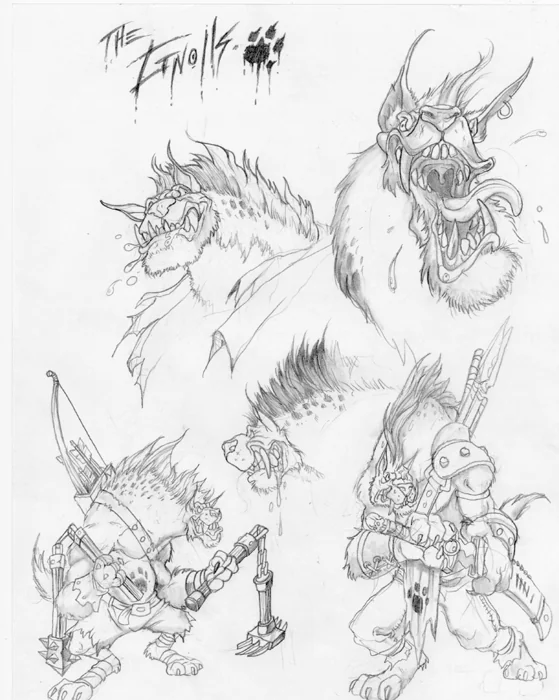
The Woodpaw gnolls occupied camps in southern Feralas where their raids threatened traffic moving between the forest's settlements. Their Alphas led fierce bands, and both Horde and Alliance travelers had reason to fear their territory. When a courier disappeared, a search among their camps uncovered a trail leading toward a danger greater than the gnolls themselves. The Woodpaw story shows how local warfare could conceal the approach of another threat.
Full History
The forest roads of Feralas were not secure simply because the Alliance and Horde had planted outposts at opposite ends of them. Between the coast, Thalanaar and the southern wilderness lay stretches of country where gnoll packs moved with impunity. The Woodpaw controlled parts of that ground. Their camps were dangerous to travelers and to scouts searching for news beyond the main roads.
From Camp Mojache, Hadoken Swiftstrider treated the gnolls as more than a scattered nuisance. He planned attacks on their Alphas, the pack leaders whose elimination might disrupt coordinated assaults against his settlement. His concern was a sustained impasse: the Woodpaw were numerous and aggressive enough that striking a few fighters would not necessarily end the trouble. Even success against individual leaders would leave the question of why their packs had grown so restless.
Farther west, the Alliance saw a different side of the same problem. Raschal, a courier serving Feathermoon Stronghold, vanished while traveling toward Thalanaar. Ginro Hearthkindle and Quintis Jonespyre searched for him, and the Woodpaw camps offered a plausible lead. Gnolls were known to scavenge and fight over abandoned possessions, so the search turned toward their territory. The discovery of the courier's backpacks did not prove the gnolls had killed him. Instead, the belongings contained evidence that Raschal had traveled farther south, following signs of strange insect creatures.
The trail led toward the Writhing Deep, a Zukk'ash hive hidden beyond the Woodpaw camps. This reversal made the investigation memorable: a region feared because of its gnoll inhabitants also bordered a threat that could change the fate of the wider forest. The Woodpaw were dangerous, but they were not necessarily responsible for every disappearance or every unexplained horror nearby.
Their story belongs to the wider struggle for Feralas. Night elven scouts watched the waterways and ancient ruins, the Horde defended Camp Mojache, and local tribes competed for the ground between. The Woodpaw showed how a relatively small faction could influence movement through a vast wilderness, while the search for Raschal revealed how easily familiar enemies could distract attention from a more alarming danger.
The Living Archive · Subject Chronicle
Through History
Explore documented turning points and follow their connections. The complete account remains in Full History above.
No additional documented milestones are available yet. The Full History above remains the primary account.