Quick Overview
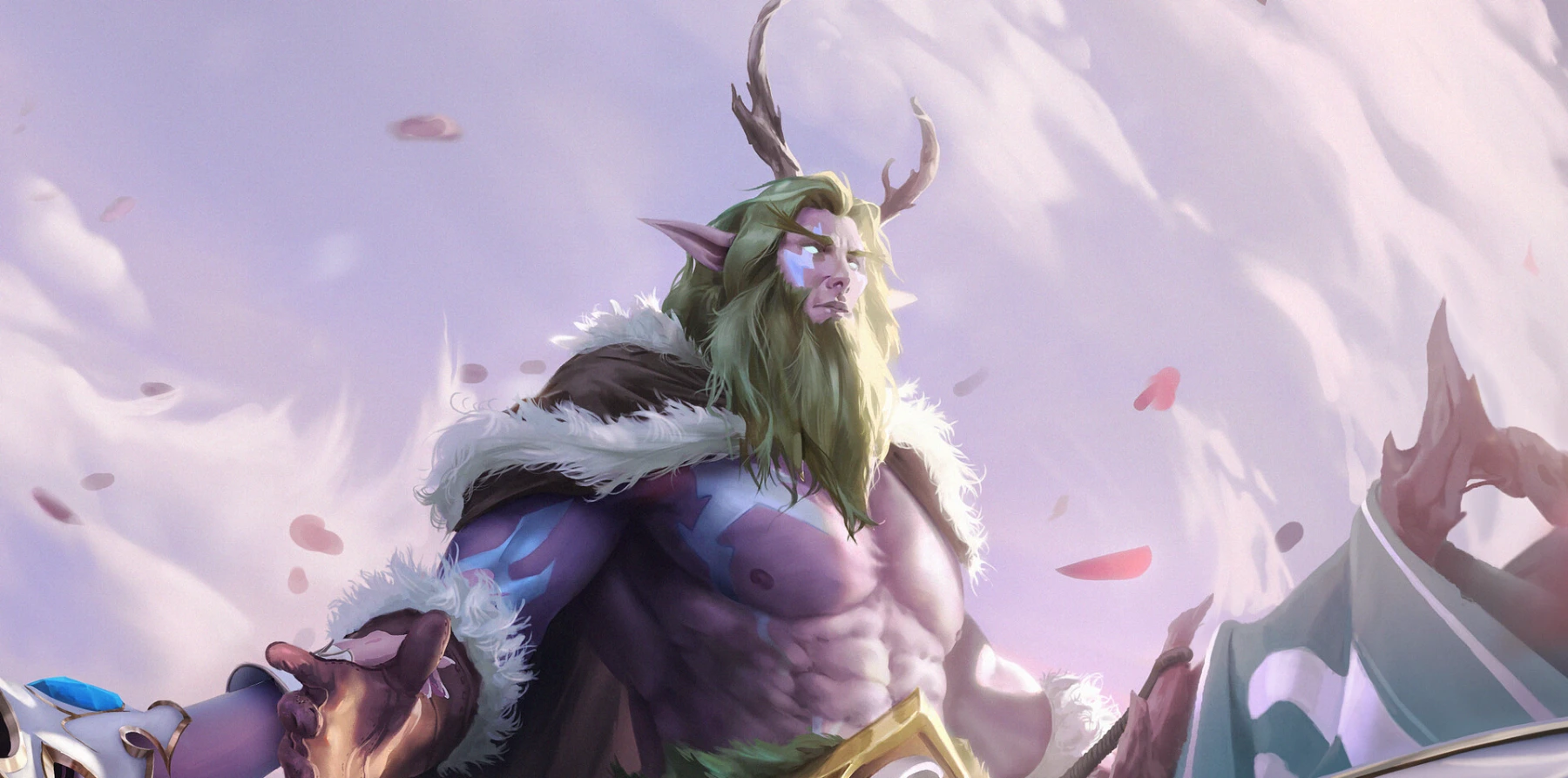
Malfurion, a student of Cenarius and one of the first great druids, helped resist the Burning Legion during the War of the Ancients. After the Sundering he opposed Illidan's second Well of Eternity and helped establish the night elves' bond to Nordrassil and the Emerald Dream. Awakened during the Third War, he led the night elves into an alliance with humans and orcs and helped destroy Archimonde at Mount Hyjal, costing his people their immortality. He later joined Tyrande and Maiev against Illidan's dangerous magic. At WoW launch his spirit is missing within the Emerald Dream; Tyrande governs while Fandral Staghelm acts as archdruid.
Full History
Malfurion Stormrage was born into a night elf civilization that seemed to have made magic the foundation of permanence. The Well of Eternity illuminated the greatness of the kaldorei empire, and Queen Azshara's court drew upon arcane energies with growing abandon. For many of the night elves, such power was proof of what their people could achieve. Malfurion grew increasingly uneasy with the same confidence. His twin brother Illidan was a prodigy of arcane power and sought mastery within that tradition. Malfurion found his calling instead among the forests, their spirits, and the ancient being Cenarius. He became a pupil of a way of life that did not treat the world as a reservoir to be exhausted for the ambitions of its rulers.
Tyrande Whisperwind, whom he had known since youth, followed the path of the priestesses of Elune. The three grew toward different forms of service while the empire around them drifted toward catastrophe. Their personal relationships mattered because the war that followed was never merely a contest between armies. It split friends and brothers over fundamental questions: What is the proper use of power? What must one do when those who rule claim authority from forces that threaten everyone beneath them? And can people who have spent their lives inside a civilization imagine surviving without it?
Malfurion's study under Cenarius introduced him to the Emerald Dream, the spiritual realm through which nature's deeper patterns could be perceived. Druidism demanded patience, humility, and an awareness of consequences that could outlast a single lifetime. These were not especially convenient virtues when demonic armies began pouring into the empire. Yet they provided him with a language for resisting both the Legion and the habits that had welcomed it.
Azshara and the Highborne used the Well of Eternity to pursue contact with powers beyond Azeroth, and the Burning Legion turned their ambition into a path for invasion. Demons poured into a world whose ruling elites had imagined themselves beyond ordinary danger. Malfurion joined the resistance alongside Tyrande, Illidan, and allies drawn from peoples who might otherwise never have stood together. The original-era *War of the Ancients* trilogy integrates Rhonin, Krasus, and the orc Broxigar into this ancient conflict through an accident of time. The travelers become part of the struggle rather than a separate alternate war: their actions help shape the sequence of events leading to the Sundering.
Malfurion's druidic gifts allowed him to confront the magical foundations of the invasion in ways ordinary soldiers could not. He entered the Emerald Dream to interfere with the workings of Xavius and others sustaining the demonic scheme. He fought alongside figures whose courage took very different forms, including the redoubtable Broxigar, who would give his life opposing the forces beyond the portal. Malfurion's leadership was not that of a crowned ruler. It emerged from his willingness to listen to the natural world and from his conviction that the defenders of Azeroth must disrupt the source of the catastrophe rather than merely kill the next demon in their path.
Illidan's relationship to the war remained more troubled. He understood the Legion's destructive power but continued to believe that harnessing forbidden energy offered the best defense. The brothers' disagreements grew sharper as the empire collapsed around them. Tyrande's imprisonment and rescue, the intervention of dragons, and the desperate effort to prevent Sargeras himself from entering Azeroth tested every alliance. The conflict ended with the destruction of the original Well of Eternity and a Sundering that remade the geography of the world.
Victory came at a price that no living witness could ignore. Great cities vanished beneath the sea. Peoples were displaced, and the once-mighty empire ceased to exist in the form that had given Malfurion and his companions their names and stations. Those who survived inherited both the responsibility of rebuilding and the knowledge that arrogance had nearly opened the world to annihilation.
The survivors' hopes for a new beginning suffered an immediate challenge. Illidan poured preserved waters of the original Well into a lake on Mount Hyjal, creating another reservoir of arcane power. To Malfurion this was not a safeguard but a repetition of the fatal error that had brought the Legion. He acted against his brother, and Illidan was imprisoned for his dangerous choice. The sentence would last thousands of years. It was a severe decision made in the conviction that the survival of the world mattered more than the reconciliation of one family.
The dragons Alexstrasza, Ysera, and Nozdormu helped secure the new Well against future abuse. The World Tree Nordrassil grew above its waters. Through the Aspects' blessings, the night elves received enduring life and a deeper link to the Emerald Dream. The druids accepted the obligation to spend long ages in restorative sleep, their spirits ranging through the Dream while the waking society protected forests and sacred places. Malfurion became a central figure in a civilization that deliberately turned away from the arcane practices of its former empire.
That order was neither static nor without cost. The druids' long absences left much of the daily governance and defense of night elf lands to Tyrande, the priestesses, and the Sentinels. Those remaining awake bore burdens that sleeping guardians could not share in person. Malfurion's relationship with Tyrande endured across separations measured by centuries, but it was shaped by vows to the larger world as much as by affection. The peace they helped maintain was a living compromise between different duties.
When the Burning Legion returned during the Third War, Tyrande awakened Malfurion and the druids to face a renewed invasion. The return did not merely confirm an ancient prophecy. It confronted Malfurion with the failure of ten thousand years of vigilance to render the world permanently safe. The Scourge had devastated the Eastern Kingdoms, demons were spreading through Kalimdor, and the night elves found themselves fighting unfamiliar orcs and humans as well as the enemies they recognized from the War of the Ancients.
Tyrande had released Illidan from imprisonment in the belief that his power might be necessary. Malfurion resisted the choice, fearing his brother would again pursue dangerous magic. Illidan soon consumed the Skull of Gul'dan's demonic power and defeated Tichondrius. The victory removed a terrible enemy, but it also transformed Illidan in ways that confirmed Malfurion's deepest concerns. Malfurion banished his brother from the night elf lands. He had won help at the cost of reopening a wound that centuries had not healed.
At first, night elves resisted the intrusions of humans and orcs into sacred forests. But the resurrected prophet Medivh brought leaders into contact and warned that division would serve only the Legion. Malfurion helped shape an alliance at Mount Hyjal among the night elves, Thrall's Horde, and Jaina's refugees. In that battle, each people fought to slow Archimonde's approach toward the World Tree. Malfurion prepared a final act that would draw upon the ancient spirits of the forest and the tree's blessings to destroy the demon lord.
Archimonde fell at Mount Hyjal, but the victory required a sacrifice. The night elves lost the immortality that Nordrassil's blessing had sustained. For a people whose leaders remembered an age before the Sundering, the change was profound. Their bodies could now age, and the promise that they might stand guard forever was broken. The forest had been saved, but its guardians were brought closer to the condition of the mortal peoples they had often regarded as strangers.
Malfurion's choice expressed the druidic vision that had shaped his life: a living world was worth more than the permanence of any one people. But it also raised difficult questions for the society that followed. How should the night elves live without the expectation of eternal years? How could their leaders protect ancient traditions while learning to negotiate with neighbors whose histories unfolded on a far shorter scale? And how should they understand the brother whose forbidden power had helped defeat a demon but whose actions still threatened catastrophe?
After Hyjal, Maiev Shadowsong pursued Illidan, who had allied with the naga. Malfurion and Tyrande eventually joined the hunt. At Dalaran, Malfurion perceived the threat posed by Illidan's use of the Eye of Sargeras to strike at the Frozen Throne. The spell endangered lands far removed from the intended target. Together the defenders stopped the magic, though Illidan insisted that destroying the Lich King was a necessary act. Their confrontation was sharpened by the sense that all the brothers' old disputes had returned under new names.
Tyrande became separated during the fighting, and Maiev allowed Malfurion to believe she had died. Illidan helped Malfurion rescue her, briefly replacing suspicion with the shared urgency of saving someone they loved. Malfurion then permitted his brother to leave, provided he no longer threatened their people. The resolution was neither reunion nor victory over Illidan. It was a decision to let him depart because confinement and revenge had not healed what divided them, and another battle among the night elves might only deepen their losses.
By the opening of *World of Warcraft*, Malfurion remains the great archdruid of night elf history, but he is not simply sleeping according to the old cycle. Something has gone wrong within the Emerald Dream: his spirit is missing, beyond even the reach of the green dragons, while his body remains asleep in a barrow den. With Malfurion lost, Tyrande governs the night elves in Darnassus and Fandral Staghelm has assumed the duties of archdruid. Fandral and his followers planted the new World Tree, Teldrassil, in hope of restoring the blessings lost at Hyjal, despite Malfurion's earlier warnings that such a selfish undertaking would not receive nature's blessing. The tree has not restored immortality; signs of corruption spread through its forests. Malfurion's absence is now a danger to a society that had always counted upon his return.
Malfurion's history is not the story of a ruler who defeated every enemy by force. It is the story of someone who tried to protect the world by understanding how life endures, and who repeatedly found that endurance demanded relinquishing something cherished: an empire, a brother's freedom, long years beside Tyrande, and finally his own people's immortality. Forests from Ashenvale to Felwood still carry the marks of the threats he fought. At launch his legacy is visible in the lives his decisions saved, and in the unresolved question of how his people will live now that endless time is no longer promised to them.
The Living Archive · Subject Chronicle
Through History
Explore documented turning points and follow their connections. The complete account remains in Full History above.
No additional documented milestones are available yet. The Full History above remains the primary account.
Further Reading
A research reference supplied with this article.