Quick Overview
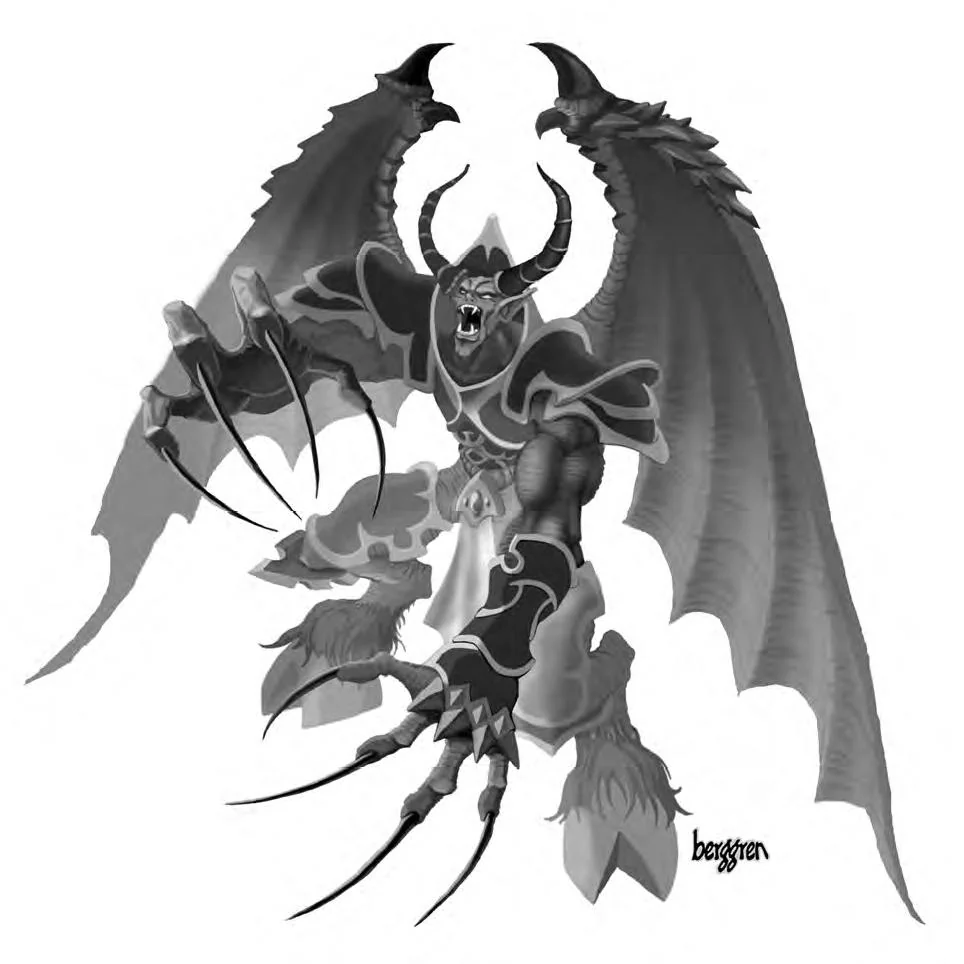
Tichondrius was a leading dreadlord of the Burning Legion and a supervisor of the undead Scourge as it devastated Lordaeron. He directed Arthas’s part in the campaign that secured Medivh’s book and enabled Archimonde’s arrival. During the invasion of Kalimdor, his forces corrupted Felwood. Illidan destroyed him using the power of the Skull of Gul’dan, but the act transformed Illidan and caused his banishment by Malfurion.
Full History
The Burning Legion did not conquer worlds only through armies large enough to darken the horizon. It also relied upon agents who could change a kingdom's fate before its defenders understood they were at war. Tichondrius was one of its foremost dreadlords, a nathrezim whose authority came through deception, command, and an expert understanding of weakness. Where Mannoroth offered blood and brute power, Tichondrius could use ambition, obedience, fear, and misplaced certainty to bring an enemy into the Legion's designs.
By the Third War, those designs centered on the undead Scourge. Ner'zhul, transformed into the Lich King, directed an expanding army from Northrend, but the Legion had imposed overseers to keep the strange new weapon within its control. Tichondrius was among the dreadlords who watched the Scourge, expecting obedience from the Lich King and from the mortal champions being drawn into undeath. The relationship was never secure. An army capable of overwhelming kingdoms might also develop masters whose ambitions no longer served the one who created it.
The plague spread through the lands of Lordaeron, turning citizens into enemies of their own families and neighbors. Arthas Menethil pursued the source of the disaster, but his determination led him toward Frostmourne and into the Lich King's service. The death knight returned to destroy the kingdom he had hoped to save. For the Legion, the catastrophe prepared the way for a far greater invasion, and Tichondrius helped bring the undead campaign under demonic direction.
In Warcraft III's undead campaign, Tichondrius appeared before Arthas and instructed him in the tasks the Legion required. The prince no longer fought for the living or for the dynasty that had raised him. He was to remove obstacles, help raise Kel'Thuzad, and set the stage for summoning Archimonde into Azeroth. This gave the dreadlord an uncomfortable vantage. Arthas appeared obedient, yet the force behind his loyalty was the Lich King, whose interests could diverge from the Legion's.
The Scourge seized the Book of Medivh in Dalaran after killing Antonidas. Kel'Thuzad used it to summon Archimonde, and the Legion's forces arrived in terrifying strength. Dalaran's destruction was a demonstration of the scale of power Tichondrius had helped unleash. A plague that began in villages had become the opening act of a war for the world.
The Legion turned its attention to Kalimdor, where Mount Hyjal and the surviving night elves represented a living obstacle to its plans. Tichondrius worked among the demonic forces that corrupted the forests and set the Scourge to clear paths for invasion. Felwood became one of the most visible marks of this desecration. Its devastation was not incidental damage: the Legion could destroy the natural strength that had protected the land for ages while forcing its guardians into a war of exhaustion.
Night elf leaders who had fought the demons thousands of years earlier returned to face the new incursion. Malfurion and Tyrande needed every possible advantage. Illidan Stormrage, newly released from his long confinement, saw an opening in the Skull of Gul'dan, a dangerous relic whose demonic energies had polluted the land. The price of using that power was obvious. Illidan had always believed that he could defeat the Legion by mastering what others feared to touch.
Illidan consumed the Skull's power and was transformed. With new strength, he confronted Tichondrius and defeated him. The destruction of the dreadlord disrupted the Legion's hold over the corrupted forest, but it did not restore Illidan to his brother's trust. Malfurion saw the demonic transformation as another proof that Illidan's methods endangered the very world he meant to defend. Illidan was banished despite the victory.
The episode captures why Tichondrius mattered even in defeat. The dreadlord's campaigns forced his enemies into terrible choices. The same weapon that destroyed him drove a wedge between two of Azeroth's most important defenders. The Legion's ambition was larger than any one servant; a fallen dreadlord did not mean its strategy had ended.
Tichondrius fell in Felwood before the final Battle of Mount Hyjal. The dreadlord's defeat removed one of the Legion's most cunning commanders, though it did not end the invasion. His relevance lies in the trail connecting the Scourge of Lordaeron, the destruction of Dalaran, the Legion's campaign in Kalimdor, and Illidan's transformation.
For an adventurer traveling through Felwood or reading the history of Arthas, Tichondrius is the face of an enemy whose true strength was not only the fear it inspired but the way it persuaded opponents to injure themselves. He became another casualty of that strategy when Illidan accepted the risk of corruption to destroy him. The world survived the battle, yet the damage endured in its forests and in the broken trust among its protectors.
The Living Archive · Subject Chronicle
Through History
Explore documented turning points and follow their connections. The complete account remains in Full History above.
No additional documented milestones are available yet. The Full History above remains the primary account.
Further Reading
A research reference supplied with this article.