Quick Overview
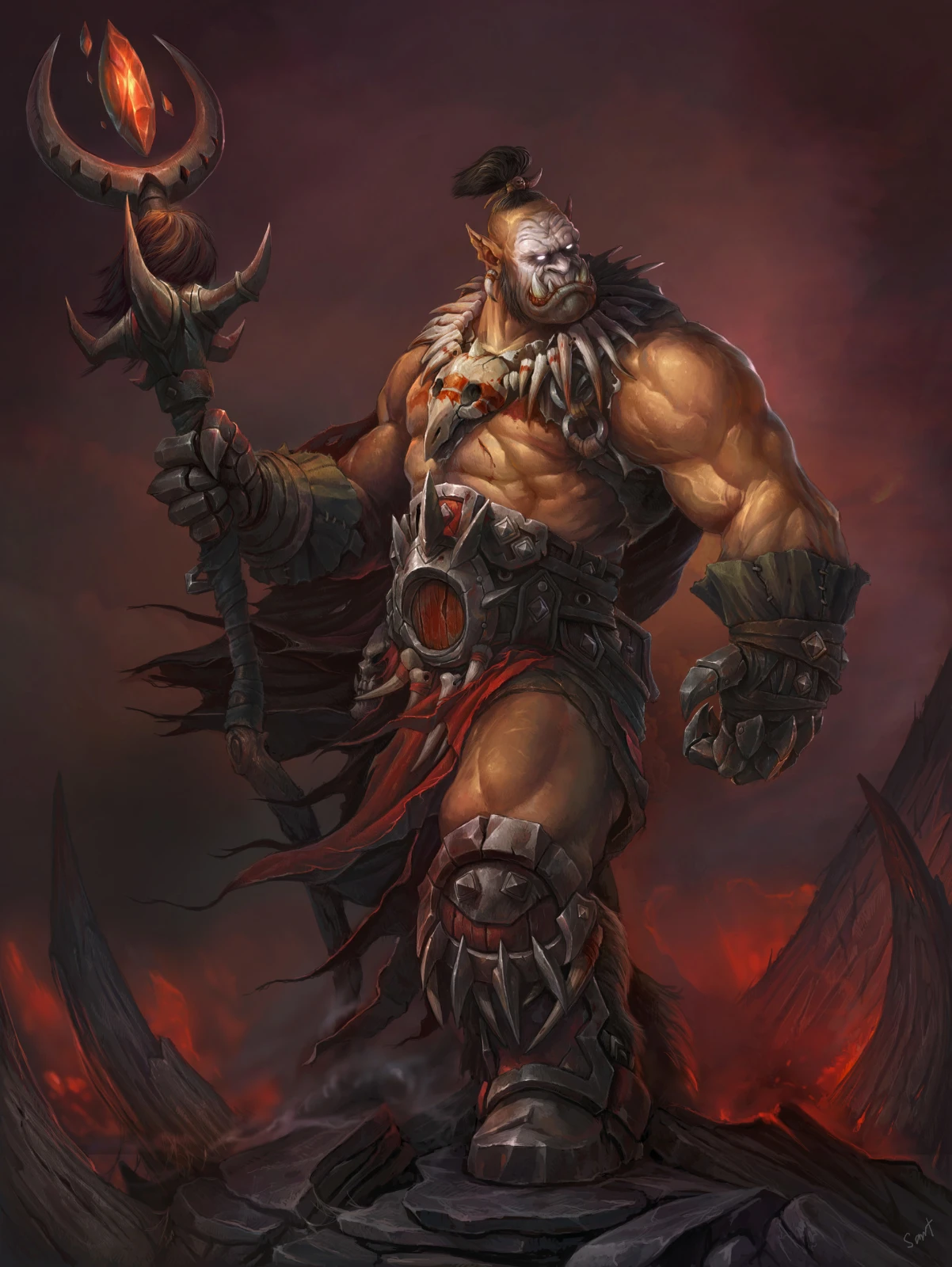
Ner'zhul was the elder Shadowmoon shaman deceived by Kil'jaeden as the Horde began its descent into demonic corruption. After the Second War, his effort to open portals beyond Draenor shattered his homeworld. Kil'jaeden bound his spirit into the Frozen Throne, transforming him into the Lich King and master of the Scourge. He summoned Kel'Thuzad, drew Arthas to Frostmourne, and ultimately joined with the fallen prince atop Icecrown during The Frozen Throne.
Full History
Before the title of Lich King was whispered across Lordaeron, Ner'zhul belonged to Draenor's world of clans, ancestral spirits, and the rituals of shamanism. He was an elder among the Shadowmoon orcs and a figure whose spiritual authority carried weight far beyond his own clan. The orcs lived in a culture where the counsel of the elements and ancestors could shape the choices of chieftains. Ner'zhul's authority depended on the belief that he could hear what others could not. That made him valuable to Kil'jaeden, the Burning Legion's deceiver, who needed an intermediary capable of turning an entire people toward war.
Kil'jaeden manipulated the shaman through signs and counsel that appeared to come from a higher source. Ner'zhul helped initiate the estrangement that would lead the orcs away from older traditions and toward the conquest of the draenei. Yet even before the campaign reached its worst excesses, he sensed the trap closing. He recoiled from the demand that the clans wholly surrender themselves to demonic power. The refusal did not undo the damage. Kil'jaeden found a more willing instrument in Gul'dan, Ner'zhul's ambitious student, and the transformation of the Horde proceeded without its first spiritual leader.
After the orcs' defeat on Azeroth in the Second War, Draenor had not been saved by distance. The clans that remained faced a devastated world and the consequences of the wars that had consumed their people. Ner'zhul rose again as a power on Draenor and directed a new effort to open paths beyond it. In the events of Warcraft II: Beyond the Dark Portal, the Shadowmoon leader sought powerful artifacts and magical knowledge that might enable passages into other worlds. Azeroth became a corridor to resources rather than the ultimate prize. The Alliance, led by Khadgar and its expeditionary commanders, recognized the danger and crossed the Dark Portal to stop him at its source.
Ner'zhul's scheme required the energies of multiple rifts. Instead of preserving Draenor, it began tearing the world apart. Great storms and destructive forces ripped through the land as his portals opened. The elder shaman, who once claimed a privileged understanding of the spirits, was now forcing the structure of the world itself to serve his escape. He fled through one of the gateways with chosen followers while the world behind him suffered the catastrophe that would leave it broken.
The passage brought Ner'zhul no freedom. Kil'jaeden awaited him in the Twisting Nether, determined to punish disobedience and recover the use of a servant whose knowledge had proven formidable. The shaman's body was destroyed, and his soul was bound to a supernatural prison carried to the frozen continent of Northrend. As the Lich King, he was granted vast necromantic power, but his power came with a mandate: prepare Azeroth for a new invasion by raising an army of the dead. Demonic overseers watched him, confident that a bodiless spirit trapped in ice could never truly act independently.
The Lich King learned to work through others. He sent his will into the world, summoned Kel'Thuzad, cultivated the Cult of the Damned, and directed the plague that would make Lordaeron's population into raw material for the Scourge. He also set his designs on Arthas. The prince's determination to destroy the plague made him easier to lead toward the cursed blade Frostmourne. Once Arthas took it, Ner'zhul gained a champion who could do what his disembodied master could not: command armies, carry weapons, and break kingdoms face to face.
Ner'zhul's first legacy was felt in the lives of orcs who never knew the full terms of the deception practiced on their elders. Gul'dan learned from him before becoming the warlock whose Shadow Council corrupted the Horde more openly. The clans that crossed the Portal into Azeroth carried the consequences of decisions made under the appearance of spiritual authority. Warriors later imprisoned in Alliance camps had not all bargained with demons, but they inherited a culture in which demonic power had already been made common. The disgrace and lethargy of the defeated Horde were not distant punishments unconnected to their past. They grew from the breakdown of older institutions that men such as Ner'zhul and Gul'dan had helped set aside.
His second legacy crossed the same boundary in reverse. Where the Horde had come from Draenor to destroy living kingdoms, Ner'zhul's Scourge arose from Northrend to make the population of Lordaeron fight against itself. The shaman who once mediated between the living and ancestral spirits was now the ruler of an army whose soldiers were denied even the ordinary peace of death. That reversal is essential to the tragedy. It would be easy to see the Lich King only as an icebound horror and forget the orc he had been. Yet understanding the orc shows that the horror did not arrive fully formed. It grew through successive bargains in which fear, power, and escape were repeatedly chosen over responsibility. Arthas's final ascent to the Frozen Throne did not erase that history. It bound the fates of two fallen leaders whose peoples had suffered from their attempts to command what they should have feared.
The Legion's defeat at Mount Hyjal created an opportunity. Ner'zhul had never forgotten his jailers, and the Scourge's interests were no longer identical with Kil'jaeden's. The demon lord ordered Illidan to destroy the Frozen Throne, while the Lich King called Arthas north to save it. Their struggle drew the surviving armies of the undead and Illidan's allies into a last contest for Icecrown. Arthas reached the summit, broke the icy prison, and placed the helm of the Lich King upon his head. The old shaman's story and the fallen prince's story joined at that moment. The original Frozen Throne ending presents their union, not the later detailed internal struggles described in subsequent books and expansions.
At World of Warcraft's launch, the Lich King reigns in remote Northrend, and Azeroth faces the consequences of plans Ner'zhul began long before his death. The Scourge is not simply a horde of monsters; it is the end of a chain of compromises, deceptions, and attempts to escape responsibility. In one lifetime he helped open the road to demonic conquest. In another existence he perfected a conquest that left the dead no choice at all.
The Living Archive · Subject Chronicle
Through History
Explore documented turning points and follow their connections. The complete account remains in Full History above.
No additional documented milestones are available yet. The Full History above remains the primary account.
Further Reading
A research reference supplied with this article.