
Quick Overview
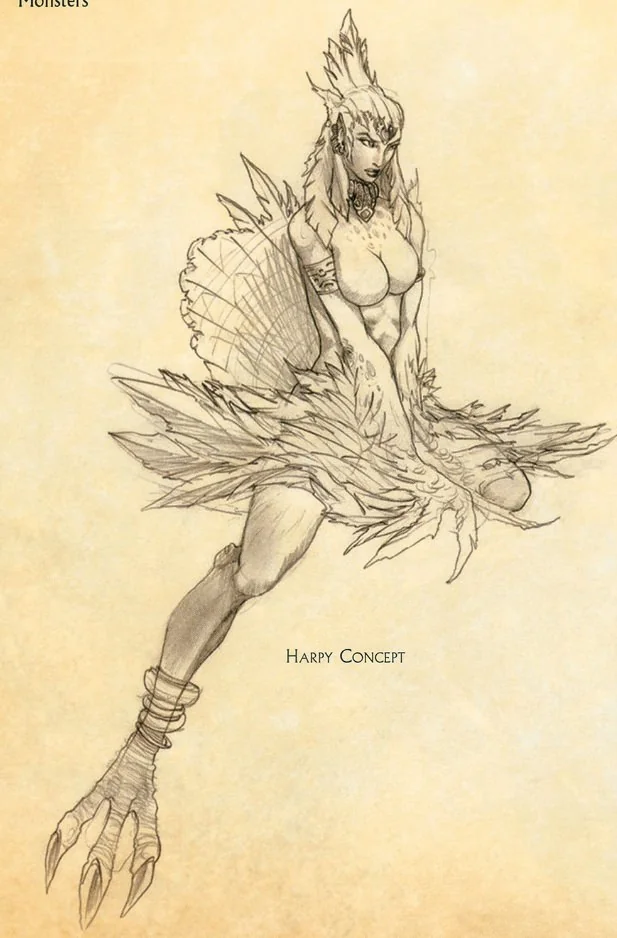
The Witchwing harpies nested in the Dry Hills northwest of the Crossroads and raided the caravan supplies sustaining the young Horde in the Barrens. Their flock possessed a recognizable chain of command, with slayers serving as lieutenants beneath a matriarchal leadership. Darsok Swiftdagger sought to break that organization rather than merely chase off individual attackers. Their conflict reveals how the defense of ordinary supply roads became essential to the Horde's new homeland.
Full History
The Crossroads was one of the practical centers of the Horde's new life in Kalimdor. Caravans crossing the Barrens brought provisions between settlements whose strength depended upon reaching one another. The Witchwing harpies, nesting in the Dry Hills to the northwest, turned this network into an opportunity for predation. They raided supplies often enough for Darsok Swiftdagger to begin studying the structure of their flock.
Darsok's response was deliberate. Rather than order indiscriminate fighting in the hills, he identified the Witchwing's lower ranks and officers. The common harpies and roguefeathers would be the opening targets. Above them stood slayers who carried rings identifying their place as lieutenants, and the officers' destruction was intended to shatter the flock's ability to coordinate raids. The raids were therefore more than a battle between isolated hunters: they became a contest between an organized hostile group and the Horde's effort to maintain its own communications.
The Witchwing chain of command also reveals something about harpy society. A matriarchal leadership held influence over a collection of fighters serving different functions. The records identify those ranks more clearly than they identify the flock's deeper origins or the date it settled in the Dry Hills. There is no need to invent a migration from another continent or an unseen war to account for its presence. The conflict documented in the Barrens is substantial on its own.
Caravan raids could be decisive without changing the colors of a map. Orgrimmar and the Crossroads were part of a newly formed political world in which soldiers, merchants, messengers and displaced peoples needed dependable roads. Every supply train lost to the Witchwing placed more pressure on settlements that were still finding their footing after the Third War.
The story of the Dry Hills shows the difference between founding a homeland and making it livable. The Horde could establish strongholds and claim allies, yet it still had to defend the routes among them from enemies that understood the terrain. The Witchwing harpies belonged to that less celebrated history of survival, where keeping food and travelers moving could prove as important as victory in a great battle.
The Living Archive · Subject Chronicle
Through History
Explore documented turning points and follow their connections. The complete account remains in Full History above.
No additional documented milestones are available yet. The Full History above remains the primary account.