
Quick Overview
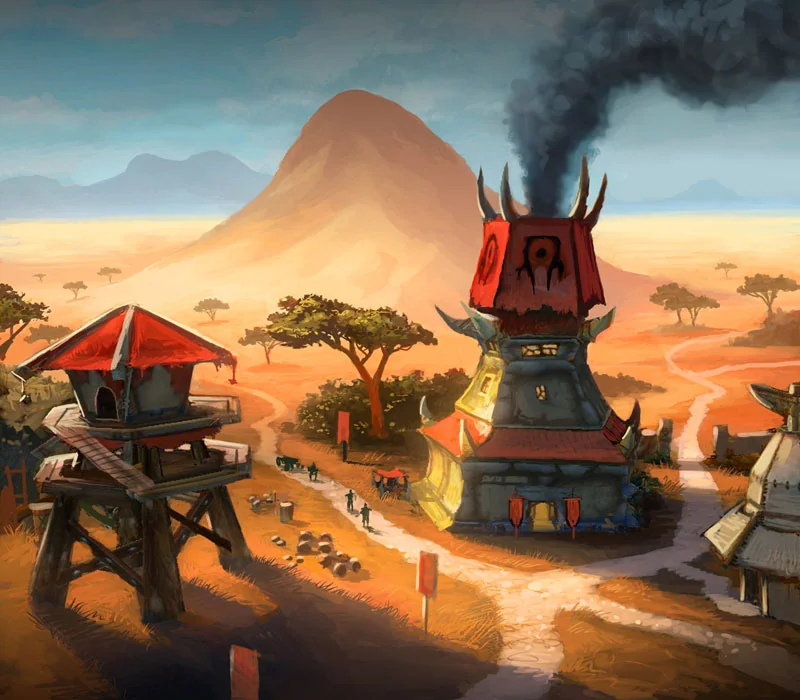
The Crossroads grew where central Kalimdor’s roads meet, linking the new orcish lands of Durotar with Mulgore, Ashenvale and the southern Barrens. After the Third War, the Horde’s orcish, tauren and troll allies needed a durable connection across dry and contested countryside. The settlement embodies the Horde’s attempt to become a stable confederation.
Full History
The Crossroads grew where central Kalimdor’s roads meet, linking the new orcish lands of Durotar with Mulgore, Ashenvale and the southern Barrens. Its strategic value came from travel and supply rather than from an ancient ruined city.
After the Third War, the Horde’s orcish, tauren and troll allies needed a durable connection across dry and contested countryside. A fortified market and garrison at the crossroads supported caravans, military patrols and the movement of settlers between their new centers of power.
The Crossroads acquired meaning because the New Horde was no longer a single marching host. Orcs established Orgrimmar in Durotar, Cairne's tauren gained a homeland in Mulgore, and the Darkspear trolls settled alongside their new allies. To keep this coalition from becoming a set of isolated refuges, they needed roads, defensive posts and trading places where the different peoples could meet. The Crossroads was placed at the practical center of that network. Traffic through the Barrens made it valuable, but also exposed it to enemies that could strike caravans before help arrived from distant capitals.
The Barrens around the settlement were never empty. Quilboar occupied their strongholds, centaur roamed dry country, and the Venture Company exploited the landscape with little concern for its inhabitants. To the north, conflict over Ashenvale's timber kept the Horde's relationship with the night elves dangerous. These pressures made the Crossroads a test of whether the new alliance could hold ground without returning to the old Horde's constant offensive warfare. Its guards served many different travelers, and its market supported peoples with distinct customs. The settlement's history is the slow and vulnerable transformation of wartime alliance into ordinary common life.
The settlement embodies the Horde’s attempt to become a stable confederation. It is built at a place where alliance and trade are daily necessities, while centaur, quilboar and other threats make that stability an unfinished task.
The Living Archive · Subject Chronicle
Through History
Explore documented turning points and follow their connections. The complete account remains in Full History above.
No additional documented milestones are available yet. The Full History above remains the primary account.
Further Reading
A research reference supplied with this article.