
Quick Overview
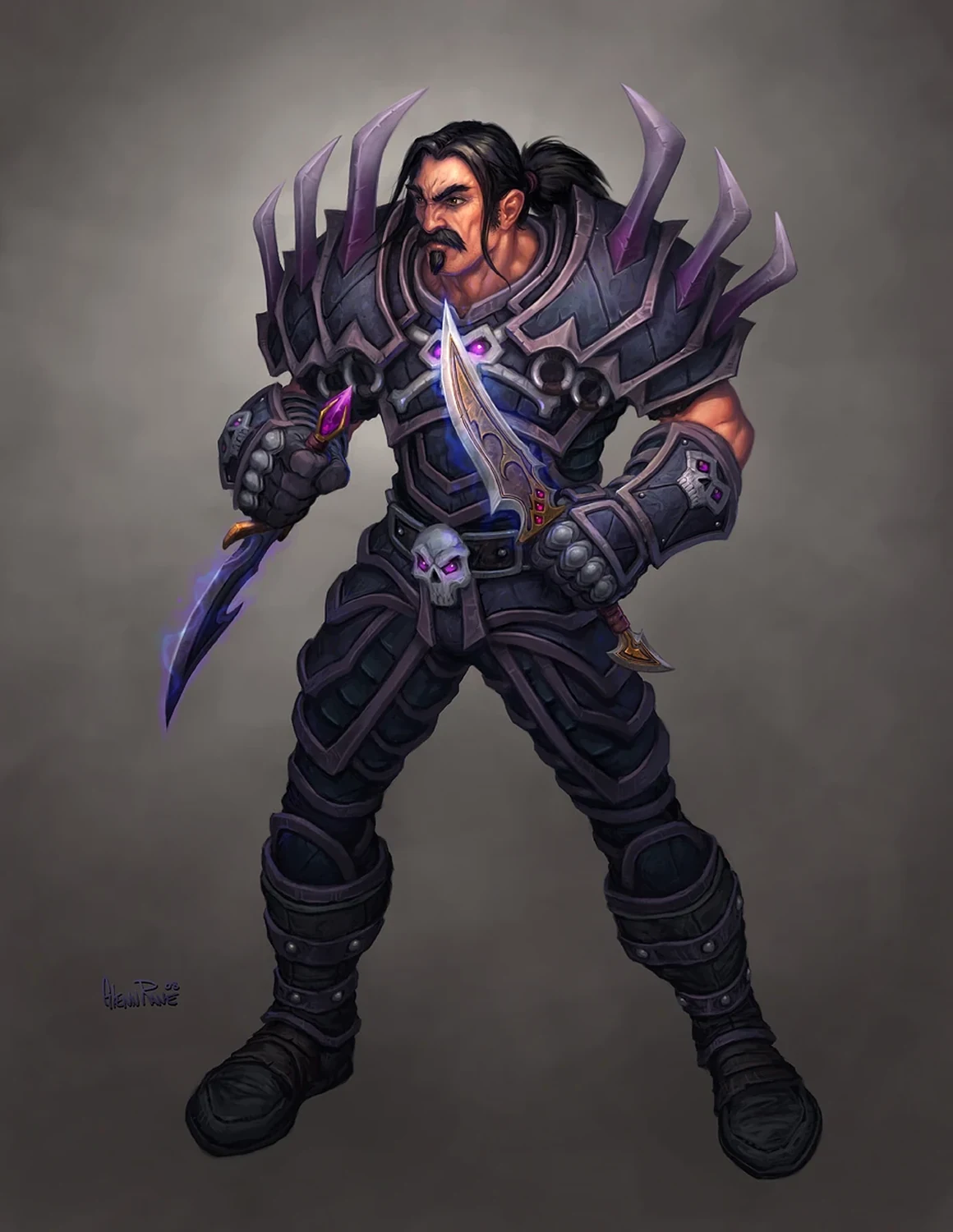
Lord Jorach Ravenholdt commanded a hidden league of thieves and assassins in the Alterac Mountains. The organization selected recruits for cunning and specialized skills rather than allegiance to a particular army. Its long rivalry with the Syndicate drew him into the struggle over the fallen kingdom’s surviving power.
Full History
Jorach Ravenholdt’s authority was deliberately unlike that of an ordinary commander. His followers did not gather beneath banners in a public square; they operated through secluded paths, secret meetings, and tests of personal skill. From a manor concealed in the mountains around Alterac, Ravenholdt oversaw a community of rogues whose reputation was built on professional competence and discretion. Where kings employed open levies, Jorach relied on agents able to move unnoticed.
An initiate’s first test offers a glimpse into the customs of his guild. Potential members were sent an invitation and a seal, then challenged to locate Ravenholdt Manor and prove their cunning. Success meant more than finding a hidden building: it showed the ability to follow hints without exposing the people who had placed them. This culture valued patience and stealth rather than the destructive theatricality of a battlefield.
Ravenholdt’s feud with the Syndicate had a political origin. Dispossessed Alterac nobles were seeking to build a new power from the ruins of their kingdom, and their hired brigands collided with Ravenholdt’s network. Jorach’s story therefore links a seemingly isolated master of assassins to the aftermath of Aiden Perenolde’s betrayal and the precarious security of Hillsbrad. Jorach’s authority rested on the discipline of his own hidden agents rather than charters from royal courts.
The Living Archive · Subject Chronicle
Through History
Explore documented turning points and follow their connections. The complete account remains in Full History above.
No additional documented milestones are available yet. The Full History above remains the primary account.
Further Reading
A research reference supplied with this article.