Quick Overview
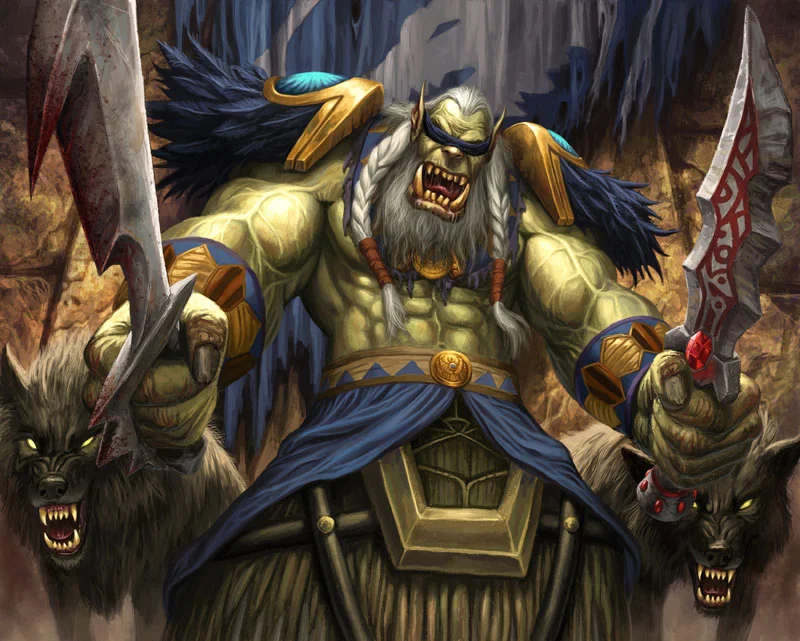
Drek’Thar is the elder shaman of the Frostwolf clan, whose people survived exile after resisting the worst demands of the old Horde. When Durotan’s lost son Thrall found them in Alterac, Drek’Thar taught him the orcish spiritual traditions that warlocks had displaced. His guidance helped turn a former gladiator into a shaman and future Warchief. His enduring legacy is the restoration of a people’s memory and an alternative to demonic servitude.
Full History
Drek'Thar belonged to the Frostwolf clan, one of the orcish communities whose history reached back to a Draenor before the Horde became an instrument of demonic war. In the old spiritual order, shamans sought the aid of the elements through respect and relationship. The rise of Gul'dan and his warlocks distorted that inheritance. Orcish leaders were tempted with swift power, and the clans were encouraged to see restraint as weakness.
The Frostwolves resisted some of the gravest demands imposed upon the Horde. Durotan, their chieftain, would not take Mannoroth's blood, and that refusal helped separate his clan from the warlords most deeply compromised by demonic influence. Drek'Thar lived through the consequences of the older Horde's collapse: the loss of a homeland, the humiliation of exile, and the urgent task of keeping the clan's traditions alive when so much of its world had been overturned.
The Frostwolves found a refuge in the cold reaches of the Alterac Mountains. Their survival there was not glamorous. They were far from the centers of the great wars, keeping their people together while humans held many other orcs in internment camps. Durotan and Draka were murdered, and their infant child disappeared. The clan had lost its leader and the son who might one day inherit his place.
Drek'Thar helped preserve what remained. As a shaman, he embodied a tradition that the Legion had tried to sever. He could remember the old ways without pretending that his generation had remained untouched by corruption and war. His authority rested partly upon that memory: he knew the cost of accepting borrowed power and the difficulty of recovering trust after a people's spirit had been wounded.
The Frostwolves' history was therefore a quiet counterpoint to the orcs' years in the internment camps. While many captives endured lethargy and hopelessness, the mountain clan maintained a living connection to customs older than the warlocks' promises. It was not a perfect preservation of the past, but it offered a foundation upon which a different future might be built.
Thrall escaped the human world that had raised him as a slave and gladiator. His search for the truth of his birth eventually led him to the Frostwolves. Finding Durotan's people did not instantly make the young orc their rightful leader in any meaningful sense. He had much to learn about a society from which he had been separated at birth. Drek'Thar became one of the central teachers who helped him understand both the clan's customs and the shamanic relationship with the spirits.
Thrall's training demanded patience. His strength and courage had been cultivated in arenas, where victory meant overpowering an opponent before a crowd. The work of a shaman was not the same. The elements were not slaves to be ordered about, and spiritual power did not flow from anger alone. Drek'Thar taught a young warrior to listen as well as to command. The lesson would shape the form of leadership that Thrall later offered the wider Horde.
Drek'Thar also helped Thrall understand what his father's refusal had meant. Durotan's defiance was not simply a story of an unusually stubborn chieftain. It represented a choice that could have saved more orcs had the clans been willing to make it. Recovering the old honor required acknowledging that they had first allowed it to be taken from them.
With the truth of his heritage and the beginnings of his shamanic training, Thrall joined Orgrim Doomhammer's campaign to liberate the interned orcs. The effort would give the scattered clans a way forward and restore political purpose to a people who had been treated as prisoners or marauders. Drek'Thar's influence traveled with Thrall even when the shaman himself was not present at every campaign meeting or battle.
That influence is visible in the new Horde's founding principles. The orcs would not return to the old bargains that made them servants of demons. They would respect ancestral practices and seek allies who shared their need for security. This vision was difficult to sustain in wartime, and Grom Hellscream's later relapse showed how easily the old corruption could be offered again. But a tradition that had survived among the Frostwolves gave Thrall something to fall back upon when the Legion returned.
In the years after Thrall's rise, Drek'Thar remains associated with the Frostwolf clan and its mountain homeland. Their refuge in Alterac continues to shape the clan's distinctive place within the new Horde. His role as a spiritual elder is a more enduring part of his importance than any single battle.
He is not the architect of a great empire or the victor of a decisive war. His place in Warcraft history comes from guiding a person who would become both shaman and Warchief. Without Drek'Thar, Thrall might still have found a way to fight the guards who imprisoned his people. He would have had far less help learning why freedom needed a moral purpose beyond revenge.
Drek'Thar's story illustrates a form of heroism easily lost amid wars of kings and demons: the work of keeping a memory alive, teaching it honestly, and entrusting it to someone capable of carrying it farther than its guardians ever could.
The Living Archive · Subject Chronicle
Through History
Explore documented turning points and follow their connections. The complete account remains in Full History above.
No additional documented milestones are available yet. The Full History above remains the primary account.
Further Reading
A research reference supplied with this article.