Quick Overview
Grom Hellscream led the Warsong clan through the old Horde's corruption and later aided Thrall's liberation of orc prisoners. On Kalimdor he pursued victory against Cenarius through Mannoroth's corrupted blood, killing the demigod and renewing the demonic curse over his warriors. Freed from immediate domination, Grom accompanied Thrall to face Mannoroth and died delivering the blow that ended the pit lord's hold on the orcs. By the WoW launch he is remembered for both the catastrophe his choices caused in Ashenvale and the sacrifice that freed his people.
Full History
Grom Hellscream was the fierce chieftain of the Warsong clan, an orc whose war cry became a symbol of courage to his followers and fear to his enemies. The Warsong belonged to the old clan societies of Draenor, but the coming of the Burning Legion changed the meaning of allegiance and glory. As Gul'dan's warlocks transformed the Horde into an instrument of invasion, many of the orcs were drawn into a blood pact that gave them terrible strength and bound them to demonic corruption. Grom stood among those who accepted that power. He would later become one of the people most determined to escape its consequences, but the part he played in the Horde's fall never ceased to matter.
Not all Warsong history took place in the kingdoms of Azeroth. The clan had fought on Draenor, endured the old Horde's campaigns, and survived in a world ravaged by the consequences of the warlocks' bargains. When the Second War failed and the Dark Portal became contested, many orcs remained trapped or scattered. Grom and his warriors survived hard years in which victory had lost the shape it once promised. Yet the chieftain's loyalty to his own remained strong. He could be reckless and proud, but he did not forget the warriors who followed him.
Thrall found Grom and the Warsong while trying to discover what it meant to be an orc. Raised in human captivity, Thrall had been taught to fight but not to know his people's history. Grom was a living connection to the old Horde, including its heroism and its corruption. The older chieftain offered the young escaped gladiator aid and instruction. Their relationship did not erase the difference between them. Thrall hoped to free the orcs from internment and recover the traditions the warlocks had destroyed; Grom carried the experience of having fought within the very order Thrall wanted to replace.
When Thrall joined the Frostwolves and eventually Orgrim Doomhammer, Grom remained part of the wider effort to liberate orcs held by the humans. These campaigns gave the scattered survivors a cause more enduring than the pursuit of another foreign capital. Grom could turn the strength of his people against the prisons and chains that had marked the Horde's defeat. He also saw the young Thrall grow into a leader whose authority came from something other than a demonic pact.
Grom's value to the New Horde was inseparable from his danger. His warriors were courageous, quick to fight, and slow to accept restraint. Thrall needed the Warsong's strength but repeatedly had to confront the anger that could make that strength destructive. The struggle was not merely one of temperament. The old blood oath had left wounds that courage alone could not heal.
When Thrall followed the prophet's summons toward Kalimdor, Grom and the Warsong sailed with the Horde. A violent crossing, difficult landings, and battles with hostile forces scattered the newcomers. They reached a continent already inhabited by peoples who had their own histories and sacred places. Grom's warriors were seeking a homeland; the inhabitants of the forests were defending one. Neither need made the conflict less dangerous.
In Ashenvale, Thrall tasked Grom's warriors with gathering lumber while the Horde worked to establish itself. The Warsong cut into forests protected by the night elves, and their advance drew the anger of the Sentinels and the demigod Cenarius. The chieftain's instinct was to answer resistance with force, but the night elves' defender was unlike any ordinary enemy he had fought. Cenarius and the forest's guardians challenged the Warsong at a moment when their frustration and fear made them vulnerable to an older temptation.
The dreadlord Tichondrius and the Legion had prepared a source of corrupted power. Grom and his warriors drank from a fountain tainted with Mannoroth's blood, believing its strength would allow them to defeat Cenarius. It did. The demigod fell, and with him died one of the ancient guardians of Kalimdor. But the price of the victory was the Warsong's renewed enslavement to the demonic will they had once obeyed. The same method that promised freedom from a battlefield defeat restored their chains.
Thrall learned what had happened and faced the necessity of saving a friend who had become an enemy through corruption. Jaina and her human forces cooperated with the Horde to confront the demonically altered Warsong. Rather than kill Grom outright, Thrall sought to remove the influence driving him. The battle to recover the chieftain showed that the young Warchief's Horde could not escape its past by simply declaring a new name. It would have to confront the actual powers that had shaped the old one.
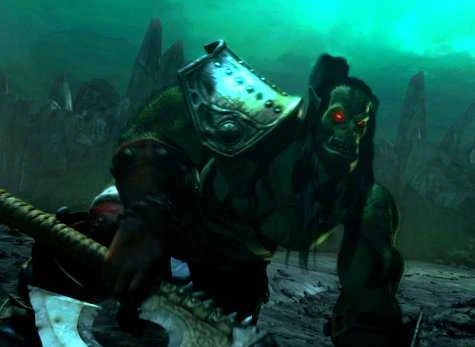
Freed from immediate domination, Grom understood that the stain of the pact still lay across his people. Mannoroth, the pit lord whose blood had helped enslave the orcs, remained the living source of that bond. Thrall and Grom pursued him, and the confrontation became a final reckoning with the old Horde's founding crime. Grom charged the demon with the furious courage for which he was famed and struck the decisive blow. Mannoroth was destroyed, and the orcs were freed from his blood curse. The unleashed energy killed Grom.
The act did not undo the death of Cenarius or erase the destruction caused during the old wars. It did something different. Grom, who had once accepted demonic strength as the measure of his people's destiny, spent his life to end the bargain. The price of freedom was not a promise of invincibility but the loss of the warrior who finally chose to break the chain.
By the original launch of *World of Warcraft*, Grom is dead, but his memory is alive in the Horde. Thrall rules the new nation from Orgrimmar, and the name Hellscream recalls both the terrible cost of demonic corruption and the courage of an orc who stood against it. Warsong forces still fight amid the contested forests of Ashenvale, where the killing of Cenarius remains part of the night elves' memory. The Horde celebrates the chieftain's sacrifice; the elves remember what the Warsong did before that sacrifice occurred. Both memories belong to the same history.
Grom cannot be made into a simple saint without losing the warning his story carries. He possessed genuine loyalty, bravery, and the power to inspire warriors who had endured defeat and humiliation. He also allowed pride and rage to make his people vulnerable to manipulation, with consequences suffered by those beyond his clan. His redemption was extraordinary precisely because it came after grave wrongs. The tale that survives him asks the Horde to honor his final choice without forgetting why such a choice became necessary. For Thrall and those who follow, the Warsong chieftain remains a reminder that freedom from the Legion must be won not only from demons in the field but from the desire for power at any cost.
The Living Archive · Subject Chronicle
Through History
Explore documented turning points and follow their connections. The complete account remains in Full History above.
Further Reading
A research reference supplied with this article.