
Quick Overview
The land that became Tanaris offered neither the forests nor the abundance their ancestors had known. Chief Ukorz Sandscalp leads a people whose enemies have multiplied while their allies have grown few. What can be said is that the hydra, the chief, and the city's guarded tombs make Zul'Farrak more than the remnants of a vanished empire. A traveler in Tanaris encounters a living people resisting outsiders and defending an old sacred city.
Full History
The Sandfury were not always desert trolls. Their ancestors belonged to the jungle-troll world connected to the Gurubashi, but lived toward the edges of its territory. When the Sundering broke ancient Kalimdor apart, geography changed their future. The land that became Tanaris offered neither the forests nor the abundance their ancestors had known. Over generations the people adapted to the heat and aridity, while the fertile empire behind them became a memory made unreachable by distance and upheaval.
Their changed appearance was more than a matter of color. Coarse skin, pale gold or brown tones, and different hair reflected a society living under a sun that punished those who could not endure it. The original Troll Compendium describes the Sandfury as territorial, distrustful, and unwilling to surrender the remaining lands they had managed to hold. It also makes an important distinction: unlike the Amani and Gurubashi, they never ruled a far-flung empire of their own.
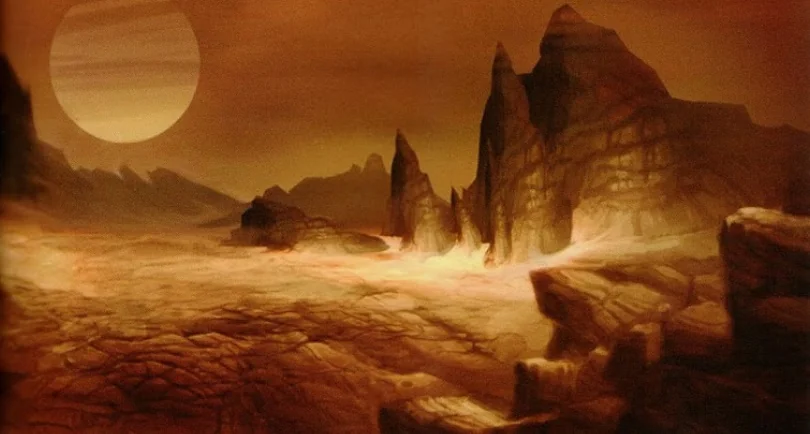
The ruins of Zul'Farrak are the heart of that struggle. Stone walls and tombs rise above the dunes, monuments to a city whose inhabitants remember a more secure place in the world. Outsiders see danger and treasure. The Sandfury see ancestral ground; in their view the intruders arrive with weapons and an appetite for sacred objects. That contrast makes the city more interesting than a dungeon whose purpose is only to hold enemies behind stone doors.
Chief Ukorz Sandscalp leads a people whose enemies have multiplied while their allies have grown few. Sandfury fighters defend entrances, ruins, and the surviving center of their culture. The tribe's hostility is real, as are the raids and brutality ascribed to its warriors, but the conflict cannot be understood by pretending that Tanaris was empty until explorers arrived.
Near Zul'Farrak's sacred depths stands the tradition surrounding Gahz'rilla, a colossal hydra whose presence gives the place a religious as well as military significance. The living troll world is full of powerful spirits, beings, and local cults; the Sandfury have adapted those beliefs to the desert.
What can be said is that the hydra, the chief, and the city's guarded tombs make Zul'Farrak more than the remnants of a vanished empire. The Sandfury still live there. Their rituals are not simply artifacts left behind for strangers to collect.
A traveler in Tanaris encounters a living people resisting outsiders and defending an old sacred city. Those are possible events of play, not universally established outcomes. The Sandfury's history ends here with a community surviving amid a ruined inheritance, a reminder that the troll peoples adapted to catastrophe in very different ways.
The Living Archive · Subject Chronicle
Through History
Explore documented turning points and follow their connections. The complete account remains in Full History above.
No additional documented milestones are available yet. The Full History above remains the primary account.
Further Reading
A research reference supplied with this article.