
Quick Overview
The troll peoples share traditions of loa reverence, priests, witch doctors, and powerful ritual obligations. Their differences arose over long periods through geography, independent rulers, conflict, and the devotion of particular communities to particular spirits. The Aqir–Troll War shaped political frontiers, but it did not establish every belief overnight. The contrast between Amani forest worship, Gurubashi conflicts over Hakkar, Drakkari northern shrines, and Sandfury ritual practices is best understood as several evolving histories.
Full History
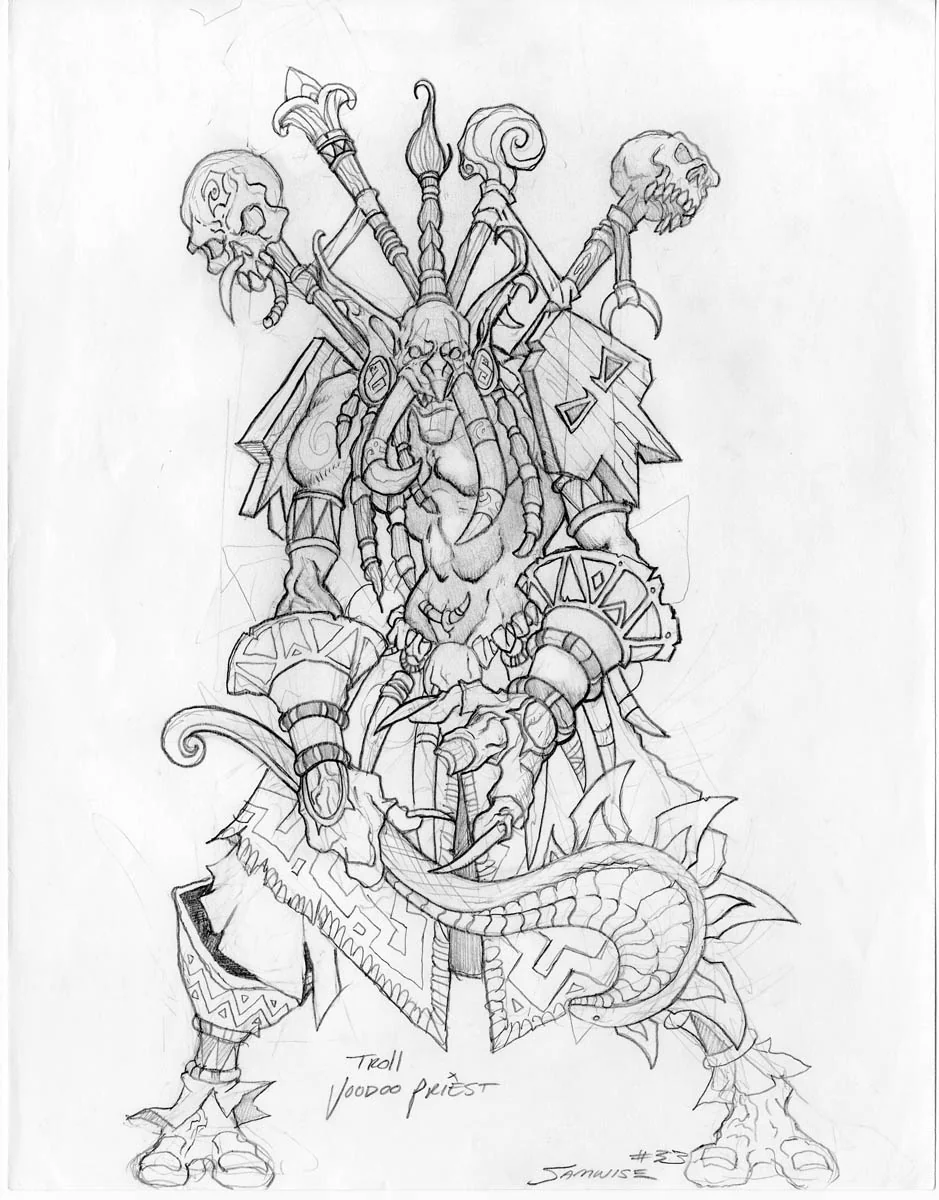
It is misleading to look at the troll peoples and assign each a single god or creed. The original Blizzard Troll Compendium portrays the Zandalari as preservers of religious learning and the shared intellectual heritage of a widely dispersed race. Tribal priests, witch doctors, and rulers depended on local experience, taboos, and powerful spirits to sustain authority. Over the ages the worship of the loa took on different emphases in different places.
The forest trolls who became the Amani invested in protecting sacred territory against rivals and later against elves. In retrospective lore, the pursuit of Kith’ix helps explain the historical significance of Zul’Aman, and much newer accounts introduce particular sacred beings and internal conflicts. Those later details must not be presented as part of an established 2004 account. The ice trolls maintained northern religious institutions under the Drakkari and encountered their own harsh enemies.
The Gurubashi story offers the clearest recorded religious schism. Famines following the Sundering led desperate priests toward Hakkar, who demanded blood sacrifices for the strength he offered. The Hakkari served him openly; the Atal’ai sought his return to the physical world; other jungle trolls and Zandalari opposed them. This is evidence of a specific struggle over ritual power and community survival, not proof that all Gurubashi or all troll peoples devoted themselves to Hakkar.
Among the Sandfury, Gahz’rilla and the defense of Zul’Farrak belonged to a local landscape after the Sundering. Darkspear communities, meanwhile, were driven from Stranglethorn and eventually made new alliances under Sen’jin and Vol’jin. Their experience with shadow hunters, witch doctors, and spiritual advisers cannot be reduced to the religion of the Gurubashi capital. The distinctions are cultural histories, not a simple list of racial colors and patron names.
The Living Archive · Subject Chronicle
Through History
Explore documented turning points and follow their connections. The complete account remains in Full History above.
No additional documented milestones are available yet. The Full History above remains the primary account.
Further Reading
A research reference supplied with this article.