
Quick Overview
No single soldier explains the fighting traditions of the trolls. Vol'jin is known as a powerful shadow hunter and adviser to Thrall; Rokhan's participation in the founding-of-Durotar campaign gives the tradition another visible representative. A jungle troll trained by the Darkspear does not necessarily share the loyalties of a Bloodscalp hunter, the religious practices of a Hakkari zealot, or the battlefield purposes of an Amani warrior. By the opening of World of Warcraft these traditions have been pressed into service by a small nation at risk.
Full History
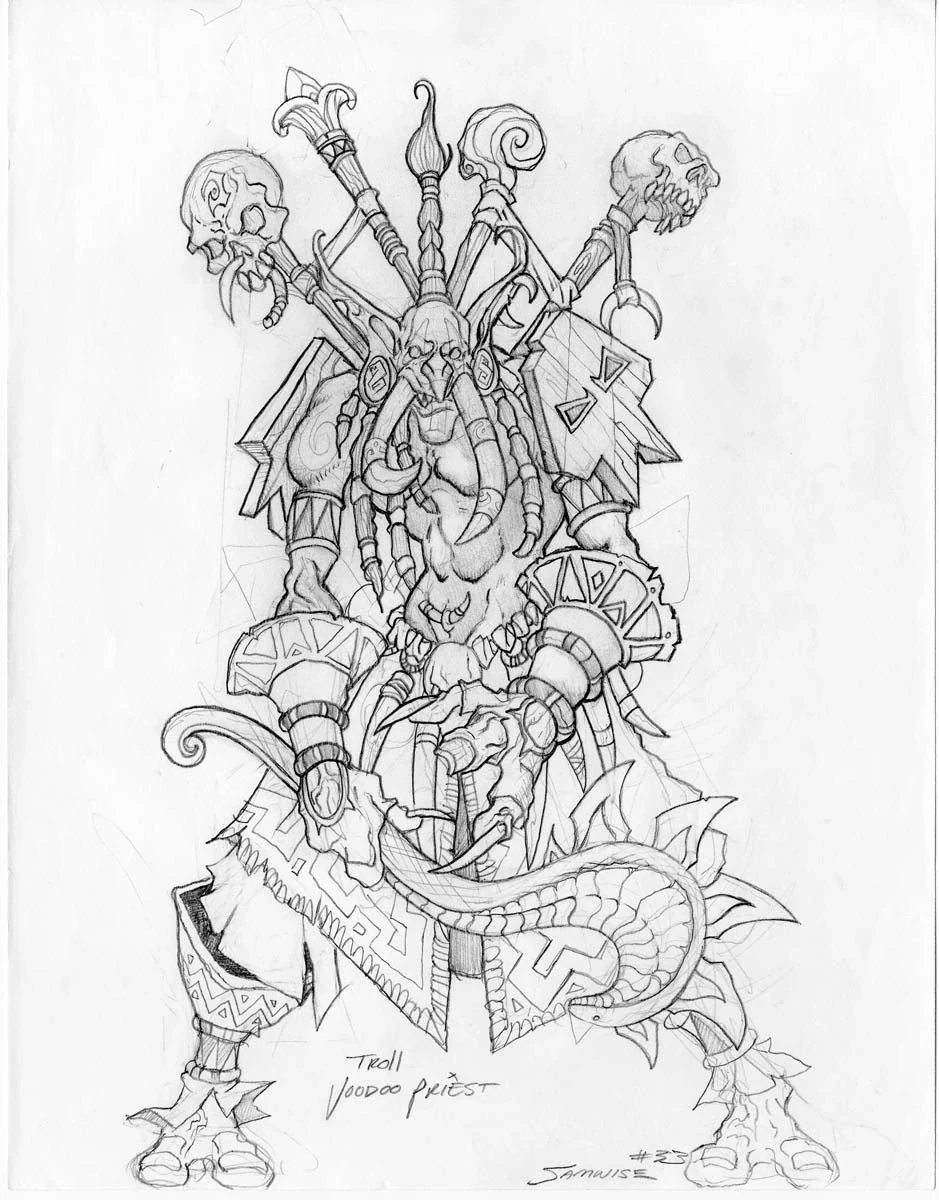
No single soldier explains the fighting traditions of the trolls. On one shore a headhunter follows animal tracks through the reeds; at a settlement's edge a witch doctor sets a ward; at a chieftain's side a shadow hunter weighs the advice of spirits against the immediate demands of war. Each role belongs to a culture in which practical survival and the unseen world are rarely far apart.
The Warcraft III manual describes troll headhunters as warriors trained to stalk, trap, and hunt dangerous prey. Their spears and thrown weapons are familiar emblems, but their expertise begins before the moment of battle. A small tribe cannot afford to lose every hunt or stumble blindly into ambushes. Tracking skill is a form of collective protection. It is easy for outsiders to call these warriors savage without noticing the patient knowledge of terrain upon which their victories depend.
Witch doctors occupy a different kind of frontier. In Warcraft III their wards heal allies, observe dangerous ground, and immobilize enemies. Their power can safeguard an encampment as well as harm a foe. Original-era troll society does not treat magic as the exclusive property of distant academies; local practitioners can be central to everyday defense. Yet Zalazane's betrayal reminds the Darkspear why such influence cannot be trusted merely because it wears a familiar face.
Shadow hunters join martial discipline to spiritual authority. Vol'jin is known as a powerful shadow hunter and adviser to Thrall; Rokhan's participation in the founding-of-Durotar campaign gives the tradition another visible representative. Their title does not make them interchangeable priests, shamans, or witch doctors. They stand where counsel, omen, survival, and combat overlap. A shadow hunter may matter to a chieftain because a threat is political as well as supernatural.
There is room for difference among the tribes. A jungle troll trained by the Darkspear does not necessarily share the loyalties of a Bloodscalp hunter, the religious practices of a Hakkari zealot, or the battlefield purposes of an Amani warrior. The 2002 manual and original 2004 accounts contain genuine information, but they sometimes use sweeping hostile language inherited from an enemy's point of view. An archive can preserve the factual roles without treating every insult as an objective account of an entire people.
By the opening of World of Warcraft these traditions have been pressed into service by a small nation at risk. Darkspear defenders guard a village on Durotar's edge while their former islands remain dangerous; Vol'jin advises a Horde with many competing needs; Gadrin confronts both curses and familial grief. The weapons, wards, and spiritual offices are not three disconnected abilities on a character sheet. Together they describe the ways a vulnerable community tries to stay alive.
The Living Archive · Subject Chronicle
Through History
Explore documented turning points and follow their connections. The complete account remains in Full History above.
No additional documented milestones are available yet. The Full History above remains the primary account.