Quick Overview
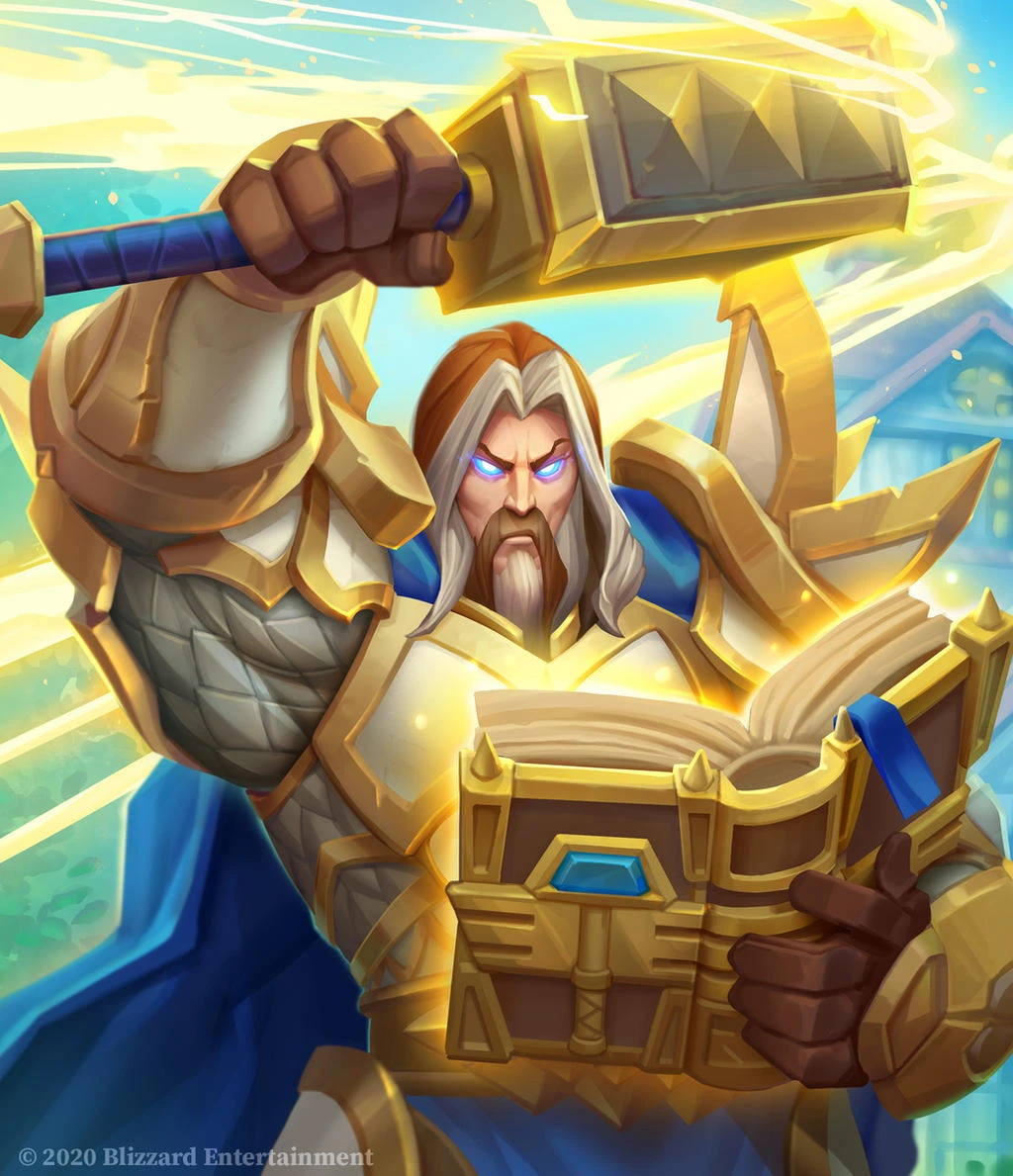
Uther the Lightbringer helped found the Knights of the Silver Hand and taught Prince Arthas the duties of a paladin. As the plague spread across Lordaeron, teacher and pupil parted over Arthas's order to purge Stratholme. After Arthas returned as a death knight and murdered King Terenas, Uther protected the king's ashes and died resisting his former student. His legacy remains a standard of conscience for those who still fight in Lordaeron's name.
Full History
Before the plague turned Lordaeron's green country into a wilderness of graves, Uther the Lightbringer represented the kind of strength that kingdom believed could defend it. He was a veteran of the wars against the Horde, but his enduring achievement was not a battlefield victory. Under Archbishop Alonsus Faol's guidance, he became one of the first paladins of the newly founded Knights of the Silver Hand: warriors trained to bind armed service to the Holy Light. Where ordinary soldiers carried the kingdom's orders, a paladin was expected to carry its conscience as well. Uther took that expectation seriously enough that his name became a measure by which other paladins were judged.
The Second War gave the Silver Hand its first terrible examination. Human kingdoms that had once fought separately were forced into an Alliance, and the orcish Horde pushed deep into Lordaeron's lands. Uther fought for more than a crown. Villages needed defending, refugees needed courage, and a coalition of frightened kingdoms needed to believe there were causes worth dying for. Afterward, as Lordaeron resumed a fragile peace, he remained a living symbol of the order's promises. Prince Arthas Menethil was among those he instructed. The young prince admired him, and Uther saw in Arthas the makings of a champion whose station might unite royal authority with genuine duty.
The warning signs first looked like a problem soldiers could solve: rumors of sickness, isolated attacks, and the restless dead on the outskirts of settled country. Uther and Arthas joined the effort to protect Lordaeron while the threat was still poorly understood. For a time, their partnership showed the best side of teacher and pupil. Arthas was fearless and energetic, and Uther provided patience, experience, and the judgment to distinguish courage from haste. But the plague was not simply disease. It was a campaign designed by the Lich King and prepared within the kingdom by Kel'Thuzad's Cult of the Damned. Every new outbreak mocked the paladins' belief that discipline and good intentions could contain the danger.
As the dead multiplied, Arthas came to see delay as complicity. Uther recognized the prince's anguish; he did not accept that anguish as permission to abandon moral limits. That disagreement became decisive at Stratholme. Arthas learned that a shipment of infected grain had doomed the city's inhabitants to rise as servants of the Scourge. He demanded that his soldiers purge Stratholme before the transformation could take place. Uther refused to carry out the order. Arthas stripped him of command and dissolved the Silver Hand's authority within his expedition. The break was more than a quarrel between generations. It was the moment the prince asserted that the scale of a threat excused any means of resisting it, while his teacher insisted that some actions destroy the very cause they claim to protect.
Uther could not prevent Arthas from pursuing the Scourge to Northrend. The prince returned transformed by Frostmourne, a runeblade that had claimed the soul of its wielder. Lordaeron did not understand what had happened until Arthas murdered King Terenas, his own father, and opened the heart of the kingdom to the undead army he had once sworn to destroy. The old defenses fell under a blow from the one person they had been raised to trust. Uther's warnings had not saved Arthas; now the paladin had to decide how to resist him.
In the ruins of royal order, Uther was entrusted with the urn holding Terenas's ashes. It was a modest burden compared with the armies he had once led, yet it carried immense meaning: a last act of loyalty to a murdered king and to the kingdom the king had embodied. Arthas sought the urn so that Kel'Thuzad's remains could be transported to the Sunwell and restored to unlife. The meeting between former pupil and teacher was therefore a collision of two kinds of inheritance. Uther guarded the memory of the dead. Arthas required a vessel for the next crime he intended to commit.
The Silver Hand was not founded in an age when its victories seemed guaranteed. The first orcish invasion had overrun Stormwind, and human rulers had seen how easily one kingdom could be defeated when its neighbors treated danger as a distant rumor. The order's holy warriors were a response to an exposed weakness in the human world: armies needed not only better weapons but leaders who could hold faith and courage together under impossible strain. Uther embodied that promise. The Light did not make its followers invulnerable, and the order never claimed that every battle would end cleanly. It asked that power be exercised as a trust. This distinction explains why the later disaster at Stratholme was not a dispute over tactics alone. The young prince had inherited the authority of a kingdom; Uther spoke for obligations a prince was not entitled to set aside.
The destruction of Lordaeron also scattered the order's legacy in complicated directions. Not everyone who took up a sword against the undead preserved Uther's patience. Survivors joined desperate militias, sought new causes, or succumbed to fear of corruption around them. By the time adventurers enter the Plaguelands at WoW's launch, the Scarlet Crusade's fanaticism and the Argent Dawn's restraint illustrate how differently people can claim to answer the same calamity. Uther cannot be made personally responsible for every later choice of those who followed the Light, but his life offers a standard against which those choices can be understood. His historical importance does not depend on whether a traveler stands at his memorial or knows his name. It lies in the argument he lost to Arthas, an argument every survivor of Lordaeron must still face.
Uther refused to surrender the urn, even when confronted by a death knight who still bore the face of the prince he had taught. Arthas defeated and killed him. The victory yielded the relic the Scourge needed and removed one of the few defenders whose reputation might have rallied scattered resistance. Yet Uther's death had consequences that cannot be counted in troop movements alone. He did not reverse the fall of Lordaeron, and the Silver Hand could not keep every knight from despair, fanaticism, or division. What survived was the image of a man who would not call an atrocity necessary merely because it promised an advantage.
At the opening of World of Warcraft, the lands where Uther had served were scarred by plague, factional hatred, and the struggling remnants of old institutions. In the Western and Eastern Plaguelands, the question that broke his partnership with Arthas had become everyone's question: how much humanity could be surrendered in the attempt to defeat an enemy that possessed none? Uther's story matters to the Argent Dawn, surviving paladins, and every traveler who enters Lordaeron's broken heart because it shows what the Silver Hand was meant to be before victory and vengeance became nearly indistinguishable.
The Living Archive · Subject Chronicle
Through History
Explore documented turning points and follow their connections. The complete account remains in Full History above.
Further Reading
A research reference supplied with this article.