
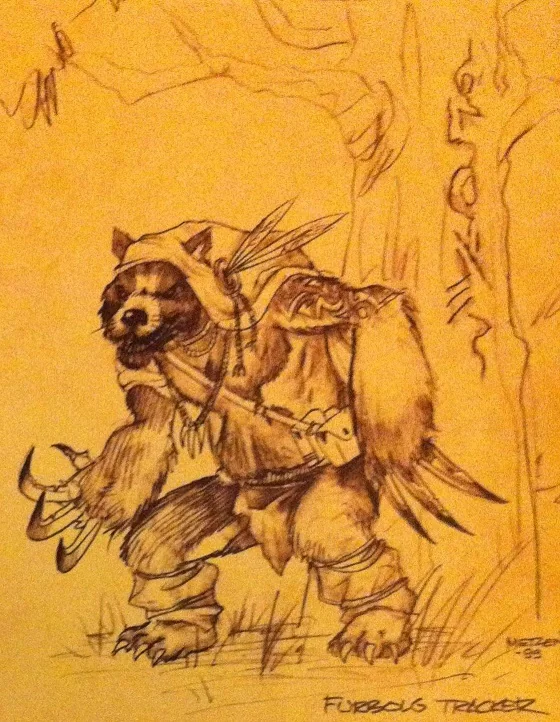
Quick Overview
The Blackwood are furbolgs whose villages lie among the northern woods of Darkshore. A satyr named Xabraxxis corrupted the tribe through magical talismans, turning neighbors of the night elves into a threat. The contamination reached furbolg food and daily life, but the original-era account also reveals a means of temporarily cleansing its effects. Their history shows how the Burning Legion's servants continued to poison communities after the larger war was over.
Full History
Darkshore's woods lie near the old night elf settlements and ruins that survived Kalimdor's ancient upheavals. Furbolg villages formed part of that forest world long before the new human and orc colonies appeared along the eastern coast. The Blackwood held camps near Cliffspring River and the ruins to the north, where they lived alongside a land that the night elves considered part of their ancestral responsibility. The tribe's hostility in the original Warcraft world grew from a corruption that arrived among people who had not always been enemies.
The source of the change was demonic. Satyr magic reached the Blackwood, and Xabraxxis used talismans to maintain his influence. Their ordinary food supplies became entangled with the corruption, making the camp's daily routines part of the means by which the curse was sustained. That cruelty reveals the distinctive horror of the Legion's lingering agents: conquest could continue without a visible marching army, simply by poisoning what a community relied upon to live.
Thundris Windweaver of Auberdine understood enough of the problem to seek a way of breaking the satyr's hold. Water drawn from the moonwell could be mixed with samples of the Blackwood's grain, fruit and nuts to provide a temporary cleansing. The process would reveal the satyr behind the enchantment and show that the furbolgs' violence was not necessarily their unaltered will. The possibility of rescue makes the story more tragic, not less. It means a hostile village might contain people whose true character has been overwhelmed by an enemy's spell.
This struggle belongs to the aftermath of the Third War. Although the defenders of Mount Hyjal defeated Archimonde and the Burning Legion, scattered demonic servants persisted in Kalimdor. Their taint fell upon furbolgs, animals and forest places that had no armies with which to defend themselves. The Blackwood's plight echoes the Deadwood of Felwood and the Winterfall of Winterspring, while also connecting to the night elves' attempt to preserve what remained of their land and people.
At the original World of Warcraft horizon, the Blackwood camps and Xabraxxis's corruption remain part of Darkshore's danger. The account does not assume that any traveler has completed a cleansing ritual or permanently restored the tribe. It closes instead on the historical reality that survival after the Legion's defeat was not the same as freedom from its influence. Even a village's food could become a battlefield in the struggle for the forest's future.
The Living Archive · Subject Chronicle
Through History
Explore documented turning points and follow their connections. The complete account remains in Full History above.
No additional documented milestones are available yet. The Full History above remains the primary account.