
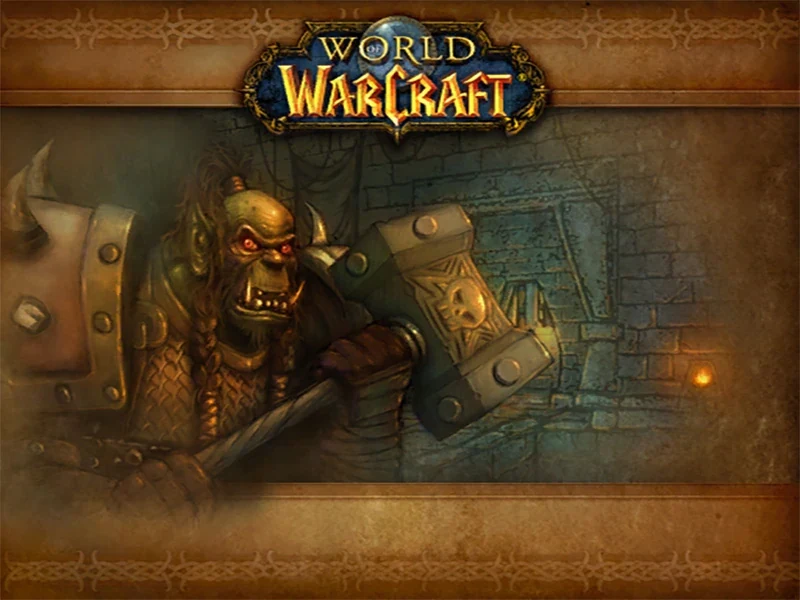
Quick Overview
Not every survivor of the old Horde followed Thrall into a new future. In Blackrock Spire, Rend Blackhand claimed the title of warchief and gathered orcs, ogres and forest trolls around the defeated traditions of the earlier wars. His renegade forces allied with Nefarian and the black dragonflight, gaining formidable protection in return for service. Their continued existence made Blackrock Mountain a place where the Second War’s ambitions remained dangerously alive.
Full History
The Horde that invaded Azeroth was broken by the end of the Second War, but defeat scattered its soldiers rather than erasing their loyalties. Some were imprisoned, some remained with their clans, and others withdrew into strongholds beyond the reach of the Alliance. In Blackrock Spire, the son of the first warchief tried to turn those remnants into a new center of power.
Rend Blackhand claimed the inheritance of his father, Blackhand, who had ruled the original Horde before Orgrim Doomhammer overthrew him. Lineage did not make Rend the leader of every orc. Thrall was building a very different Horde in Kalimdor, one shaped by escape from internment, the recovery of shamanic traditions and alliances with the Darkspear trolls and tauren. Rend rejected that transformation. His followers kept faith with the older dream of conquest and with the claim that Blackrock power still entitled them to lead.
Blackrock Spire gave the renegades a formidable fortress. Within its passages gathered soldiers of the Blackrock clan, ogres and forest trolls whose wars had bound them to orcish armies. The surrounding mountain was hardly safe territory. Beneath the Spire, the Dark Iron dwarves controlled their own stronghold and guarded the volcanic depths in which Ragnaros’s power was entrenched. The survivors of the Horde thus occupied a mountain divided among several hostile masters.
The decisive advantage for Rend came through his connection to Nefarian. The black dragon, son of Deathwing, sought control of the upper mountain and used the renegade Horde as part of his military strength. Dragonspawn under General Drakkisath defended the upper stronghold, while Rend’s forces helped keep the approaches secure. This arrangement gave Rend power, but it also exposed the limits of his independence. Behind the self-proclaimed warchief stood a black dragon pursuing purposes that did not belong to any orcish nation.
The Dark Horde represents a road the orcs might have continued to follow after the great wars: fortified, bitter and unwilling to reconsider the ideas that brought ruin to their people. Its survival makes Thrall’s reforms more meaningful. The new Horde had not inherited every clan or healed every grievance. In Blackrock Spire, the ambitions of the old warlords still had soldiers ready to fight for them.
The Living Archive · Subject Chronicle
Through History
Explore documented turning points and follow their connections. The complete account remains in Full History above.
No additional documented milestones are available yet. The Full History above remains the primary account.
Further Reading
A research reference supplied with this article.