
Quick Overview
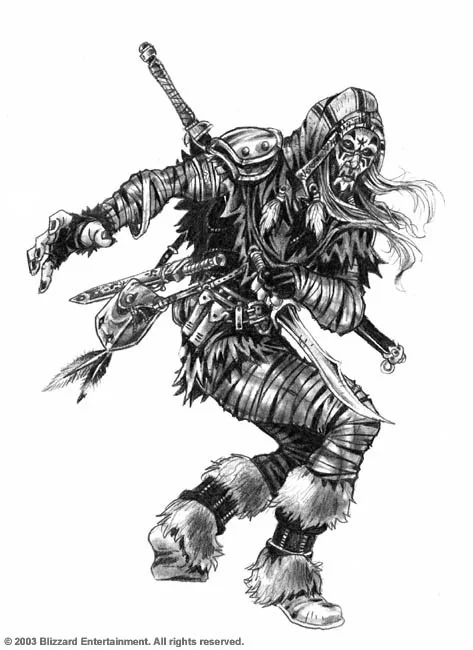
The Forsaken arose from undead who broke free of the Lich King’s control after the destruction of Lordaeron. Sylvanas Windrunner rallied these survivors and defeated rivals seeking power over the ruined human capital. They founded the Undercity beneath Lordaeron’s remains and made their former homeland the center of a new political identity. Their uneasy membership in Thrall’s Horde gave them allies, but neither the Scourge nor the hostility of living humans ceased to threaten them.
Full History
The fall of Lordaeron produced more than a ruined kingdom. The Scourge raised many of its dead to serve the Lich King, stripping them of control over their own actions and setting them against the living. When that domination weakened, some undead recovered their freedom without recovering their former lives. Sylvanas Windrunner, once the ranger-general defending Quel’Thalas, became the strongest leader of this emerging group. Hers was a force made up of people who had served an enemy against their will and now refused to return to obedience.
Freedom did not place the land immediately under their control. Dreadlords and remaining Scourge forces competed for power in the ruins of Lordaeron, while human troops under Garithos also claimed the former capital. Sylvanas made use of temporary alliances and divisions among her enemies. Varimathras, a dreadlord defeated by her forces, entered her service. Garithos helped in the struggle against Balnazzar but was killed after his usefulness ended. The struggle concluded with Sylvanas and her followers holding the ruined capital and declaring themselves the Forsaken, an independent people no longer acting as servants of the Lich King.
The Forsaken built their chief stronghold in the Undercity, extending below the old capital. Tirisfal Glades became the surrounding homeland of free-willed undead, although its farms, burial grounds, and villages remained marked by the Scourge’s destruction. Their enemies were not all of one kind. The Scourge sought renewed dominance; the Scarlet Crusade and other hostile humans fought the undead without necessarily distinguishing the Forsaken from mindless servants of the Lich King. The new society had to survive amid this overlapping danger while establishing institutions and loyalties of its own.
The original World of Warcraft presents their alliance with Thrall’s Horde as practical and sometimes uneasy. The Forsaken gained powerful allies and a place in a larger coalition, while the Horde gained a presence in the Eastern Kingdoms. That political bargain did not erase mistrust between the members or the scars of Lordaeron’s fall. The Forsaken’s defining historical achievement at this point is neither conquest of all the north nor the restoration of the old kingdom: it is the establishment of a free undead society in the ruins of the world that once claimed them.
The Living Archive · Subject Chronicle
Through History
Explore documented turning points and follow their connections. The complete account remains in Full History above.
No additional documented milestones are available yet. The Full History above remains the primary account.
Further Reading
Search result, not a direct source citation.