
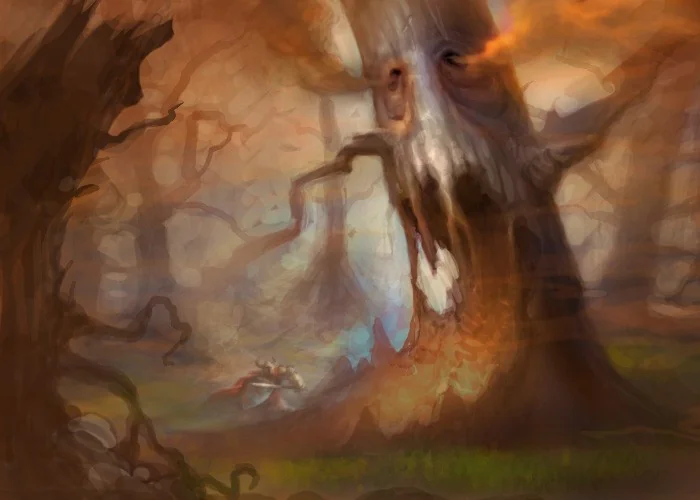
Quick Overview
The Western Plaguelands were once fertile lands supplying Lordaeron until the Cult of the Damned used infected grain to spread the Scourge's plague. Andorhal and Scholomance embody the destruction and the necromancy that followed. The Forsaken, Scarlet Crusade, Argent Dawn, and surviving Alliance defenders contest a country not yet reclaimed.
Full History
Before the Third War, western Lordaeron was a country of farms and prosperous market towns. Grain moved through Andorhal, estates lined the roads, and the royal capital lay not impossibly far to the north. That agricultural importance made the region vulnerable to Kel'Thuzad's plans. The Cult of the Damned distributed plague-tainted grain across Lordaeron, turning ordinary trade into a weapon. The resulting outbreak shattered the countryside even before the Scourge's armies completed the kingdom's collapse. Andorhal remains one of the clearest landmarks of that catastrophe, a ruined distribution center and battlefield rather than a normal town awaiting reconstruction.
Scholomance at Caer Darrow adds a more deliberate horror. The Barov estate's conversion into a school of necromancy became part of the machinery of the Scourge and the Cult of the Damned. Nearby farmland was transformed into plague-ridden territory, and once respectable households became sites of undeath or fanaticism. The Scarlet Crusade, born from survivors determined to destroy the undead, maintains its own uncompromising presence and does not always distinguish clearly between enemies and possible allies. The Forsaken and the Scourge, although both undead, should never be treated as the same faction: one has broken from the Lich King's control, while the other remains his instrument.
The Bulwark on the western approach marks the frontier where the Forsaken confront Scourge-held territory. Chillwind Point and other Alliance positions reflect attempts to contain the plague from the south. The Argent Dawn offers a different moral response to the disaster, seeking opposition to the Scourge without embracing the Scarlet Crusade's fanaticism. At the patch 1.1 starting point the Western Plaguelands are not a liberated province. Their ruins preserve Lordaeron's economic life, the logistics of its destruction, and the bitter divisions among the survivors trying to decide what justice should mean.
Uther the Lightbringer's tomb at Sorrow Hill gives this ravaged province another meaning. The memory of the paladin who tried to stop Arthas stands amid land that his former prince helped destroy. The grave offers a moral contrast to both the Scourge's necromancy and the Scarlet Crusade's increasingly harsh zeal.
The Living Archive · Subject Chronicle
Through History
Explore documented turning points and follow their connections. The complete account remains in Full History above.
No additional documented milestones are available yet. The Full History above remains the primary account.
Further Reading
A research reference supplied with this article.