
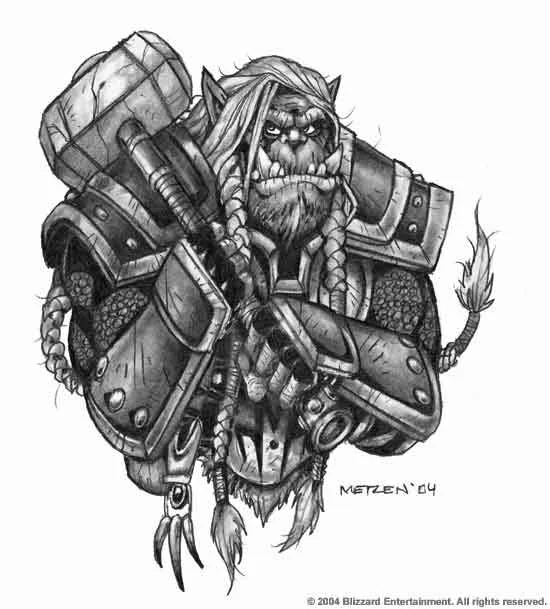
Quick Overview
Orgrim Doomhammer's capture marked the defeat of the Old Horde in the Second War. After years of conquest, the armies that had threatened the northern kingdoms could no longer sustain their campaign. The Alliance faced a new problem: what to do with the surviving orcs now held as prisoners in Azeroth.
Full History
Orgrim Doomhammer rose to command the Horde by overthrowing Blackhand, taking control of an army already responsible for the devastation of Draenor and the invasion of Stormwind. He continued the war into the northern Eastern Kingdoms, where the Alliance of Lordaeron assembled against him. His campaigns threatened the homes of humans, dwarves, high elves, and others, and his military successes made the orcish conquest appear possible for a time.
The Horde's advance eventually faltered. Gul'dan deserted the campaign in pursuit of the Tomb of Sargeras, drawing strength away from the fighting. The Alliance rallied after Anduin Lothar's death, and Turalyon carried forward the offensive. Doomhammer was captured as the orcish war effort collapsed. The defeat ended the Second War's great invasion without immediately settling the fate of every orc in Azeroth.
The Alliance then faced an unprecedented question. The captured orcs were not a neighboring kingdom whose ruler could merely sign a treaty and return home. Their link to Draenor had become uncertain, their war machine was broken, and the powers that had corrupted them were withdrawing. The victors established internment camps to confine the surviving soldiers, an arrangement that brought severe costs and difficult political arguments among the human kingdoms.
Doomhammer's own story continued into the generation of Thrall. His eventual role in the liberation of the orcs connected the fallen Old Horde with efforts to create something different. Yet the capture at the end of the Second War remains a clear turning point: the invading army was defeated, its military command shattered, and the remnants of the Horde entered an age defined less by conquest than by captivity, lethargy, and the search for a new identity.
The Living Archive · Subject Chronicle
Through History
Explore documented turning points and follow their connections. The complete account remains in Full History above.
Further Reading
A research reference supplied with this article.