
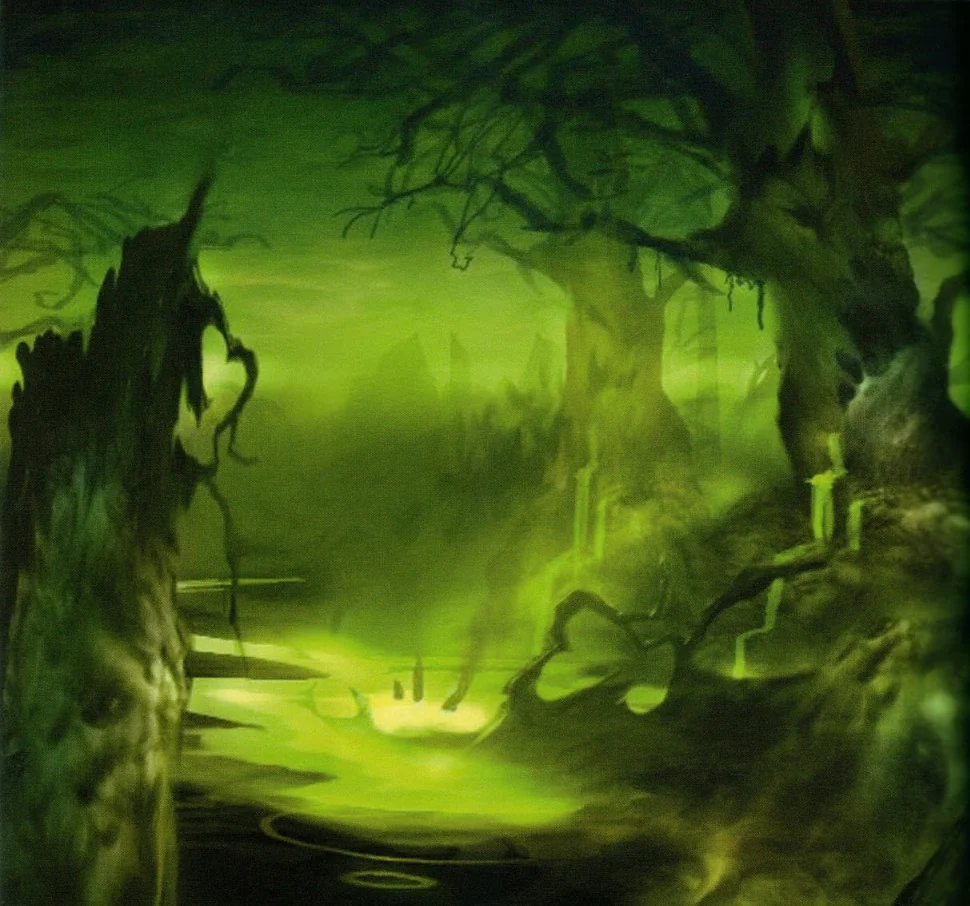
Quick Overview
Jaedenar was built into ancient night-elven ruins in the forest that became Felwood. The council’s warlocks survived the downfall of the old Horde and the Third War, gathering in protected chambers and the underground Shadow Hold. Jaedenar embodies a danger that Thrall’s victory could not immediately erase: the institutions of demonic service still existed beyond the new Horde’s control.
Full History
Jaedenar was built into ancient night-elven ruins in the forest that became Felwood. The site’s name honors Kil’jaeden and signals its connection to demon worship and the Shadow Council.
The council’s warlocks survived the downfall of the old Horde and the Third War, gathering in protected chambers and the underground Shadow Hold. Their continued activity deepened the corruption already inflicted on the forest during the Burning Legion’s invasion.
The Shadow Council's survival is central to understanding Jaedenar. Gul'dan had used demonic magic and a network of warlocks to consolidate power within the old Horde, and the destruction of that faction's armies did not eliminate its teachings. Cultists sought secluded places where their rituals could continue without the scrutiny of a new warchief committed to restoring shamanism. The remains of night-elven sites in Felwood were suitable because the forest had already suffered the Legion's invasion. Jaedenar became a point from which old corruption could be maintained and spread through a land that desperately needed healing.
The resistance to the cult was not simply another war between Horde and Alliance. Night-elven druids and their allies understood that Felwood's sickness threatened the soil, the creatures and the future of the forest itself. Destroying an individual warlock could prevent a ritual, but healing the district demanded longer work, including the protection of moonwells and other places associated with life. Shadow Hold provided the council with defensible chambers, and the ruined surface was only part of its organization. Jaedenar's story is therefore about the persistence of institutions after their apparent defeat: the old Horde's demonic loyalties remained active even when Thrall's New Horde had repudiated them.
Jaedenar embodies a danger that Thrall’s victory could not immediately erase: the institutions of demonic service still existed beyond the new Horde’s control. The nearby druids and their allies faced the task of breaking the cult without repeating the Legion’s methods.
The Living Archive · Subject Chronicle
Through History
Explore documented turning points and follow their connections. The complete account remains in Full History above.
No additional documented milestones are available yet. The Full History above remains the primary account.
Further Reading
A research reference supplied with this article.