Quick Overview
Long before the First War, the land that would become Quel'Thalas was already meaningful to the Amani. Powerful magic broke the Amani offensive, and warriors who had expected another campaign to recover their forests instead faced a disastrous defeat. When Zul'jin rose during the Second War, he was not inventing the demand to reclaim Quel'Thalas. The Troll Wars explain why an event thousands of years old remains an active argument about who belongs in the northern woods.
Full History
Long before the First War, the land that would become Quel'Thalas was already meaningful to the Amani. Forest trolls had inhabited and defended the northern woods for ages. When the high elves crossed the sea and sought a new home, they entered a region the trolls did not consider empty. The elves brought arcane magic, built settlements, and eventually raised a protected kingdom. To them it was a refuge after exile from Kalimdor. To the Amani it was another civilization laying claim to ground their ancestors had held.
The first wars over those forests did not erase the conflict. Runestones defended elven settlements; the Amani withdrew, gathered strength, and endured. Generations passed, but the memory of conquest did not fade merely because an elven map gave the land a new name.
When the Amani threatened Quel'Thalas with a renewed assault, the elves turned south to the emerging human kingdom of Arathor. The people of Arathor had their own troubles, and aiding a distant kingdom brought great risks. But a common enemy created a bargain that transformed both allies. The elves offered to teach a small group of humans the arts of magic. One hundred human students entered a discipline that had previously been guarded by elven practitioners.
The exchange was not simply an extraordinary lesson for aspiring magi. It was a military decision made under the pressure of possible destruction. A skill carefully rationed to a hundred people could still change the course of a battlefield when combined with human armies and elven spellcraft.
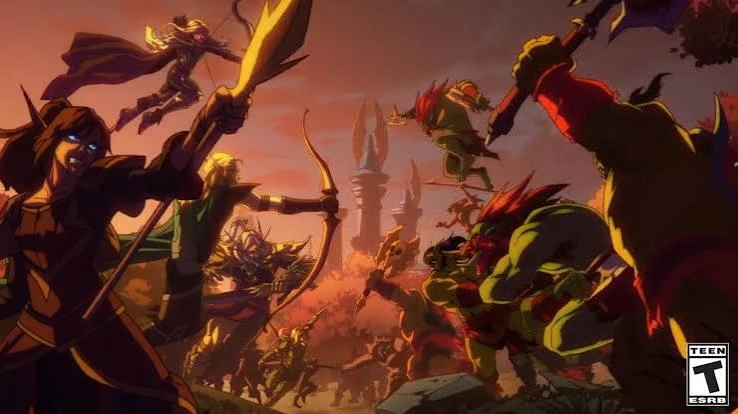
The united human and elven forces confronted the troll army in a struggle whose outcome shaped the entire northern continent. Powerful magic broke the Amani offensive, and warriors who had expected another campaign to recover their forests instead faced a disastrous defeat. The Troll Wars shattered the ability of the Amani Empire to control its old territory as a single great power. Arathor gained an enduring reputation as the kingdom that had answered the elves' call; the elves preserved Quel'Thalas; humanity gained a magical tradition that would influence its history for millennia.
There were no uncomplicated victors in the memory of this war. High elves celebrated survival. Human chroniclers remembered unity and the beginnings of their arcane legacy. Forest trolls remembered the destruction of armies sent to reclaim their homeland. The contradiction is part of the story, not a mistake to be removed from it.
The Amani did not disappear. Their surviving tribes retained sacred places, bitterness toward the elves, and ties that might one day be gathered under a warlord. When Zul'jin rose during the Second War, he was not inventing the demand to reclaim Quel'Thalas. He was giving an ancient grievance a new army and a temporary alliance with Orgrim Doomhammer.
For the original WoW explorer, the war's consequences are visible far beyond an old battlefield: in elven runestones, the old human kingdom of Strom, the divided tribes of the Hinterlands, and the hatred still held by forest trolls toward Quel'Thalas. The Troll Wars explain why an event thousands of years old remains an active argument about who belongs in the northern woods.
The Living Archive · Subject Chronicle
Through History
Explore documented turning points and follow their connections. The complete account remains in Full History above.
Further Reading
A research reference supplied with this article.