
Quick Overview
The Pool of Tears hides more than a drowned building. Inside the temple, religious devotion and the corruption of the surrounding world are intertwined. The temple is a living remnant of the Gurubashi civil struggle and a warning about the limits of force: an evil pushed underground may grow more secretive without growing weaker. Its unresolved threat is the reason the place matters.
Full History
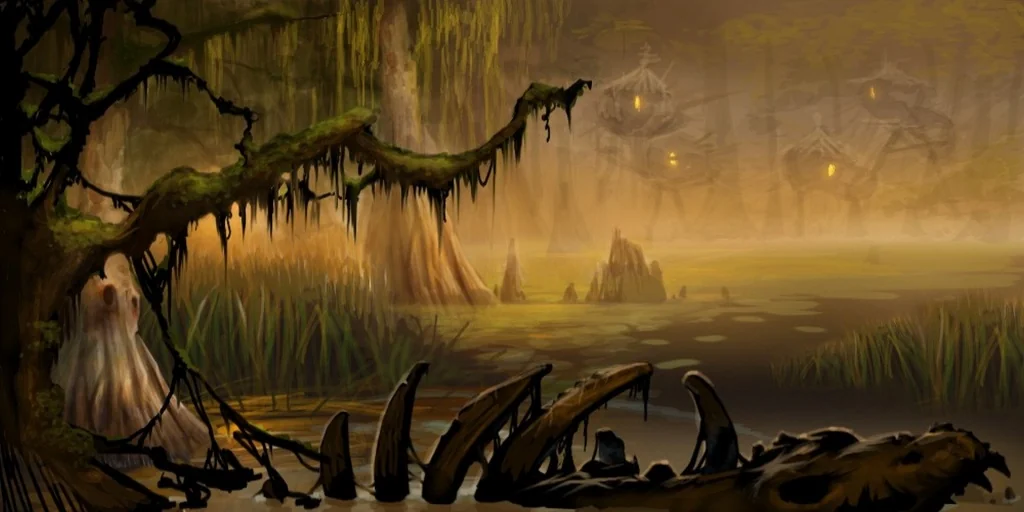
The Pool of Tears hides more than a drowned building. Deep within the Swamp of Sorrows stands the Temple of Atal'Hakkar, raised by priests who had been driven from the centers of troll power but never abandoned the Blood God. The temple's stones preserve a decision made long before the kingdoms of the current age were born: the Atal'ai would continue serving Hakkar even when their own people rejected what that worship required.
For the exiles, the swamp offered distance and concealment. Forest and water could protect rituals that would invite revolt elsewhere. The priests created a sanctuary designed not merely to honor their god but to prepare for his return. Their work connected older Gurubashi conflict to a region far from Zul'Gurub, showing how a defeated religious faction could survive by turning exile into opportunity. What failed in one city could be attempted again in another.
Ysera and the green dragonflight recognized the danger. The original history associates their intervention with the sinking of the temple beneath the swamp. Water and earth swallowed the structure, a dramatic attempt to keep the summoning rites from threatening the wider world. Yet the submerged shrine was not necessarily destroyed. Its flooded isolation could make the priests harder for outsiders to reach, even as they continued the work that had drawn the dragons' attention.
Inside the temple, religious devotion and the corruption of the surrounding world are intertwined. Atal'ai priests and their followers inhabit chambers built to sustain forbidden rites. The presence of dragons and the temple's relationship to the dream-bound green flight give the place a second layer of conflict. The question is not only whether a cult might bring back an ancient god. It is also what guardians of the living world can do when a prison becomes an unintended sanctuary.
The original dungeon's dangers include a series of figures whose individual roles should be understood in this larger conflict, rather than treated as an arbitrary set of chambers to clear. Their rites, defenses, and prisoners all point back to the failed attempt to contain Hakkar's worship. The temple is a living remnant of the Gurubashi civil struggle and a warning about the limits of force: an evil pushed underground may grow more secretive without growing weaker.
At the original World of Warcraft launch, the Sunken Temple still stands in the swamp, its history reaching backward through the troll empires and outward toward the green dragonflight. This story does not claim that Hakkar has returned as the result of a completed dungeon run. Its unresolved threat is the reason the place matters.
The Living Archive · Subject Chronicle
Through History
Explore documented turning points and follow their connections. The complete account remains in Full History above.
Further Reading
A research reference supplied with this article.