
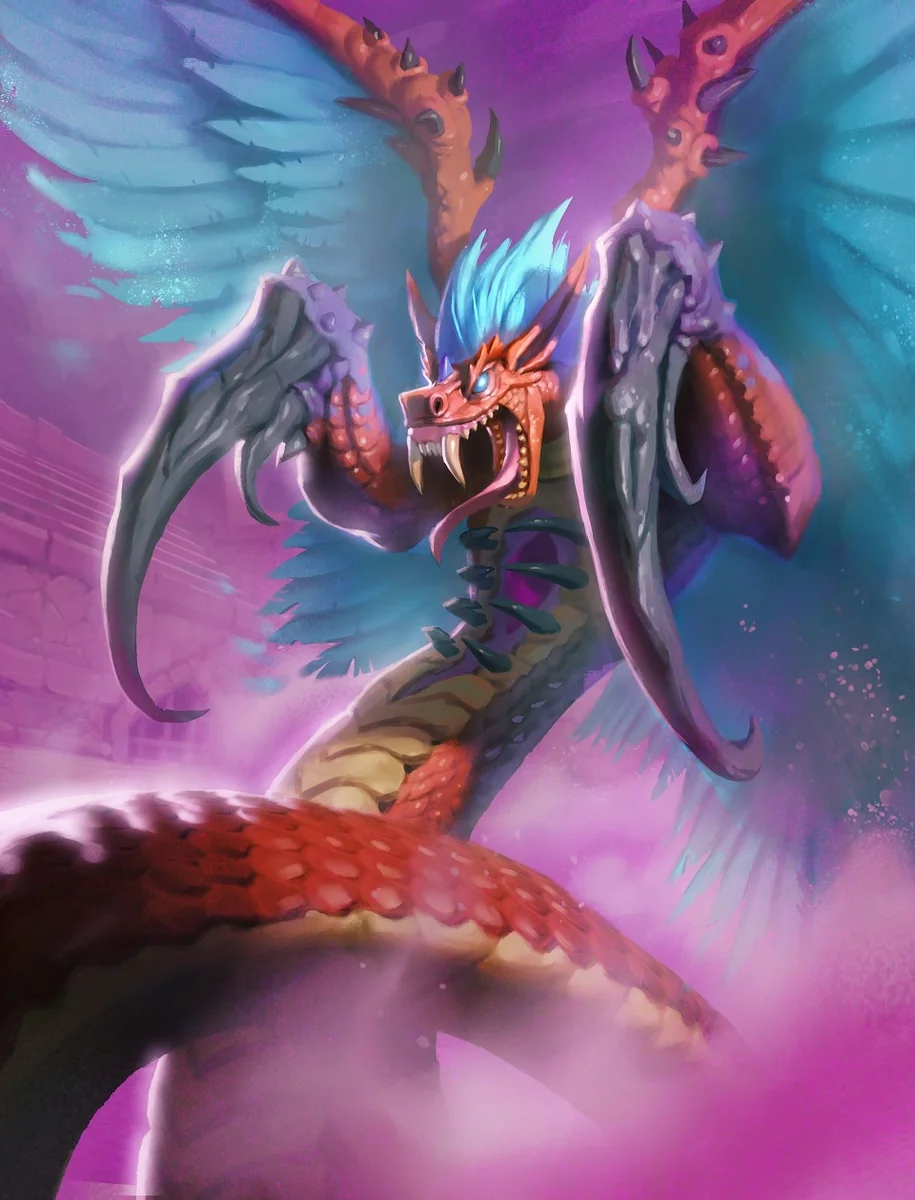
Quick Overview
The Gurubashi remembered an age when their cities commanded vast stretches of southern Azeroth. Zul'Gurub, already burdened by the legacy of a fragmented empire, became inseparable from the struggle over the Blood God. Troll factions disagreed not only over land or lineage, but over what they were willing to sacrifice to escape decline. The Zul'Gurub raid campaign, however, belongs to a later 2005 patch and must not be presented as an already-occurring launch event.
Full History
The Gurubashi remembered an age when their cities commanded vast stretches of southern Azeroth. That memory was a source of pride, but pride did not make ruined fields grow grain or restore alliances broken by ancient catastrophe. In the centuries after the Sundering, fear and desperation opened a door that no enemy army could have forced so easily. The Gurubashi sought power from Hakkar the Soulflayer, a being whose promises carried the price of blood.
Hakkar offered the possibility of renewed strength. His priests, the Hakkari, claimed that sacrifices and obedience could restore what the empire had lost. Such promises find their greatest audience among people whose old order has failed them. Yet the rituals demanded more than loyal worship. They threatened to consume the very population the priests said they were saving. A god who measured devotion through death could make the empire weaker even while its followers spoke of recovering greatness.
Resistance arose from within troll society. The conflict was not simply a righteous foreign invasion of an evil city. It was a struggle among Gurubashi and their allies over what kind of power their civilization should accept. Trolls who had every reason to cherish their empire nevertheless turned against the Hakkari and the god they served. Zandalari resistance entered the old accounts as part of this effort to prevent Hakkar's worship from defining all troll futures.
The clash tore at the heart of Gurubashi power. Zul'Gurub, already burdened by the legacy of a fragmented empire, became inseparable from the struggle over the Blood God. Priests who remained faithful to Hakkar did not cease to exist when the revolt drove them from the center of power. The Atal'ai carried their devotion elsewhere, eventually establishing a sanctuary in the Swamp of Sorrows. The effort to summon Hakkar would continue in another place, under different walls and beneath a different sky.
That legacy links the jungle city, the exiled priests, and the Temple of Atal'Hakkar without requiring a narrator to leap ahead to later raid campaigns. These are connected chapters of a much older religious and political catastrophe. Troll factions disagreed not only over land or lineage, but over what they were willing to sacrifice to escape decline.
At the original World of Warcraft launch, Hakkar's ancient cult and its surviving influence are valid subjects of historical inquiry. The Zul'Gurub raid campaign, however, belongs to a later 2005 patch and must not be presented as an already-occurring launch event. The older story remains dramatic on its own: a desperate empire tried to reclaim its past and almost surrendered its future to the price of that promise.
The Living Archive · Subject Chronicle
Through History
Explore documented turning points and follow their connections. The complete account remains in Full History above.
Further Reading
A research reference supplied with this article.