
Quick Overview
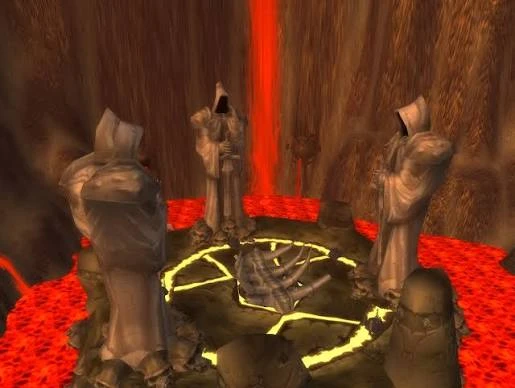
The Altar of Storms in the northwestern Burning Steppes is a surviving ritual site associated with the Blackrock clan. Altars of this kind were instruments of the old Horde’s magical warfare, most famously used to empower ogre-magi during the Second War. In the original world, the Burning Steppes site remains a place where dark power attracts warlocks and dangerous bargains. Its presence links the orcs’ shattered armies to the sorcery that once helped them threaten the kingdoms of the north.
Full History
The old Horde did not win its victories by strength of arms alone. During the Second War, its commanders sought ways to replace lost magical power and transform the ogres serving beside their armies. The answer was the Altar of Storms, a structure designed to channel arcane energies into a new kind of warrior. The Warcraft II account traces the altar’s power to the elven runestone at Caer Darrow. The magic that had once belonged to the elves was turned toward the creation of ogre-magi, granting their enormous strength a dangerous command of spells.
That transformation mattered because the orcs’ own warlocks had suffered under Orgrim Doomhammer’s rule. Rather than restore the old order of demonic spellcasters unchanged, the Horde invested power in allies who could fight and cast magic in the same battle. The Altar of Storms became a symbol of this adaptation: a military installation where stolen knowledge and brutal necessity met. Its imposing form was not a temple of peaceful worship. It was built to make war more effective.
The Altar of Storms that stands in the northwestern Burning Steppes belongs to the surviving landscape of that old magical tradition. It lies near Blackrock Mountain, where the remnants of the Blackrock clan continue to hold ground. The region also contains other reminders of the wars that brought orcs into Azeroth: fortified approaches, surviving settlements and the ruins left by armies that once fought for the road north. The altar is a place where power can outlast the government or commander who first sought it.
By the time of the original World of Warcraft, the altar still attracts practitioners of dangerous magic. Mor’zul Bloodbringer studies near it and offers warlocks a path toward binding a dreadsteed, a ritual requiring extraordinary resources and a willingness to bargain with powers beyond the ordinary world. The site is not the same thing as the other altars found elsewhere in Azeroth, nor does its continued existence prove that every original Second War ritual remains active. It does show that the old Horde’s magical monuments can serve new ambitions long after their first purpose has faded.
The Burning Steppes altar is thus both a relic and a warning. Its history begins with a runestone taken from Caer Darrow, with the ambition to reshape ogres into spellcasters, and with a Horde that believed it could seize any power needed for conquest. The armies around Blackrock have changed, but the stone remains. What was once a tool of war continues to draw those who see in its dark energies a way to command something stronger than themselves.
The Living Archive · Subject Chronicle
Through History
Explore documented turning points and follow their connections. The complete account remains in Full History above.
No additional documented milestones are available yet. The Full History above remains the primary account.
Further Reading
A research reference supplied with this article.