
Quick Overview
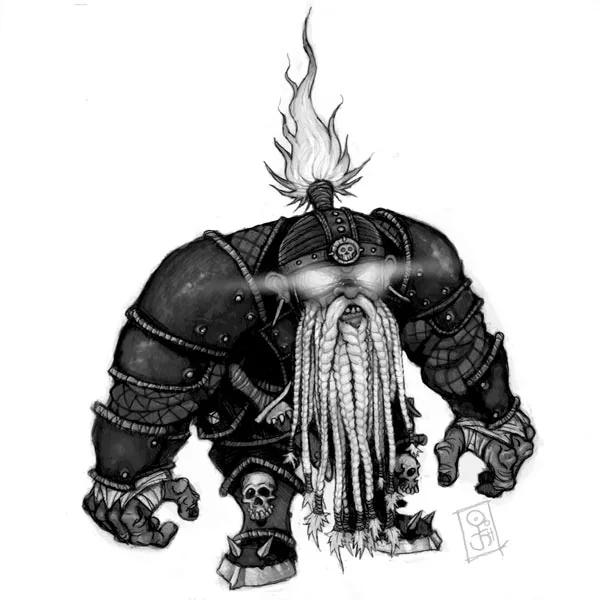
High King Modimus Anvilmar ruled a dwarf kingdom that still contained the Bronzebeard, Wildhammer, and Dark Iron clans. His authority held their rivalries within one political order, though the underlying disputes over influence and territory remained. The tensions he could not permanently resolve would erupt into the War of the Three Hammers.
Full History
The dwarves had established a mountain kingdom centered on Ironforge after emerging from their older earthen heritage. For a time, the Bronzebeards, Wildhammers, and Dark Irons shared this political world despite differences in custom, interests, and ambition. Modimus Anvilmar was the high king under whom that uneasy unity persisted. His reign offered the clans a common authority even where affection and trust between them were weak.
The settlement contained the seeds of future conflict. Clan loyalties remained strong, and rival leaders had reasons to dispute the distribution of power. The fact that one king presided over the factions did not turn them into a single homogeneous people. Their distinct identities were already important before they became competing kingdoms and military forces.
After Anvilmar's rule ended, those divisions developed into open war. The Bronzebeards retained Ironforge, the Wildhammers made Grim Batol their stronghold, and the Dark Irons under Thaurissan pursued their own dominion. Modgud's attack on Grim Batol, the curse that followed, and Thaurissan's summoning of Ragnaros transformed a political rupture into a catastrophe felt across the surrounding land.
Remembering Anvilmar's reign helps explain why the War of the Three Hammers was a civil conflict rather than a struggle between unrelated peoples. The clans fought over a shared inheritance, and the wreckage of their unity shaped both their later homelands and their relations at the beginning of World of Warcraft.
The Living Archive · Subject Chronicle
Through History
Explore documented turning points and follow their connections. The complete account remains in Full History above.
Further Reading
A research reference supplied with this article.