
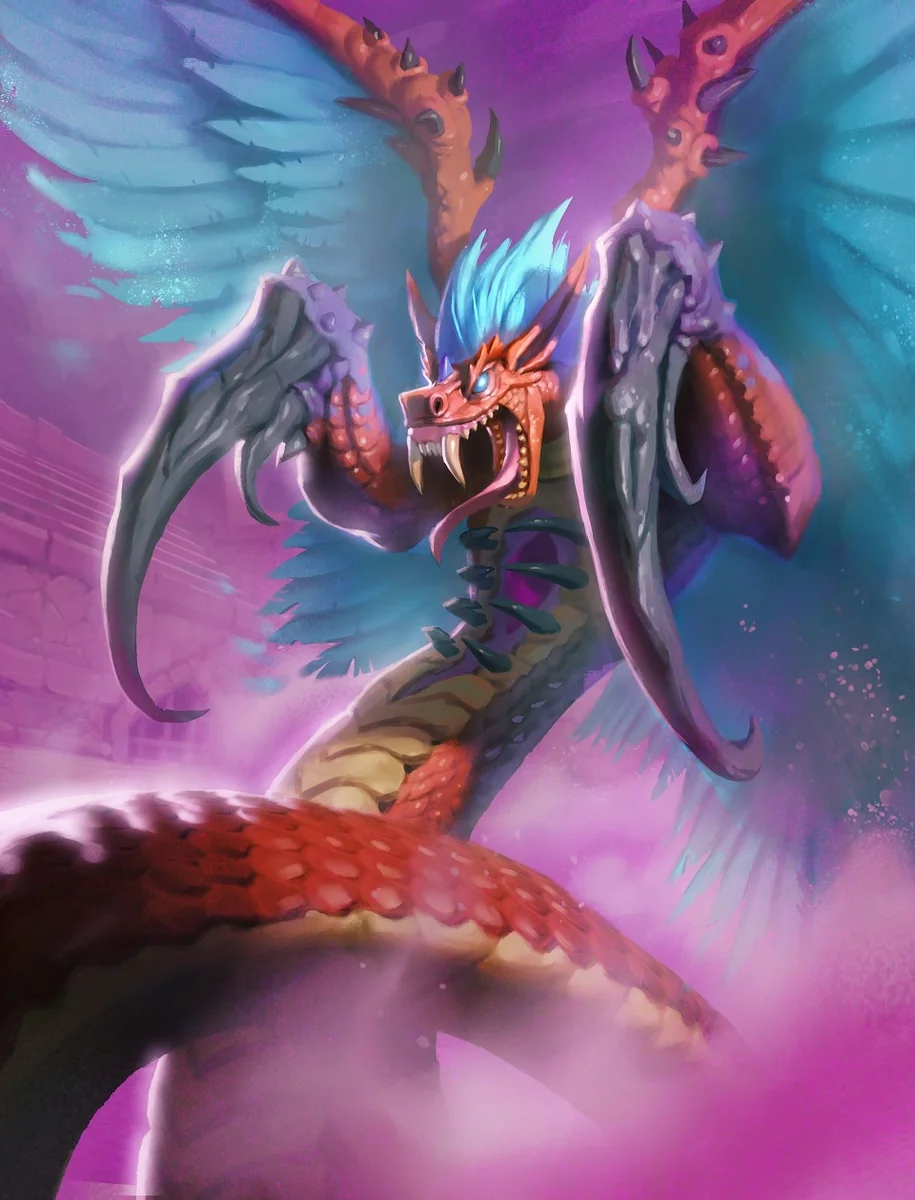
Quick Overview
The Gurubashi had survived the collapse of ancient Kalimdor and the loss of much of their former world. Hakkar's enemies challenged his followers and forced the cult out of its former place of power. The Darkspear descend from the broad jungle-troll world, but they do not therefore inherit loyalty to the Hakkari. The Zandalari resistance is one of the rare places in this history where far-separated trolls acted in defense of something wider than any one tribe.
Full History
The Gurubashi had survived the collapse of ancient Kalimdor and the loss of much of their former world. Their kingdom still occupied tropical forests, but its prosperity had waned. In that climate of fear and uncertainty the worship of Hakkar promised renewed strength. The blood god offered power, and those who accepted his rites came to believe that sacrifice could purchase a future for their people.
The bargain poisoned the kingdom it was supposed to save. Religion had always occupied an important place in troll life, yet the demand for blood threatened to make the Gurubashi subjects of a power that cared little for their survival. Resistance grew as the cost of the cult became impossible to ignore.
This was no simple war of trolls against outsiders. Families and tribes were drawn onto opposing sides of a religious dispute. Hakkar's priesthood had followers, sacred places, and an ideology strong enough to defy those who rejected it. The original Troll Compendium places the Zandalari among the opponents of the blood cult, acting with other trolls who would no longer accept its demands.
The distinction is important. The Zandalari preserved old religious knowledge, but that did not mean they approved of every being worshipped by any troll tribe. Their intervention reflected a struggle over what divine authority could legitimately ask of a people. Resistance to Hakkar was therefore as much a fight over troll society's future as over possession of temples or cities.
Hakkar's enemies challenged his followers and forced the cult out of its former place of power. The Gurubashi kingdom did not emerge whole. The conflict damaged its remaining unity and left rival communities among its descendants. Some of the displaced priests pursued their rituals far from Stranglethorn, continuing a story that would eventually reach the Swamp of Sorrows and the Temple of Atal'Hakkar.
That exile explains why the memory of Hakkar is attached to more than one region. The story is not proof that the 2005 Zul'Gurub raid had already occurred at WoW launch. The older religious schism and the later playable return must be treated as different events separated by the original game boundary.
The Darkspear descend from the broad jungle-troll world, but they do not therefore inherit loyalty to the Hakkari. Sen'jin and Vol'jin lead a tribe with its own traditions and choices. Their joining the Horde offers a particularly sharp contrast with the blood cult: a small community seeking a future through alliance rather than by reviving the most destructive claims of an ancient priesthood.
The Zandalari resistance is one of the rare places in this history where far-separated trolls acted in defense of something wider than any one tribe. They could not rebuild the lost empire, but they could refuse a god whose price would have consumed it.
The Living Archive · Subject Chronicle
Through History
Explore documented turning points and follow their connections. The complete account remains in Full History above.
Further Reading
A research reference supplied with this article.