
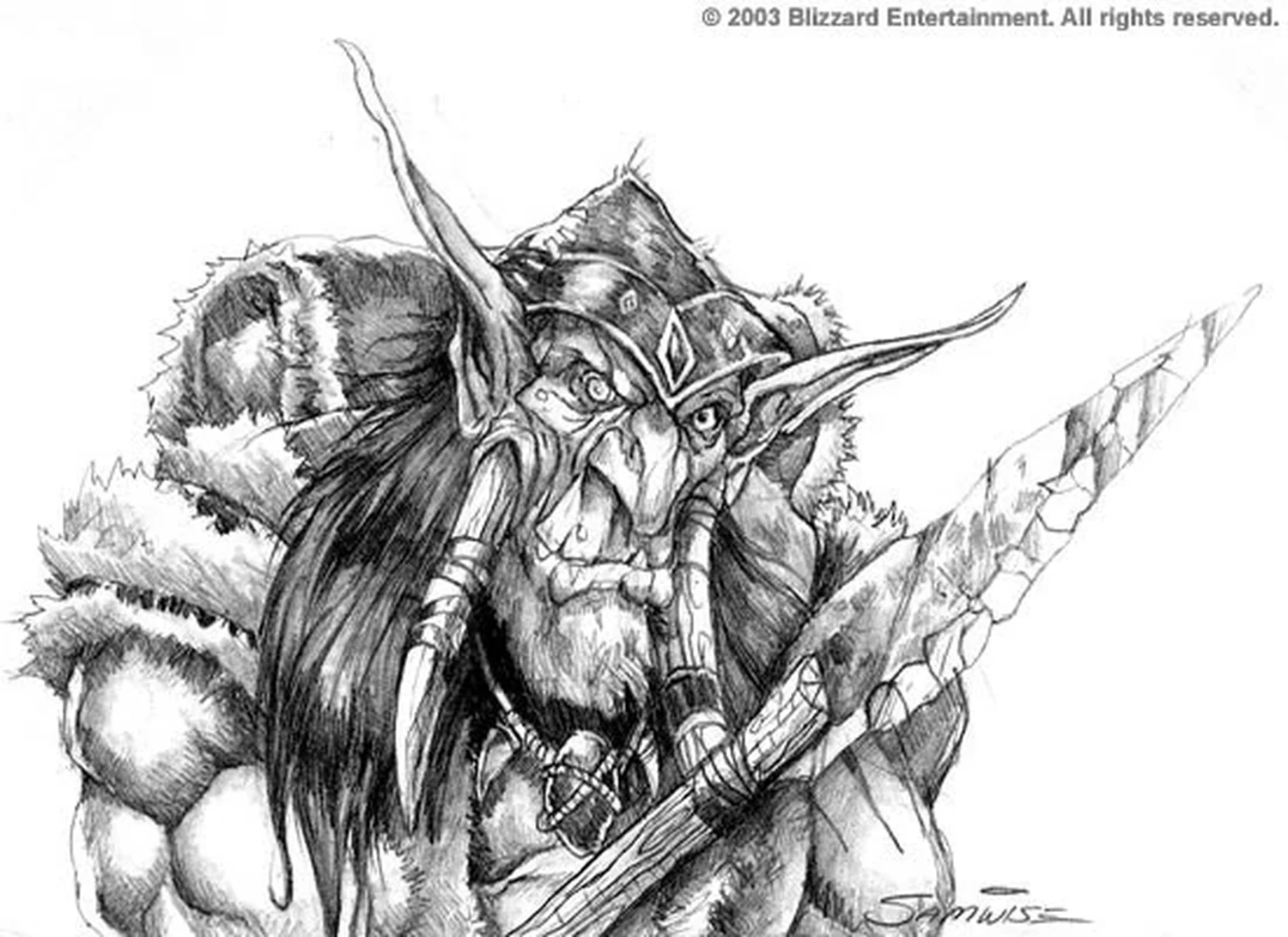
Quick Overview
When the great troll peoples expanded across ancient Kalimdor, not every community sought the warm forest or jungle. Those connections do not make Zul'Drak the seat of a ruler directing every Frostmane scouting party or Winterax warband. When Warcraft III establishes the Lich King in Northrend, the old ice-troll kingdom occupies the same continent as a growing empire of undeath. Zul'Drak is therefore a historical location in Warcraft: Forever, not a playable zone or dungeon target for the launch client.
Full History
When the great troll peoples expanded across ancient Kalimdor, not every community sought the warm forest or jungle. The ancestors of the Drakkari went north. Original historical accounts describe communities driven away from more settled lands who learned to survive snow, hard ground, and bitter winters. Eventually they formed a separate nation in the region called Zul'Drak. It was not simply an Amani fortress transplanted to another climate, but a northern society with its own enduring traditions.
The Zandalari were famed for ritual learning, the Gurubashi for their jungle empire, and the Amani for their forest power. The Drakkari in Zul'Drak developed an identity tied to cold lands and a fierce warrior culture. Their kingdom never reached the wealth attributed to the great southern empires in the original account, but it endured long enough to become the ancestral homeland of more than one ice-troll branch.
The Sundering left Zul'Drak upon Northrend, removed from the surviving centers of the southern troll world. Its people continued living there. Over later generations, other ice-troll communities appeared across the sea in the Eastern Kingdoms. The Frostmane near Ironforge and the Winterax associated with the Alterac mountains are remembered in the archived Troll Compendium as descendants of this broad northern people.
Those connections do not make Zul'Drak the seat of a ruler directing every Frostmane scouting party or Winterax warband. The distance is too great, and the sources do not provide such a chain of government. These are descendants and relatives whose histories took different courses after the lands were divided.
When Warcraft III establishes the Lich King in Northrend, the old ice-troll kingdom occupies the same continent as a growing empire of undeath. The Compendium describes a dangerous relationship in which the Drakkari seek to avoid the Scourge and suffer losses in the north. The situation makes Zul'Drak part of the original-era historical world, but it does not establish the future resolution of the conflict. The destruction and later quests shown in Wrath of the Lich King belong to a story the original World of Warcraft has not yet told.
Zul'Drak is therefore a historical location in Warcraft: Forever, not a playable zone or dungeon target for the launch client. Its significance can still be encountered through Frostmane and Winterax history, through the ancient records of the Zandalari, and through the looming Scourge threat across Northrend. A map should mark it as a remembered kingdom beyond the present adventurer's road—an older part of Azeroth that explains the people the player does meet.
The Living Archive · Subject Chronicle
Through History
Explore documented turning points and follow their connections. The complete account remains in Full History above.
No additional documented milestones are available yet. The Full History above remains the primary account.