Quick Overview
Long before Azeroth's mortal nations, the Old Gods and elemental lords held immense power over the world. Their domination formed the setting for the titans' arrival and the first great struggle over Azeroth's ordering. The enemies bound in that ancient conflict would not simply disappear from the world's later history.
Full History
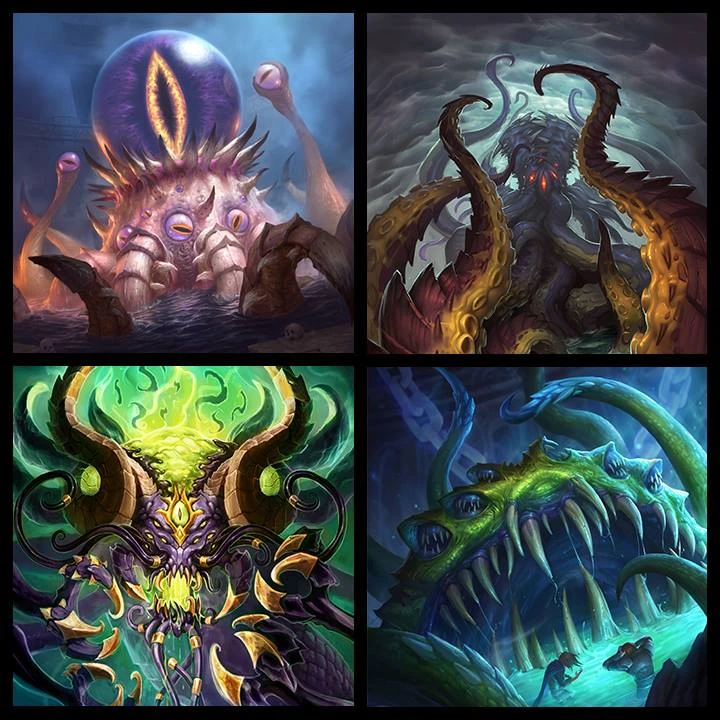
Azeroth was not an empty land waiting to receive its first inhabitants when the titans appeared in its story. Ancient, destructive powers already held sway. The Old Gods spread their influence over the world, and elemental lords were bound up in the struggle that left the primordial landscape under the control of forces hostile to the order the Pantheon sought to impose. This is the earliest great conflict that the original histories place upon Azeroth itself.
The Old Gods were neither ordinary rulers nor enemies that could be measured by the boundaries of a later kingdom. Their hold on the world was profound enough to summon an intervention by the titans. The elemental lords likewise represented powers of fire, water, earth, and air beyond the armies familiar to the historical ages of elves, trolls, or humans. The struggle with them belonged to a distant world in which the division between landscape, magic, and living power was unlike the order that followed.
The titans confronted these powers and prevailed in the original historical account. The Old Gods were bound, while the elemental lords were banished into separate realms of confinement. Azeroth could then be reshaped, and its later history unfolded upon a world that bore the consequences of that intervention. The description of this victory is significant precisely because it is not the extinction of every ancient enemy; containment and restriction are part of the recorded outcome.
Those ancient threats remained relevant long after the Sundering and the rise of modern states. Ragnaros's emergence in the War of the Three Hammers and the presence of terrible powers beneath the world revealed that deep time had not made the old struggle meaningless. Sites such as Ahn'Qiraj also pointed toward histories older than the current conflicts of Horde and Alliance. The earliest age of the Old Gods and elementals is therefore both a chapter in Azeroth's origins and an explanation for dangers still embedded in the land.
A later historical perspective
Ancient history revealed later
Later accounts describe the Old Gods' ancient Black Empire as more than a vague prehistoric reign. Their servants included formidable C'Thraxxi and subterranean insectoid populations. These forces remained consequential even after the titan-forged prevailed; much later, Kith'ix's reawakening would help ignite the devastating war between the aqir and troll civilizations.
The original histories spoke of Old Gods and elemental violence in Azeroth's earliest ages, but later accounts gave that remote era additional shape. The Old Gods commanded the Black Empire, with dreadful servants capable of confronting even the titan-forged protectors who came after them. Not every part of their influence vanished when the world was ordered. Some followers endured in buried strongholds; other terrors survived the struggle in slumber or captivity.
A particularly enduring consequence was Kith'ix. In the later history, the creature lived through Tyr's last stand, gravely wounded, then slept beneath lands that future troll peoples would consider their own. When roused, it called out to the hidden aqir and unleashed a threat that forced ancient troll societies into war. The ruins and hostile powers encountered throughout later ages therefore have roots in an older struggle whose effects outlasted its supposed end.
This retrospective should illuminate ancient Azeroth, not import modern expansion quests or the present-day outcomes of the Old Gods. The Classic-era account of the world's ordering remains distinct from the more detailed genealogy of servants, battles and survivals published afterward.
The Living Archive · Subject Chronicle
Through History
Explore documented turning points and follow their connections. The complete account remains in Full History above.
Further Reading
A research reference supplied with this article.